
Please Choose Your Language


Views: 0 Author: Site Editor Publish Time: 2026-07-31 Origin: Site


A pressure washer drastically reduces cleaning time and slashes manual labor costs. Property owners and facility managers rely on these machines daily. However, deploying the wrong water pressure on the wrong material causes irreversible damage. You might accidentally etch solid concrete or splinter delicate wood. You could even strip protective seals off building siding.
Buyers frequently focus on raw, generic cleaning power. We believe you should instead match specific surface tolerances to precise equipment capabilities. Understanding PSI, GPM, and nozzle types prevents costly mistakes. This article provides a definitive guide to surface compatibility. You will learn how to determine exactly what class of equipment is required for your commercial facility, vehicle fleet, or residential property. We also highlight critical surfaces you must actively avoid washing. Identifying these delicate materials prevents severe structural damage and safety hazards.
Surface Tolerance Dictates Equipment: High-density materials require high PSI for effective stripping; porous or delicate materials require high GPM and low PSI (soft washing).
Nozzles act as the primary safety mechanism: The angle of the spray dictates impact force just as much as the machine's base output.
Industrial vs. Consumer Grades: Sustained, daily cleaning of hardscapes and fleet vehicles necessitates an industrial high pressure washer rather than standard consumer models.
The "Do Not Wash" Rule: Identifying what *cannot* be pressure washed is critical to preventing costly property damage and safety hazards.
Safe exterior cleaning requires a fundamental understanding of machine specifications. Many operators mistakenly assume higher pressure always yields better results. This misconception often leads to ruined surfaces. You must evaluate cleaning power using objective metrics. This approach guarantees safety and efficiency across different materials.
PSI stands for Pounds per Square Inch. This metric represents the raw stripping power of the machine. High PSI breaks the chemical bond between dirt and a surface. You need high PSI to remove tough stains like dried paint or baked-on grease.
GPM stands for Gallons per Minute. This metric measures the flushing or moving power. High GPM washes away the debris once the PSI loosens it. A higher GPM rate cleans surfaces much faster. It sweeps large volumes of dirt away effortlessly.
Industry professionals evaluate equipment using the Cleaning Unit (CU) formula. You calculate this by multiplying PSI by GPM. The resulting number provides an objective performance score. You can use this metric to compare machine efficiency accurately.
Consider two different machines. Machine A offers 4,000 PSI and 2.0 GPM. It has a CU score of 8,000. Machine B provides 3,000 PSI and 4.0 GPM. It has a CU score of 12,000. Machine B cleans significantly faster despite its lower pressure. It flushes dirt away twice as fast.
Your nozzle acts as the primary safety valve. The spray angle dictates the final impact force. A narrow angle concentrates the stream. A wider angle disperses the pressure safely. The industry uses a universal color-coding system to identify these angles.
Nozzle Color-Coding Standard Guide
Color | Angle | Primary Application | Risk Level |
|---|---|---|---|
Red | 0° | Shooting water long distances; hard stain removal on steel. | Extremely High (Can cut skin and gouge concrete) |
Yellow | 15° | Stripping paint; cleaning heavy equipment and tough stains. | High (Safe for hardscapes if kept moving) |
Green | 25° | General cleaning; washing driveways, brick, and patio furniture. | Moderate (Standard all-purpose choice) |
White | 40° | Washing vehicles, siding, and delicate wood decking. | Low (Safest choice for most common surfaces) |
Relying solely on maximum PSI creates severe implementation risks. Operators often ignore nozzle selection. They also forget to adjust their distance from the target surface. This combination is the leading cause of surface destruction. Always start cleaning from a safe distance. Slowly step closer until the water stream cleans effectively. You must keep the wand moving constantly to prevent concentrated damage.
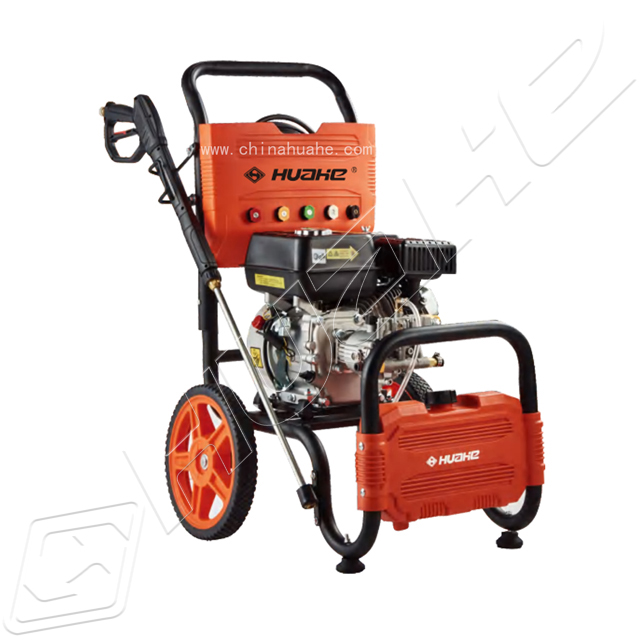
Commercial environments present tough cleaning challenges. Hardscapes and heavy machinery endure constant abuse. They collect stubborn contaminants over time. You need specialized equipment to restore these durable materials. Standard residential machines simply lack the necessary power.
Solid concrete withstands extreme cleaning forces. Driveways, sidewalks, and loading docks require aggressive treatment. You generally need 3,000+ PSI for these surfaces. This pressure effectively removes dark tire marks. It lifts embedded grease spots and obliterates severe algae growth.
Best Practices for Concrete:
Pre-treat oil stains using a strong degreaser.
Allow the chemical to dwell for ten minutes.
Use a dedicated surface cleaner attachment.
Maintain a steady walking pace to avoid zebra striping.
A surface cleaner attachment distributes water evenly through spinning nozzles. It eliminates the streaks often left by a standard wand. This accessory drastically reduces your overall cleaning time.
Brick and natural stone demand careful pressure calibration. They handle heavy cleaning well. However, you must protect the surrounding mortar. We recommend setting your machine between 2,500 and 3,000 PSI. This range successfully restores natural color.
It clears away moss and environmental pollution. It cleans effectively without degrading structurally sound mortar joints. Always test a small, hidden section first. Ensure the brick face does not chip or flake under the water stream.
Industrial vehicles accumulate thick layers of grime. Tractors, excavators, and delivery trucks encounter harsh conditions daily. Cleaning them requires a specific equipment formula. You must use an industrial high pressure washer for fleet maintenance.
These applications demand a high GPM rate of 4.0 or more. You should combine this volume with moderate pressure around 2,000 to 3,000 PSI. Hot water capability is absolutely essential here. Cold water merely pushes grease around. Hot water actively melts hydraulic fluid. It cuts through baked-on mud and stubborn road grime efficiently. This combination reduces manual scrubbing significantly.
Many common property surfaces require a gentle approach. High pressure easily ruins wood, vinyl, and automotive paint. You must shift your strategy from aggressive stripping to careful washing. We call this technique soft washing. It relies on chemical cleaners and high water volume rather than brute force.
Wood is highly susceptible to water damage. Softwoods like pine or cedar scar very easily. You must cap your output at 1,200 to 1,500 PSI maximum. Always equip a wide-angle nozzle, preferably the 40° white tip.
Implementation reality often proves challenging for beginners. You must always sweep the wand in the direction of the wood grain. Going against the grain tears the wood fibers. Operators call this damage "furring." It leaves a fuzzy, splintered texture behind. You will then have to sand the entire deck to fix it. Keep the nozzle at least 12 inches away from the boards at all times.
House siding protects a building from moisture. Applying high pressure here creates severe hidden problems. We recommend using 1,300 to 1,700 PSI for these materials. You must employ specialized soft washing techniques.
Common Mistakes to Avoid on Siding:
Never shoot water upward under the lap siding.
Avoid blasting directly into window seams or vents.
Do not rely on pressure to remove black algae.
Shooting water upward forces moisture behind the exterior panels. This trapped water breeds hidden mold and rots the wooden framing. Instead, apply a cleaning solution specifically formulated for siding. Let the chemicals kill the algae and loosen the dirt. Finally, rinse the wall using a gentle, downward-angled spray.
Washing your personal vehicle saves money. However, improper technique easily causes expensive paint damage. You should limit your machine to 1,200–1,900 PSI. Use a 40° white nozzle exclusively. Maintain a distance of two to three feet from the car body.
The implementation reality involves serious risks. Holding the nozzle too close easily strips the clear coat. It can peel away aftermarket vinyl wraps or decals. High pressure also forces water past rubber weather seals. This floods door panels and damages sensitive electronic components. Always use a foam cannon attachment to apply thick soap before rinsing.
Certain materials cannot withstand even moderate water pressure. Attempting to wash these items guarantees immediate destruction. It also voids manufacturer warranties and creates potential safety hazards. Identifying what *cannot* be pressure washed is critical.
Roofs often grow ugly black streaks caused by algae. Homeowners frequently try to blast these stains away. You must never pressure wash an asphalt shingle roof. High pressure instantly strips away the protective ceramic granules.
These granules reflect UV rays and protect the underlying asphalt. Removing them accelerates roof decay dramatically. It also immediately voids most manufacturer warranties. You must use a dedicated, zero-pressure chemical soft wash system for roof cleaning.
Older homes often feature peeling lead-based paint. Using high water pressure here creates a severe environmental hazard. The stream blasts toxic paint chips into the air. These chips eventually settle into the surrounding soil and garden beds.
This contamination poses a massive health risk to children and pets. It also violates environmental protection regulations in many areas. You must hire certified abatement professionals to handle lead paint removal safely. They use contained scraping methods rather than water blasts.
Air conditioning units require regular cleaning to maintain efficiency. However, they feature extremely fragile external components. The exterior coils consist of thin, delicate aluminum fins. Even a light pressure washer will instantly bend these fins flat.
Crushed fins destroy the unit's ability to draw air. This severely restricts airflow, forcing the compressor to overheat. You will ruin a highly expensive appliance in seconds. Clean AC coils using foaming coil cleaners and a standard garden hose instead.
Historic brick homes require gentle maintenance. The mortar holding these structures together degrades over decades. High water pressure easily blasts away weakened, crumbly mortar. This immediately compromises the structural integrity of the wall.
Water then enters the deep crevices left behind. If this water freezes, it expands and cracks the bricks apart. You must avoid washing old masonry altogether. If cleaning is necessary, use gentle chemical treatments and soft bristle brushes.
Buying the correct machine ensures long-term reliability. The market offers countless models categorized by price and power. You must understand the internal components to make a wise investment. Selecting a reputable high pressure washer manufacturer prevents frustrating breakdowns.
The pump determines the lifespan of your machine. Consumer-grade units typically feature axial cam pumps. These pumps cost less to produce. However, they have a notoriously short lifespan. They run at high RPMs, generating excessive heat. You cannot rebuild an axial cam pump when it fails. You simply throw the machine away.
Commercial equipment utilizes triplex plunger pumps. These pumps run at lower RPMs and run much cooler. They are designed for sustained, daily commercial use. More importantly, they are fully rebuildable. You can replace individual valves or seals as they wear out. This drastically extends the life of your investment.
You must evaluate brands beyond their marketing claims. Look for transparent pump sourcing. The best manufacturers openly state who builds their pumps. Inspect the internal materials closely. Quality machines feature solid brass manifolds. Brass resists cracking under high pressure and thermal shock.
They also utilize ceramic plungers rather than cheap steel. Ceramic resists friction and heat far better. Check the availability of replacement parts before purchasing. Ensure the brand maintains a robust distribution network. Review their warranty structures carefully. A confident brand offers multi-year warranties on the pump and engine.
Choosing between hot and cold water dictates your cleaning capabilities. Cold water units are cheaper and highly portable. They are perfectly sufficient for removing dirt, mud, and light algae. Most residential and light commercial users only need cold water.
Hot water machines feature heavy, built-in burner systems. A hot water high pressure washer is essential for removing grease, oil, and hydraulic fluid. It functions exactly like washing greasy dishes in a sink. Cold water leaves an oily film behind. Hot water emulsifies the grease, allowing the high GPM stream to flush it away permanently. Industrial fleet managers and restaurant cleaners must choose hot water systems.
Safe and effective pressure washing requires precise calculation. It relies on matching surface density with machine capability and proper operator technique. You cannot treat every surface with maximum pressure. Relying on raw PSI alone virtually guarantees expensive property damage.
Take action before finalizing your purchase or rental decision. Audit the primary surfaces you need to clean. Calculate your total square footage and identify every specific material type. This audit determines whether you need a high-PSI machine for concrete or a high-GPM machine for delicate siding.
We strongly recommend consulting with an equipment specialist. They will help match your exact GPM and PSI requirements to your operational needs. Choosing the right equipment protects your property, increases efficiency, and ensures superior cleaning results every single time.
A: Yes, but you must clean it strictly at low pressure. Keep the output under 1,500 PSI. Use a wide-angle nozzle and maintain a safe distance. High pressure easily etches the protective plastic capping. This ruins the finish and exposes the interior wood fibers to moisture damage.
A: Windows should generally not be pressure washed at all. Even low pressure carries a high risk of breaking waterproof seals or shattering the glass entirely. We recommend using a standard garden hose or a specialized water-fed pole system with a soft brush for exterior windows.
A: It depends entirely on your application. Electric models are quiet, require zero maintenance, and provide sufficient power for light residential tasks like washing cars or patio furniture. Gas models are mandatory for high-mobility, heavy-duty commercial applications. They offer the extreme PSI and GPM needed for massive hardscapes.
