


Views: 0 Author: Site Editor Publish Time: 2026-07-30 Origin: Site


Selecting the wrong cleaning equipment carries high operational stakes. You risk damaging property, ruining siding, or completely stripping paint when you mismatch a machine to a surface. Inefficient labor also becomes a massive drain when your crew wastes hours scrubbing stubborn grease that refuses to lift. Furthermore, improper equipment usage can easily void commercial insurance policies, leaving you liable for damages. Industry professionals frequently use "pressure washing" and "power washing" interchangeably. However, these are mechanically distinct solutions designed for entirely different challenges. We aim to clear up this widespread confusion once and for all. You will gain a technical and commercial evaluation framework below. This guide helps facility managers, cleaning businesses, and property owners choose the exact right equipment for their specific operational requirements.
The Single Differentiator: Power washers use heated water; standard pressure washers use unheated (cold) water. Both utilize high pressure.
Mechanical Reality: Power washers require internal heating coils or burners, making them heavier, more expensive, and maintenance-intensive.
Application Rule of Thumb: Cold pressure washing is for dirt, mud, and delicate surfaces; hot power washing is for grease, oil, chewing gum, and heavy industrial sanitization.
ROI Focus: Sourcing an industrial high pressure washer requires evaluating PSI (pressure), GPM (flow rate), and surface compatibility to prevent asset damage and maximize labor efficiency.
We need to look inside these machines to fully understand their core differences. Both devices utilize a highly specialized pump to move water rapidly. This pump accelerates the water stream to generate intense kinetic force. However, a power washer adds a crucial, defining component to this process. It features an integrated heating element, usually in the form of a burner or electrical heating coil. This heater introduces significant thermal energy into the water stream. You combine extreme heat and high pressure to tackle unique commercial cleaning challenges.
The fundamental science of cleaning explains why this distinction matters so greatly. Heat fundamentally breaks down the tough molecular bonds found in grease, fats, and oil. You literally melt these sticky substances away from the surface. On the other hand, pressure alone relies on physical force. Kinetic energy easily pushes loose mud, dust, and algae off a solid surface. It physically dislodges dirt. However, cold kinetic force cannot melt hardened fats or heavy oils. You absolutely need thermal energy to handle petroleum-based spills effectively.
We must issue a strict risk warning based on field experience. Never attempt to run hot water from an external source through a standard cold pressure washer. Standard units lack heat-resistant components. Hot water will instantly melt the internal pump seals. You will destroy the machine in a matter of seconds. Always ensure your equipment is specifically engineered and rated for high temperatures before introducing any heat source.
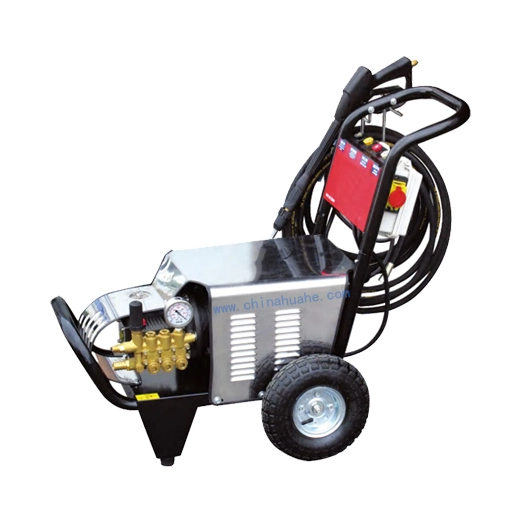
We define the standard cold water unit as the most versatile workhorse of the entire cleaning industry. Almost every property manager, homeowner, and contractor relies on this machine for daily tasks. It provides immense kinetic cleaning power without the added complexity of a built-in heating system. A standard high pressure washer handles routine maintenance efficiently. It draws ambient temperature water and pressurizes it to strip away loose surface debris.
You will find this machine performs best in specific use cases. It excels at removing dirt, algae, cobwebs, and loose paint from common exterior surfaces. Operators frequently use cold water units to wash residential vinyl siding, clean wooden decks, and rinse fleet vehicles. It also works perfectly for brightening standard concrete sidewalks and brick pathways covered in everyday environmental dust.
We can break down the advantages and disadvantages of cold water machines into a few key points:
Pros: They feature a much lower upfront purchase cost. They weigh significantly less, making them highly portable around large job sites. Operators enjoy easier, cheaper maintenance schedules. They also pose a lower risk of thermal damage to sensitive materials, such as vinyl siding, plastic trim, or composite decking.
Cons: They are highly inefficient against petroleum-based stains. They struggle to remove hardened biological matter, animal fats, or thick restaurant grease. You will waste considerable time scrubbing if you attempt to clean oil spills using only cold water.
Your evaluation metric for a cold water unit focuses entirely on finding the right balance. You must balance PSI (which determines your stripping power) and GPM (which dictates your rinsing speed). A higher PSI breaks the dirt loose, while a higher GPM acts as a broom to swiftly wash it away.
We define the true power washer as a highly specialized commercial tool. It serves primarily in heavy grime removal, deep sanitization, and harsh commercial environments. You deploy this machine when a cold water unit simply fails to deliver results. The internal burner system usually heats the water up to 200 degrees Fahrenheit, transforming the equipment into an industrial degreasing powerhouse.
The best use cases for hot water power washers revolve around commercial and industrial facilities. Operators rely on them for degreasing heavily soiled driveways and cleaning busy restaurant drive-thrus. They are indispensable for maintaining mechanic shop floors coated in oil. Municipalities use them for rapid weed eradication in sidewalk cracks and for melting away hardened chewing gum from public plazas.
Consider these essential pros and cons before investing in a hot water system:
Pros: A hot power washer cleans greasy surfaces remarkably faster. You need significantly less chemical detergent because the heat does the heavy lifting. The extreme temperatures also sanitize surfaces effectively, which proves crucial for food processing facilities and agricultural enclosures.
Cons: They carry a high operational cost. The machines have a much heavier, bulkier footprint. Operators must handle combustible fuels, like diesel or kerosene, to run the internal burner. Furthermore, inexperienced users run a high risk of warping, melting, or permanently damaging delicate surfaces.
Performance and Application Comparison Chart
Feature / Application |
Cold Pressure Washer |
Hot Power Washer |
|---|---|---|
Primary Cleaning Mechanism |
Kinetic Force (Pressure) |
Thermal Energy + Kinetic Force |
Best Suited For |
Dirt, Mud, Dust, Algae |
Grease, Oil, Gum, Animal Fats |
Equipment Weight |
Lighter, highly portable |
Heavier, often requires a trailer |
Maintenance Requirements |
Low (Pump and engine only) |
High (Pump, engine, burner, coils) |
Sanitization Capability |
Poor (Requires chemical additives) |
Excellent (Heat destroys bacteria) |
You must implement a strict framework for matching water temperature and PSI to the specific surface material. Failure to do so invites massive liability. For example, cleaning old masonry requires low PSI to avoid blowing out fragile mortar joints. Wood decking requires careful handling; excessive pressure easily splinters the boards and ruins the finish. Hot water introduces an extra layer of danger. Applying 200-degree water to vinyl siding will instantly warp and melt the panels. You must train your crew to identify surface materials before they ever pull the trigger. Always test a small, inconspicuous area first.
Purchasing commercial cleaning equipment forces buyers to weigh immediate expenses against long-term operational efficiency. Heated power washers carry a significantly higher upfront purchase price than cold water models. However, you must evaluate the labor savings gained from much faster cleaning times. If your crew spends three hours scrubbing a greasy loading dock with cold water, you lose money on hourly wages. A hot water unit might finish that exact same job in forty-five minutes. You must determine if your daily task volume justifies the higher initial investment to achieve these labor efficiencies.
Environmental compliance dictates how you operate in commercial spaces. When you combine hot water, high pressure, and commercial degreasers, you create a hazardous runoff situation. Local municipalities and federal environmental agencies strictly regulate where this wash water can flow. You often cannot allow industrial runoff to enter standard storm drains. Operators must use water reclamation systems or drain booms to capture the dirty water. Additionally, proper operator training remains an absolute necessity. You must mitigate insurance liabilities by ensuring every worker understands high-pressure injection injuries, burner safety, and proper fuel handling procedures.
Many new buyers mistakenly focus only on massive PSI numbers. We need to explain why commercial buyers often prioritize a higher GPM over extreme PSI. PSI breaks the bond between the dirt and the surface. GPM determines how fast you can wash away that dislodged debris. If you have 4000 PSI but only 2 GPM, you will clean very slowly. You are essentially sweeping a large driveway with a tiny toothbrush. Upgrading to a 5 or 8 GPM machine increases your workflow speed dramatically. It pushes mud and dirt away faster without risking the surface damage caused by excessively high PSI.
Knowing what to look for when upgrading your fleet ensures reliable daily operations. Moving to an industrial high pressure washer requires you to evaluate build quality above all else. You cannot afford downtime in a commercial setting. Commercial units use heavy-duty brass manifolds, ceramic plungers, and unloader valves designed for continuous duty cycles. You must bypass consumer-grade units found at residential hardware stores. Look for machines built specifically for eight-hour daily run times.
You should assess potential equipment brands using a strict set of criteria:
Availability of replacement parts: Ensure the manufacturer stocks easy-to-find pumps, standardized quick-connect nozzles, and replacement high-pressure hoses. Proprietary parts lead to extended repair delays.
Warranty structures: Read the fine print regarding the heating coils versus the pump. Good manufacturers offer separate, extended warranties for the heavy-duty pump block and the burner system.
Customization options: Evaluate your mobility needs. Determine if you require trailer-mounted systems with bulk water tanks or portable wheeled carts. Choose between gas engines for remote job sites or electric engines for indoor exhaust-free operations.
We advise you to conduct a thorough audit of your most frequent cleaning tasks before spending any capital. Track exactly how much time your crew spends fighting grease versus rinsing loose dirt. Once you quantify your daily challenges, consult directly with a reputable high pressure washer manufacturer or a specialized distributor. They will help you spec the exact PSI, GPM, and temperature configuration needed to scale your operations safely and efficiently.
The fundamental choice between these two powerful machines always comes down to what exactly you are cleaning. Remember the core rule: dirt requires pressure, while grease requires heat. Selecting the proper equipment prevents catastrophic property damage, protects your commercial insurance standing, and radically improves your labor efficiency. We strongly advise starting with a high-quality cold pressure washer for general exterior maintenance and standard property upkeep. You should only upgrade to a heavy, hot power washer when industrial degreasing, oil removal, or intensive sanitizing becomes a daily operational requirement. Match the machine to the mess, train your operators rigorously, and maintain your equipment to guarantee years of reliable service.
A: Partially, but it requires harsh chemicals and heavy manual scrubbing. Cold water cannot melt the petroleum bonds embedded in concrete. A hot power washer does this effortlessly by melting the oil, saving you hours of frustrating labor.
A: No. The intense heat generated by a power washer can easily warp or completely melt vinyl siding panels. Soft washing with specialized detergents or using a standard cold pressure washer at a safe distance is highly recommended.
A: No. For most commercial applications, a higher GPM (gallons per minute) is much more valuable than excessive PSI. GPM dictates how fast you can wash away the dislodged debris, directly speeding up your overall workflow.
A: No. Standard pumps are not built to withstand high temperatures. Running hot water through them will melt the internal seals. You must purchase a machine specifically engineered with a burner and heat-resistant components.
