
Please Choose Your Language


Views: 0 Author: Site Editor Publish Time: 2026-08-03 Origin: Site


Most buyers look at a pressure washer and only see water spraying out of a wand. However, understanding the physical mechanics behind this process is critical. When you understand how these machines actually work, you make much sounder purchasing decisions. Buying equipment based solely on superficial marketing specs often leads to disaster. If you rely on inflated peak pressure numbers, you risk severe equipment failure. You might even cause unexpected property damage or face frustrating operational bottlenecks. We need to solve this problem by looking inside the machine.
By understanding internal engineering, you gain a massive operational advantage. We will explore pump dynamics, water flow mechanics, and various power source variables. You will learn how to accurately match equipment capabilities to your exact cleaning challenges. Once you decode these metrics, you can seamlessly align your purchase with your daily operational scale.
A pressure washer is a motorized mechanical device that accelerates water flow to break the adhesive bonds of dirt, grease, and paint.
True cleaning power is determined by the combination of pressure (PSI) and water volume (GPM), not just maximum pressure alone.
Industrial applications require specific pump architectures (like belt-driven triplex pumps) that standard commercial or residential units lack.
Evaluating a high pressure washer manufacturer requires looking beyond the spec sheet to component metallurgy, aftermarket support, and compliance standards.
Many operators misunderstand how fluid acceleration actually works. The machine does not simply "push" water harder. Instead, it relies on fundamental physics. The internal pump restricts high-volume water flow through a very narrow orifice. This restriction creates extreme kinetic energy. Water enters at low velocity and exits at incredibly high velocity. This rapid acceleration generates the stripping force needed for heavy cleaning. You apply this kinetic energy directly to stubborn surface debris. It effectively blasts away material by breaking strong adhesive bonds.
You must understand the internal architecture to operate these machines properly. Every reliable unit depends on five specific components working together seamlessly.
Inlet & Filter: This is where standard municipal water enters the system. Clean water is absolutely essential. We always emphasize micron filtration here. Microscopic debris can easily score the internal ceramic cylinders. A high-quality filter prevents catastrophic pump failure.
The Motor/Engine: This serves as the raw power source driving the pump. Manufacturers use electric motors, gas engines, or heavy-duty diesel engines. The engine determines the maximum potential energy available to the water pump.
The Water Pump (The Core Engine): The pump draws water in and forcefully pushes it out. Cheap consumer units use wobble or axial cam pumps. These wear out quickly under daily stress. In contrast, heavy-duty machines utilize triplex plunger pumps. Triplex pumps use three ceramic plungers to deliver smooth, continuous pressure.
The Unloader Valve: This serves as the crucial safety mechanism for the entire system. When you release the trigger, water must go somewhere. The unloader valve reroutes water into a safe bypass loop. This action prevents dangerous pressure buildup inside the manifold.
High-Pressure Hose & Nozzles: These components deliver the final output. The nozzle controls the exact spray angle. Angles range from 0° (a pinpoint laser of water) to 40° (a wide, gentle fan). The angle dictates the final kinetic impact and ensures application safety.
Professionals often refer to PSI as the "stripping" power. This metric measures the raw physical force of the water hitting a surface. High PSI breaks the stubborn bond between debris and the substrate. You need sufficient PSI to remove heavy road tar, cured paint, or baked-on grease. However, relying on PSI alone is a common operational mistake. Extreme pressure can easily destroy soft materials like wood or vehicle clear coats.
We classify GPM as the "flushing" power of the machine. GPM represents the actual volume of water moving through the system. Think of GPM as your true metric of operational efficiency. Once PSI breaks the dirt loose, GPM washes it away. Higher GPM directly equals faster job completion. A high pressure washer with excellent GPM allows you to clean large surface areas much faster.
You can calculate true performance by combining these two critical metrics. Industry professionals use the Cleaning Units (CU) equation. You simply multiply PSI by GPM (PSI x GPM = Cleaning Units).
A machine with 3000 PSI and 2.0 GPM offers 6000 CU.
A machine with 2000 PSI and 4.0 GPM offers 8000 CU.
The second machine will clean a large concrete pad significantly faster. It provides more flushing power despite having a lower stripping pressure.
You must rigorously evaluate marketing claims on spec sheets. We frequently warn buyers against manufacturers who artificially inflate "Max PSI" numbers. They often achieve peak pressure spikes at the expense of working GPM. Max PSI only lasts for a fraction of a second when you first pull the trigger. You must evaluate the continuous working pressure instead. Continuous working metrics tell you how the machine performs during a long, demanding shift.
Performance Metric Comparison Chart
Metric Balance | Primary Benefit | Best Application | Common Mistake |
|---|---|---|---|
High PSI / Low GPM | Extreme stripping power | Paint removal, heavy rust | Damaging delicate surfaces |
Low PSI / High GPM | Rapid flushing speed | Muddy farm equipment, walkways | Failing to break heavy grease bonds |
High PSI / High GPM | Maximum overall efficiency | Industrial concrete, heavy fleets | Using incorrect nozzle angles |
Electric units rely on standard electrical grids for their power. They offer incredibly quiet, exhaust-free operation. Operators appreciate the push-button start and lack of fuel maintenance.
Best for: Indoor facilities, food processing plants, noise-restricted zones, and exhaust-free environments. They excel in enclosed wash bays.
Limitations: You generally face lower GPM limits on standard household or commercial circuits. They also suffer from limited mobility since you must keep them tethered to electrical outlets.
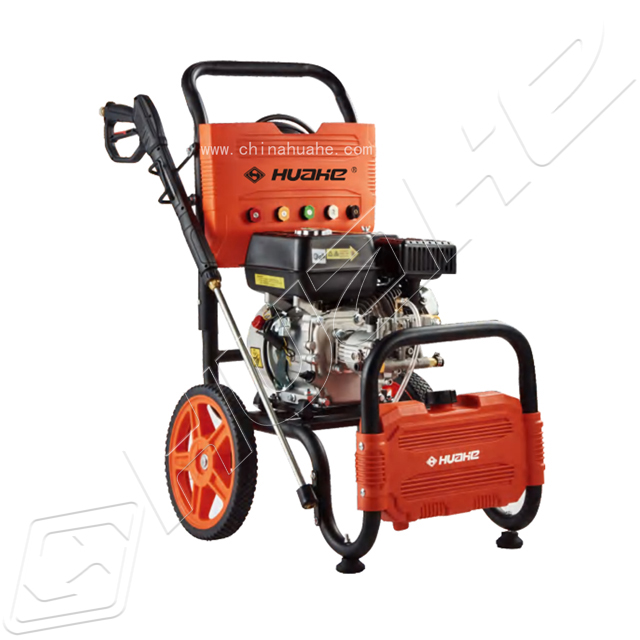
Gas units provide total mobility and excellent raw power. They break the cord, allowing you to move freely around job sites.
Best for: Mid-tier commercial cleaning, extensive fleet maintenance, and general outdoor concrete washing. They perform exceptionally well on residential siding and long driveways.
Limitations: They require a high maintenance footprint. You must handle oil changes, spark plugs, and carburetor care. They are strictly prohibited indoors due to lethal carbon monoxide risks. Their overall lifespan varies heavily based on engine quality.
These systems represent the apex of portable cleaning power. They utilize heavy-duty diesel engines or tractor Power Take-Off (PTO) shafts. They generate massive amounts of continuous torque.
Best for: Remote industrial sites, heavy agriculture, large-scale mining operations, and heavy machinery washing.
Advantages: They provide maximum available torque and exceptional mechanical longevity. They are highly capable of driving the highest-output triplex pumps for prolonged, continuous shifts.
Many buyers confuse standard commercial units with genuine industrial equipment. An industrial high pressure washer crosses a very specific engineering threshold. Standard commercial models generally handle 10 to 20 hours of use per week. True industrial units handle continuous daily runtimes of 6+ hours. They utilize oversized bearings, thicker brass manifolds, and reinforced chassis designs. Industrial users cannot afford unexpected equipment downtime during peak operations.
The connection method between the engine and the pump drastically affects machine longevity. You must choose between two primary architectures.
Direct-Drive: The pump mounts directly to the engine shaft. It spins at the exact same RPM as the engine (usually around 3400 RPM). This design is highly compact. However, it transfers motor heat and vibration directly to the pump. This excess heat rapidly reduces the lifespan of internal seals and bearings.
Belt-Drive: This design uses a dedicated pulley and belt system. The pulleys reduce the pump RPM down to around 1400 to 1700 RPM. This isolation prevents severe heat transfer and dramatically reduces vibration. A belt-drive system is an absolute non-negotiable requirement for heavy industrial use.
Sometimes, raw kinetic energy and cold water are simply not enough. When you face petrochemicals or heavy equipment sludge, you need thermal energy. Hot water integration adds a specialized burner coil system. The machine heats pressurized water to temperatures exceeding 200°F (93°C). Hot water immediately melts heavy grease and sticky oil. This thermal reaction cuts through molecular bonds, saving hours of strenuous manual labor. It also reduces your reliance on harsh chemical detergents.
You must scrutinize the raw materials used inside the machine. A reputable high pressure washer manufacturer relies on premium metallurgy. Look exclusively for forged brass manifolds. Brass resists cracking under extreme pressure fluctuations. Ensure the pump uses solid ceramic plungers, as they handle heat and friction perfectly. You should always look for built-in thermal relief valves. Avoid manufacturers heavily reliant on cheap aluminum or plastic internal housings. Plastic quickly warps under intense operational heat.
Even the strongest industrial equipment eventually requires maintenance. You must carefully assess the manufacturer's supply chain. Ask specific questions before purchasing. Can the manufacturer guarantee fast access to replacement seals? Do they stock unloader springs and ceramic check valves? If parts are unavailable, the machine becomes a useless "throwaway" design. Fast aftermarket support keeps your daily operations running smoothly.
Industrial cleaning involves extreme kinetic energy and pressurized water. Safety must remain your top priority. You must verify standard electrical and mechanical certifications. Look for UL, CSA, or CE safety marks on the spec sheet. Furthermore, check for OSHA-compliant safety features. The unit should include specialized rupture disks and automatic flow switches. These features protect operators from sudden, catastrophic pressure spikes.
Your operational needs will likely evolve over time. You need a partner, not just a vendor. A top-tier manufacturer should offer tailored solutions. They will provide custom trailer mounts for mobile fleets. They can adapt specific voltage requirements for unique factory grids. They also build automated stationary systems for dedicated wash bays. Avoid companies that only push off-the-shelf SKUs without understanding your specific industry workflow.
We must summarize a critical shift in operational perspective. You should stop seeing a pressure washer as just a basic tool. Instead, you must understand it as a highly critical engineered system. Proper pump mechanics, engine torque, and fluid dynamics determine your success on the job.
The right equipment choice expertly balances PSI and GPM for your specific daily tasks. Prioritizing robust pump quality ensures long-term operational reliability. You avoid massive headaches by selecting belt-driven triplex pumps for industrial workloads. Take action today by evaluating your current cleaning workflow. We highly recommend downloading a specialized equipment sizing guide. You can also request a comprehensive facility audit. For the best results, consult directly with a technical sales engineer to perfectly match a machine to your needs.
A: No. Excessively high PSI frequently causes permanent surface damage. It can easily strip paint, splinter wood, and gouge soft concrete. GPM is often much more important for overall cleaning speed. High GPM flushes debris away faster, improving your daily operational efficiency.
A: Wobble and axial cam pumps are entry-level components designed for light residential use. They have shorter lifespans and are rarely rebuildable. Triplex pumps use three ceramic plungers for smooth, heavy-duty operation. Triplex pumps represent the standard for industrial business use due to their extreme durability.
A: No. Doing this destroys the internal pump seals almost immediately. Cold water machines use standard rubber seals that melt under high temperatures. You must use a machine specifically engineered with heat-resistant components for hot thermal intake.
A: Industrial units require strict preventive maintenance schedules. You must perform regular pump oil changes, typically after the first 50 hours, then every 500 hours. You also need routine burner tune-ups, daily inlet filter checks, and regular inspection of hoses and unloader valves.
