
Please Choose Your Language


Views: 0 Author: Site Editor Publish Time: 2026-07-28 Origin: Site


The shift from manual scrubbing to mechanized cleaning completely transformed modern maintenance routines. However, choosing the wrong equipment carries heavy consequences. You risk severe surface damage, operational bottlenecks, and wasted capital. A high pressure washer is never a universal tool. Instead, its specific applications depend on a precise mathematical relationship between pressure (PSI) and water flow (GPM). If you misunderstand this critical balance, you will likely buy a machine unsuited for your actual needs. To avoid these costly mistakes, you must evaluate equipment based strictly on your operational requirements. This guide provides a clear framework to help you navigate residential, commercial, and industrial cleaning demands. We will explore exactly how to match machine specifications to your physical tasks. You will learn the stark difference between raw power and true cleaning efficiency. Let us dive into the core principles of mechanized surface cleaning.
A pressure washer’s true capability is measured by Cleaning Units (PSI x GPM), not just maximum pressure.
Application dictates the power source: electric units suit enclosed or light-duty spaces, while gas/diesel units handle heavy, continuous outdoor operations.
Selecting an industrial high pressure washer requires evaluating hot vs. cold water capabilities for specific contaminants like oil or grease.
Partnering with a reliable high pressure washer manufacturer ensures access to serviceable parts (like triplex pumps) rather than disposable hardware.
You cannot use the same equipment for washing a small patio and sanitizing a massive commercial fleet. Every cleaning task requires a specific amount of force and water volume. We categorize these tasks into three distinct tiers. Understanding these tiers helps you select the correct hardware for your specific environment.
Homeowners often need equipment for seasonal cleaning. Typical targets include family vehicles, vinyl siding, patio furniture, and wooden fencing. These surfaces require a gentle touch. Excessive force can strip automotive clear coats or gouge soft woods. Therefore, machines in this tier prioritize safety over brute strength.
When operating in this range, your decision lens must focus on convenience. Prioritize portability and low noise over continuous runtime. Residential users rarely operate their machines for more than an hour at a time. Compact designs allow for easy storage in crowded garages. Furthermore, lighter machines maneuver easily around tight suburban driveways. You do not need massive water output to wash away loose topsoil or light algae.
Property managers and serious DIY enthusiasts tackle much tougher challenges. Typical tasks include reviving stained driveways, washing concrete walkways, restoring brickwork, and cleaning multi-story home exteriors. Mud, embedded dirt, and stubborn mildew require a stronger approach. Equipment in this tier delivers noticeable stripping power.
For these applications, your decision lens shifts toward volume. You require higher GPM to push dislodged debris away quickly. A machine might break the dirt loose, but without enough water flow, the mud just settles back onto the concrete. This tier also necessitates durable wand extensions for reaching second-story gutters. Additionally, you will want surface cleaner attachments. These large, disc-shaped accessories hover over driveways, delivering uniform cleaning patterns while drastically reducing completion time.
Commercial enterprises face extreme sanitation demands. Daily tasks include fleet vehicle sanitization, municipal graffiti removal, heavy machinery degreasing, and agricultural facility sanitation. Time equals money in these scenarios. Operators need maximum efficiency to process large areas rapidly. Consumer-grade plastic components simply melt or shatter under these intense daily workloads.
Your decision lens here is absolute durability. This environment demands an industrial high pressure washer built for daily, multi-hour utilization. These robust machines often require specialized nozzles to strip away hardened industrial scale. Furthermore, many commercial operations require heated water capabilities to melt stubborn grease. When you tackle industrial grime, you need professional-grade power.
Navigating equipment specifications can confuse even experienced buyers. Manufacturers often highlight massive numbers on their packaging. However, true cleaning performance relies on a balance between two crucial metrics. You must understand how pressure and volume interact to form a complete cleaning solution.
Think of PSI as your stripping force. It defines the abrasive power of the water stream. This metric explains what type of physical bond the water can break. Low PSI removes loose dust. Medium PSI breaks down algae and mild stains. High PSI strips away hardened paint, chewing gum, and baked-on grease. If your PSI is too low for the task, the dirt simply will not detach. If it is too high, you risk destroying the underlying material.
GPM represents your rinsing volume. It measures the physical weight and flow of the water hitting the surface. GPM explains how fast the machine can clear the broken debris away. Imagine sweeping a floor. PSI represents the stiffness of your broom bristles. GPM represents the width of your broom head. A pressure washer utilizing high GPM drastically reduces the total time spent on large flatwork projects.
To evaluate equipment objectively, industry professionals use a standard metric called Cleaning Units (CU). You calculate this by multiplying the PSI by the GPM. This formula reveals the true working capacity of a machine. It prevents you from being distracted by a single inflated specification.
Machine Profile | PSI (Stripping Force) | GPM (Rinsing Volume) | Total Cleaning Units (CU) | Ideal Application Use Case |
|---|---|---|---|---|
Low Flow / High Force | 4,000 | 1.0 | 4,000 CU | Precision rust or paint removal on small, localized metal parts. |
Balanced Residential | 2,000 | 2.0 | 4,000 CU | General driveway cleaning and washing mud off family vehicles. |
High Flow Commercial | 3,000 | 4.0 | 12,000 CU | Rapidly cleaning massive commercial parking lots and walkways. |
You must apply a skeptical check when reading consumer-grade marketing materials. Many big-box retail brands artificially inflate their PSI numbers to attract buyers. They do this by restricting the water flow through a tiny nozzle. A 4,000 PSI machine pushing only 1 GPM will take hours to clean a standard driveway. We strongly advise focusing on higher GPM when you plan to tackle large flatwork areas.
Once you calculate your required Cleaning Units, you must select your power source and water temperature profile. These choices dictate where and how you can safely operate your equipment.
Your physical environment dictates your power source. Each option provides distinct advantages and strict limitations.
Electric Systems: These units produce zero emissions. They require significantly lower maintenance because they lack complex engines. Electric models remain ideal for indoor facilities, food processing plants, or noise-restricted neighborhoods. However, they face clear limitations. You are permanently bound by cord length and available electrical outlets. Furthermore, standard household voltages naturally cap the maximum PSI these machines can produce.
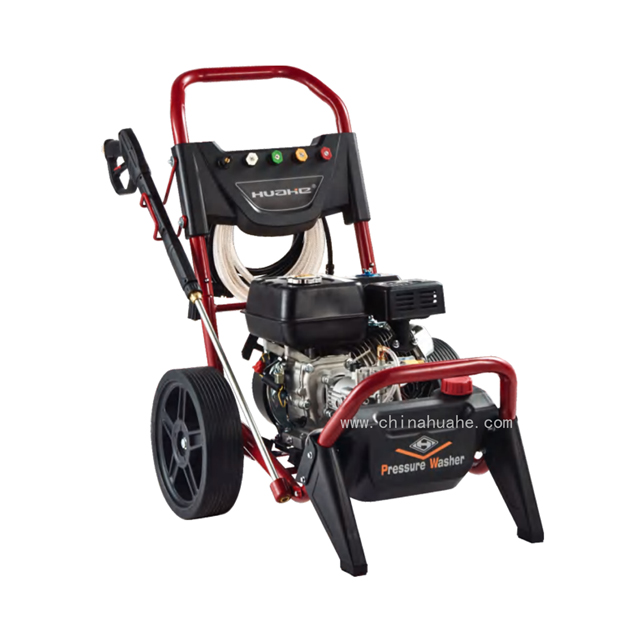
Gasoline and Diesel Systems: Engine-driven units provide ultimate mobility. They deliver superior PSI and GPM output. These robust machines are absolutely mandatory for large-scale outdoor environments. Landscapers, construction crews, and agricultural workers rely on them daily. You can roll them to remote corners of a property without worrying about extension cords.
Temperature impacts molecular bonds. Your choice between hot and cold water depends entirely on the chemical composition of your target grime.
Cold Water Systems: This remains the standard choice for mud, dust, and general surface preparation. Cold water easily breaks mechanical bonds. It washes away soil, strips old paint, and clears away organic algae buildup. For 80% of general cleaning tasks, cold water provides more than enough utility.
Hot Water Systems: Heat becomes essential for molecular breakdown. You must specify a hot water unit if your use case involves automotive grease, industrial oils, or sanitation. Cold water simply pushes oil around, creating a slippery mess. Hot water actively melts the grease, allowing the pressure to blast it away permanently. Facilities managing bacteria control or food waste absolutely require hot water capabilities.
Pressurized water acts like a liquid blade. Operating this equipment requires deep respect for safety protocols. Mismanagement leads to costly property damage, severe bodily injury, and hefty regulatory fines.
Inexperienced operators frequently destroy the very surfaces they intend to clean. Using a 0-degree red nozzle concentrates all the pressure into a pinpoint strike. If you direct this concentrated beam at soft woods like cedar decking, you will instantly carve deep grooves into the planks. Similarly, applying excessive PSI to aging brick mortar will blast the cement away. This causes irreversible structural damage. You must test your spray pattern on an inconspicuous area before tackling the main project.
Water under extreme pressure is inherently dangerous. High-pressure injection injuries rank as severe medical emergencies. If the water stream punctures your skin, it injects toxic debris and bacteria deep into your muscle tissue. This requires immediate surgical intervention. You must detail the necessity of proper Personal Protective Equipment (PPE). Always wear heavy-duty boots, shatter-proof safety goggles, and long pants. Furthermore, pulling the trigger generates sudden, forceful kickback. Maintain a wide, stable stance to prevent losing your balance on slippery surfaces.
Commercial operators face strict environmental oversight. When you wash a surface, the water carries away everything it removes. In commercial settings, EPA and local municipal regulations often dictate how wastewater must be managed. This becomes critical if the runoff contains engine oil, heavy metals, or chemical detergents. You cannot simply wash toxic sludge down a storm drain. Professional crews often utilize specialized vacuum booms to capture, filter, and reclaim their wastewater legally.
Procuring reliable equipment requires looking past the exterior paint job. You must analyze the internal components. A machine is only as durable as its weakest internal valve. Use this logic to evaluate potential vendors.
The pump serves as the beating heart of your machine. The industry generally utilizes two distinct pump architectures.
Axial Cam Pumps: You will find these in consumer-grade machines. They cost less to manufacture but offer a notoriously low lifespan. When an axial pump fails, you usually throw the entire machine away.
Triplex Plunger Pumps: These dominate the commercial sector. Triplex pumps run cooler, last thousands of hours, and are fully rebuildable. You must ensure your manufacturer uses triplex architecture for any industrial needs.
Pay close attention to the connection points. Cheap consumer models use proprietary plastic fittings. If these break, you cannot easily find replacements. Look for standardized, quick-connect brass or stainless steel fittings. Industry standards include M22 threaded connectors or 3/8" quick connects. Standardized metal fittings ensure you can easily attach aftermarket surface cleaners or replacement hoses.
A shiny warranty means nothing if you cannot source basic repair components. A reputable high pressure washer manufacturer provides highly transparent schematics. They ensure you can easily source replacement O-rings, check valves, and ceramic plungers. Furthermore, look for companies offering a comprehensive warranty on the pump and the engine independently. Dedicated support networks keep your machines running year after year.
The overall utility of mechanized cleaning equipment depends entirely on matching the machine's technical specifications to the physical demands of your specific job. Overbuying leads to wasted capital, while underbuying leads to frustrating operational bottlenecks. Before finalizing your procurement decision, follow these action-oriented next steps:
Audit your exact cleaning demands to calculate the required Cleaning Units (PSI x GPM).
Determine whether your typical contaminants require hot water melting capabilities or if cold water will suffice.
Assess your environmental constraints to choose between electric plug-in models or mobile gas engines.
Verify the pump architecture to ensure it meets your required lifespan expectations.
A: Yes, but you must select the right model. You can never use gas or diesel units indoors due to lethal carbon monoxide emission risks. For indoor applications, you must choose an electric model. Additionally, ensure your indoor facility has proper floor drainage to handle the water volume.
A: It depends on the grime. Choose cold water for standard dirt, mud, dust, and algae removal. You must select a hot water unit if you are cleaning automotive grease, industrial oil spills, or sanitizing areas requiring bacteria control. Heat melts grease; cold water just moves it.
A: Industrial machines utilize heavy-duty triplex plunger pumps designed for continuous, multi-hour runtime. They deliver significantly higher GPM for faster rinsing. Residential models use cheaper axial cam pumps, output lower GPM, and are engineered for occasional weekend use rather than daily commercial strain.
A: It certainly can if used improperly. Applying excessive PSI or using a concentrated 0-degree nozzle on uncured or aging concrete can blast away the top cream layer. This exposes the rough aggregate beneath. Always use a wide-fan nozzle or a dedicated surface cleaner attachment to protect concrete surfaces.
