
Please Choose Your Language


Views: 0 Author: Site Editor Publish Time: 2026-08-09 Origin: Site


Equipment downtime drains financial resources and stalls daily operations rapidly. This reality hits especially hard in commercial or heavy-use scenarios. Reliable performance remains mandatory for these demanding jobs. Dealing a malfunctioning machine kills team productivity. It also ruins your project margins. Our goal is to provide a clear, practical diagnostic framework. You will learn how to identify the actual root causes behind common equipment failures. We will help you figure out when to repair your machine versus when to replace it entirely.
It is true all high-pressure systems experience natural wear and tear. However, chronic breakdowns usually stem from persistent misapplication. Poor maintenance routines and low-grade components also cause frequent headaches. By understanding these mechanical fault lines, you can prevent minor glitches from turning into catastrophic failures. Ultimately, you will discover how to keep your equipment running longer. You will perform better and protect your bottom line against unnecessary service delays.
Pressure inconsistencies are most often caused by inlet water restriction, worn nozzles, or unloader valve failures.
Engine/Motor stalling frequently traces back to fuel degradation (gas) or voltage drops/capacitor faults (electric).
Pump failure (milky oil or severe leaking) is often the financial tipping point where replacement outweighs repair.
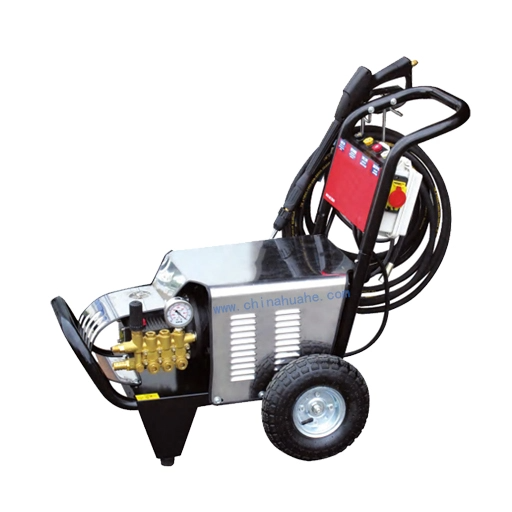
Upgrading to an industrial high pressure washer with a triplex plunger pump is usually the most cost-effective solution for users experiencing repeated axial cam pump failures.
Pumps require a steady, sufficient water supply to function correctly. Inadequate Gallons Per Minute (GPM) at the source starves the machine. Kinked inlet hoses also restrict this critical flow. When water starvation happens, the pump experiences cavitation. Vacuum forces create vapor bubbles in the incoming fluid.
These bubbles implode violently against the internal pump manifold. The resulting mechanical damage is severe. Cavitation causes deep pitting in brass or aluminum manifolds. It shreds internal water seals almost instantly. You must always verify your water source delivers higher GPM than your machine requires. Never run the unit using a crushed or collapsed garden hose.
The unloader valve regulates system pressure. It diverts water into a safe bypass loop when you release the trigger wand. If this valve sticks, you will encounter major operational problems. A stuck-closed valve creates massive pressure spikes upon trigger release. These spikes can easily burst hoses or damage the pump casing.
Conversely, a stuck-open valve means the system cannot build pressure when pulled. The internal O-rings wear out constantly due to friction. Internal tension springs also lose calibration over hundreds of cycles. Routine inspection of this valve prevents sudden pressure loss on the job site.
High-velocity water acts exactly like liquid sandpaper. Natural orifice wear happens silently over time. Even a slightly enlarged nozzle hole reduces your system PSI drastically. Furthermore, microscopic debris often bypasses the inlet filter. This debris easily clogs the tiny spray tips.
People often blame the pump for weak spray force. However, you should try a quick diagnostic check first. Swap your current tip for a brand-new one. This simple step isolates the issue away from the pump. If pressure returns immediately, the old nozzle was simply worn out or blocked.
Remove the current spray tip from the wand.
Inspect the small opening for trapped sand or rust particles.
Insert a brand-new tip of the exact same degree and orifice size.
Test the spray against a hard surface to verify pressure restoration.
Small gas engines suffer frequent downtime due to modern fuel blends. Ethanol-blended fuel degrades quickly in storage. Ethanol absorbs ambient moisture directly from the air. This chemical mixture turns into a gummy varnish inside the carburetor. Clogged carburetor jets prevent the engine from starting or running smoothly.
Spark plug fouling presents another common engine hurdle. Carbon buildup on the plug electrode stops the necessary spark. Additionally, restrictive air filters choke the engine. Dust and debris block crucial airflow, running the fuel mixture too rich. Regular fluid changes and filter replacements solve the majority of these stalling problems.
Operators often grab the nearest cheap extension cord for electric units. This represents a massive operational mistake. Thin-gauge extension cords cause excessive voltage drops over distance. When voltage drops, the motor pulls higher amps to compensate.
This excess heat melts the internal motor windings entirely. Start capacitors also fail frequently on electric models. A failing capacitor produces a loud humming sound. It will also trip your circuit breakers repeatedly. Follow these steps to diagnose electric faults safely:
Plug the machine directly into a wall outlet, bypassing all extension cords.
Check the main electrical panel for any tripped breakers.
Listen closely to the motor housing for a buzzing or humming noise upon startup.
If humming persists without motor rotation, schedule a capacitor replacement immediately.
Leaving a machine running in bypass mode is incredibly dangerous. Bypass mode occurs when the engine runs but the trigger remains un-pulled. Water loops endlessly inside the small bypass circuit. Mechanical friction heats this trapped water rapidly. Within just one or two minutes, internal temperatures soar past safe operating limits.
The thermal relief valve will activate and dump this scalding water onto the ground. This dumping action is a built-in safety mechanism. It protects the pump seals from melting completely. A dripping thermal relief valve is not necessarily a defect. Instead, it indicates improper operational habits. You must shut the engine off if you stop spraying for more than sixty seconds.
Pump crankcase oil should appear clear or slightly amber. If it looks like a milky substance, you have a critical failure. This milky appearance confirms severe water ingress into the pump crankcase. High-pressure water seals and internal oil seals have failed entirely.
This situation frames a major repair scenario. Water destroys the lubricating properties of the oil immediately. Internal bearings will overheat, score, and shatter. You must intervene the moment you spot milky fluid. Waiting will guarantee catastrophic pump destruction.
Use the diagnostic chart below to interpret common fluid leaks quickly:
Fluid Symptom | Probable Source | Required Action |
|---|---|---|
Water leaking from pump manifold base | Worn high-pressure or low-pressure water seals | Rebuild the manifold using a new seal kit. |
Clear oil leaking from crankcase bottom | Damaged crankcase oil seal or loose drain plug | Tighten fittings or replace the main oil seal. |
Milky oil visible in the sight glass | Catastrophic failure of both water and oil seals | Stop usage immediately. Rebuild or replace the pump entirely. |
Every operator faces a clear business problem eventually. You must decide when to sink money into repairs versus investing in new equipment. Creating a solid decision framework removes emotion from this choice. Look at the total repair bill objectively. This includes both replacement parts and expected labor costs.
We recommend following the 50% Rule strictly. If parts and labor exceed half the cost of a comparable new unit, replacement is generally advised. Sinking heavy funds into an old, fatigued frame rarely makes sense. You will likely face another unrelated component failure shortly after.
You must also evaluate downtime considerations carefully. Consumer-grade models often rely on proprietary parts. You might wait weeks for shipping. Commercial units typically utilize standardized, easily sourced components. Every day you wait for a proprietary part costs you money. Sometimes, buying a brand-new pressure washer gets you back to work faster and cheaper.
Understanding pump design helps you categorize solutions effectively. Consumer-grade axial cam pumps are inherently disposable. They have a very limited lifespan. Manufacturers design them for occasional weekend chores. In contrast, an industrial high pressure washer utilizes a triplex plunger pump. These pumps run cooler. They are fully rebuildable. Engineers design them specifically for continuous, daily duty.
Vetting a reputable supplier is equally crucial. Discuss warranty terms upfront. Ensure they offer transparent coverage without hidden loopholes. You need immediate parts availability to keep operations smooth. Robust engineering support also separates premium brands from budget importers. Always look for strict safety and compliance standards. UL or CE certifications prove the equipment meets rigorous testing criteria. Heavy-duty steel frame construction ensures the machine survives rough transport.
Matching machine features to your actual outcomes prevents operational failures. Specify the correct PSI and GPM ratio for your specific industry. Do not buy a machine underpowered for your daily tasks. Choosing the right power source upfront matters heavily. Gas provides mobility, while electric offers quiet, indoor-safe operation. Partnering with a proven high pressure washer manufacturer guarantees you get the exact specifications required for the job.
Routine fluid and filter maintenance prevents the vast majority of engine and pump faults.
Baseline build quality strictly dictates the ultimate lifespan of your equipment.
Upgrading to triplex plunger designs eliminates the headache of disposable axial cam failures.
Prioritize standardized parts and accessible engineering support to minimize expensive downtime.
Stop losing money on constant equipment repairs. Contact a technical sales representative today to evaluate your current breakdowns. Browse our extensive catalog of durable, commercial-grade machines. Find the exact equipment designed to eliminate your chronic downtime permanently.
A: Surging usually indicates inlet water starvation or a cycling unloader valve. Check your garden hose for kinks and ensure your water source provides enough GPM. If the water supply is adequate, your unloader valve might be stuck or failing. It rapidly bounces between high pressure and bypass modes, causing the engine to surge.
A: Residential axial cam pumps typically last between 100 and 300 hours of use before failing. They are generally not rebuildable. In stark contrast, industrial triplex plunger pumps easily surpass 2,000 hours of continuous use. You can also rebuild triplex pumps multiple times, extending their lifespan significantly.
A: Apply the 50% rule. If a new pump and labor cost more than half the price of a brand-new unit, buy the new machine. Bolt-on replacement pumps make sense for expensive commercial frames. However, for cheap residential models, full equipment upgrades are far more practical.
