
Please Choose Your Language


Views: 0 Author: Site Editor Publish Time: 2026-07-28 Origin: Site


Selecting the right equipment involves far more than simply buying the machine with the highest maximum pressure rating. Misaligning equipment capabilities with your actual cleaning volume or environment quickly leads to severe surface damage. It creates frustrating operational bottlenecks and wastes valuable capital. You must carefully evaluate your specific commercial or industrial environment before making a decision.
Whether you are scaling a massive commercial cleaning fleet, upgrading your facility maintenance tools, or tackling heavy-duty property upkeep, your choice matters. The decision hinges entirely on specific power, temperature, and durability frameworks. Choosing incorrectly costs you daily labor time and significantly reduces overall team productivity.
This comprehensive guide breaks down the core categories of heavy-duty cleaning equipment. We will explore critical evaluation metrics, power configurations, and real-world implementation challenges. You will learn exactly how to balance pressure and flow effectively. Ultimately, this framework helps you shortlist the exact pressure washer required for your daily operational success.
Power Source dictates mobility and scale: Electric models offer zero-emission indoor compliance, while gas/diesel models provide the raw power required for remote, continuous heavy-duty use.
Temperature solves specific chemical problems: Cold water moves dirt; hot water breaks down grease, oil, and industrial grime on a molecular level.
Flow rate (GPM) is often more critical than pressure (PSI): Higher GPM dictates how fast you can clean, driving labor efficiency in commercial applications.
Manufacturer support is a feature: When evaluating an industrial unit, local parts availability and pump architecture (Triplex vs. Axial) define your long-term investment.
You must determine your operational constraints before you ever look at machine specifications. You need to assess your access to grid power. Consider whether you will work primarily indoors or outdoors. You also need to meet strict local noise and emission compliance rules. Matching the machine's power source to these constraints prevents costly daily downtime.
Electric models excel in enclosed spaces and highly regulated environments. They represent the best choice for indoor use, food processing facilities, and stationary wash bays. We highly recommend them for any area requiring strict air quality controls.
You benefit heavily from zero exhaust emissions and a significantly lower decibel output. They also require vastly reduced maintenance since you never need to perform engine oil changes, replace spark plugs, or clean carburetors. You just plug them in and pull the trigger.
However, noticeable limitations exist. You remain permanently restricted by cord length and available facility voltage. A standard 120V outlet severely limits the motor's power output. If you want true industrial-grade performance from an electric unit, you need 230V or 460V dedicated infrastructure. Upgrading your building's electrical panel adds to your initial setup costs.
Always plug directly into a proper wall outlet.
Never use thin extension cords, as voltage drops will quickly burn out the electric motor.
Ensure your facility panel can handle the initial startup amperage spike.
Gas models provide incredible flexibility and raw stripping power. They remain ideal for property management, remote construction sites, and mobile auto detailing businesses.
You gain maximum portability and higher baseline Cleaning Units (CU). These machines operate completely independent of electrical grids. This makes them perfect for remote job sites where utility connections simply do not exist. You can mount them on trailers or roll them around expansive properties easily.
But you must manage specific operational drawbacks. They produce deadly carbon monoxide gas. Therefore, you must strictly limit them to outdoor use. They also generate much higher noise levels, often requiring operators to wear hearing protection. You must implement strict fuel management protocols, ensuring you use fresh gas and proper fuel stabilizers to keep the engines running smoothly.
Heavy industries require exceptionally robust solutions. Engineers design diesel and hydraulic units specifically for heavy agriculture, mining operations, and offshore marine environments.
You get maximum torque from these heavy-duty powerplants. They deliver unmatched longevity under continuous daily duty cycles. If your commercial crew runs equipment 40 hours a week in harsh weather, these units easily withstand the abuse. Hydraulic units often tap directly into the existing hydraulic systems of tractors or heavy machinery, eliminating the need for a standalone engine.
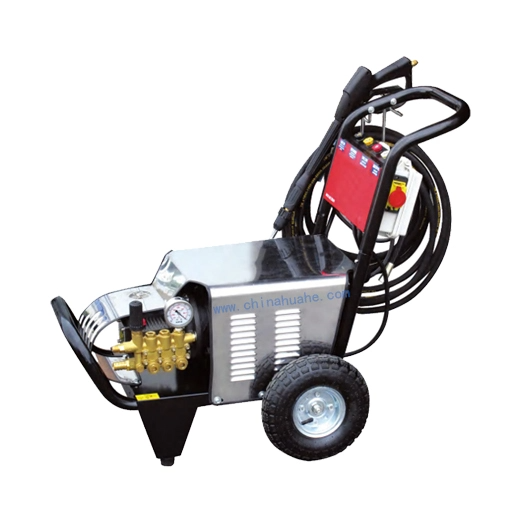
You must match your water temperature to the chemical composition of the substrate you need to remove. Different contaminants require completely different thermal approaches. We see many businesses fail because they try to wash heavy grease away using only cold water.
Cold water systems remain the most common and accessible choice for buyers. They excel at removing mud, loose peeling paint, sand, and atmospheric dirt. You will find them highly effective for general property maintenance, fleet rinsing, and sidewalk clearing.
They offer a much lower upfront cost compared to heated units. They weigh considerably less, making them easier for a single operator to load into a truck. They also feature mechanically simpler designs. This simplicity means fewer internal parts can break down over time.
However, they are highly ineffective against petrochemicals. You cannot easily remove heavy engine grease, hydraulic fluid, or cooking oil without heavy reliance on caustic detergents. Spending money on expensive chemicals quickly eats into your profit margins.
Hot water changes the entire cleaning dynamic. You absolutely need a hot high pressure washer for eradicating stubborn grease, caked-on oil, discarded chewing gum, and hazardous biohazards.
The mechanism relies on an internal burner coil. This heavy-duty coil uses diesel, kerosene, or natural gas to heat the pressurized water up to 200°F or more. Hot water physically breaks down the strong molecular bonds of oily grime, causing it to release from the concrete or metal surface immediately.
The evidence strongly supports upgrading to heated systems for commercial work. Hot water drastically reduces your need for harsh, expensive chemicals. Furthermore, it cuts manual labor time by up to 35% when dealing with oily residues. This massive boost in daily labor efficiency easily justifies the higher upfront capital expenditure.
Running the burner without adequate water flow, which warps the internal heating coils.
Failing to descale the heating coil annually, leading to severe blockages and pressure loss.
Using a hot water machine in poorly ventilated areas where burner exhaust fumes accumulate dangerously.
We must move beyond the basic marketing hype of "Max PSI." You need to balance pressure and flow properly to achieve actual onsite productivity.
PSI strictly defines your raw stripping power. A higher PSI forcefully breaks the stubborn bond between the contaminant and the underlying surface. You need high PSI to blast away hard mineral deposits or strip old paint from metal.
But you must watch out for a very common operator mistake. Excessive PSI easily damages soft wood decking, delicate masonry, and vehicle clear coats. You should only use the minimum PSI required to break the dirt bond, protecting the asset you are washing.
GPM defines your overall rinsing speed. Once your PSI breaks the dirt loose, a high GPM washes the broken debris away. High flow rates push heavy mud, thick sludge, and soapy foam across large concrete surfaces much faster. Most industry professionals consider GPM more important than PSI for daily efficiency.
You should use Cleaning Units (CU) as an objective performance metric. It allows you to compare overall machine productivity accurately across different brands. You simply multiply the PSI by the GPM to find the total CU.
Application Type | Recommended PSI | Recommended GPM | Total Cleaning Units (CU) | Primary Advantage |
|---|---|---|---|---|
Vehicle Fleet Washing | 2,000 | 4.0 | 8,000 | Fast rinsing speed prevents soap from drying on paint. |
Heavy Concrete Cleaning | 4,000 | 3.0 | 12,000 | Deep surface penetration easily removes tough stains. |
Agricultural Equipment | 3,000 | 5.0 | 15,000 | Massive water volume pushes thick mud away instantly. |
For commercial efficiency, always prioritize a higher GPM over extreme PSI. High flow drastically reduces the actual labor hours spent on a job. It allows your operators to cover large square footage quickly, moving on to the next profitable job faster.
You must use specific structural criteria when buying equipment for continuous daily use. Running a machine 40 or more hours a week demands entirely different internal components than intermittent residential use. You have to look deeply inside the machine.
The pump acts as the beating heart of your cleaning system. Its design dictates the entire lifespan of the machine.
Wobble/Axial Cam Pumps: You typically find these aluminum pumps in entry-level consumer units. They offer a very short operational lifespan of roughly 60 to 300 hours. They are usually non-rebuildable. Once the internal seals fail, you must throw the entire pump away and buy a new one.
Triplex Plunger Pumps: These represent the gold standard for commercial and industrial units. They feature heavy brass manifolds and thick ceramic plungers. These plungers run significantly cooler under heavy continuous loads. They reliably last thousands of hours. Furthermore, professional mechanics can fully rebuild them when seals eventually wear out, saving you from buying a brand new machine.
Your ongoing supplier relationship matters greatly. Finding a reliable high pressure washer manufacturer serves as a strong expertise and trust indicator. Do not just buy a piece of metal. You need to buy into a robust, responsive service network.
Evaluate manufacturers based on clear support criteria. Check the exact warranty terms covering the pump and the motor. Ask about the Service Level Agreement (SLA) on shipping replacement parts. Verify the availability of authorized local service centers in your region. A machine sitting idle while waiting weeks for a proprietary part actively costs your business money.
You face several severe operational risks when deploying heavy equipment in the field. You must train your crew to handle these challenges proactively to protect your investment.
Improper setup destroys expensive equipment faster than standard wear and tear. You must manage your water supply and your storage conditions meticulously.
Winterization: You must protect your equipment from freezing climates. Failure to properly flush the system will destroy internal components overnight. Ice expands inside the brass manifold, causing it to crack instantly. Follow these winterization steps:
Disconnect all high-pressure hoses, wands, and trigger guns from the main unit.
Attach a short garden hose adapter connected directly to a specialized pump antifreeze bottle.
Turn the machine on briefly to pull the antifreeze fluid entirely through the pump block.
Shut the engine off immediately once you see pure antifreeze exiting the discharge port.
Water Supply Limitations: You must always verify your source flow before starting the engine. Many high-end units require 4.0 or 5.0 GPM to operate safely. If you connect an industrial high pressure washer to a standard municipal spigot outputting only 2.5 GPM, disaster strikes rapidly. The pump will cavitate. It starves for water, creating tiny imploding bubbles that tear the brass internal components apart. Professional operators often mount large buffer tanks on their trucks to prevent this starvation.
You must prioritize operator safety above all else. Always acknowledge OSHA noise compliance rules. Gas and diesel models often run loud enough to require strict hearing protection. Provide your team with proper safety gear.
You must also highlight severe injection injury risks. Zero-degree nozzle tips combined with high PSI can easily inject contaminated water and harsh chemicals deep under the human skin. This creates a severe medical emergency that requires immediate surgery. Train your operators to respect the wand and never point it toward themselves or bystanders.
The right equipment transforms your daily operational efficiency. It directly aligns the power source with your work environment. It matches the water temperature perfectly with the specific type of grime you face. Most importantly, it ensures the internal components can easily survive your expected commercial duty cycles. A mismatched machine only causes team frustration and endless mechanical delays.
Take these action-oriented next steps before you finalize any equipment purchase:
Audit your current facility water supply flow rate using a simple five-gallon bucket test to ensure you can feed a larger machine.
Identify your most common cleaning obstacle, definitively categorizing it as either loose dirt or heavy molecular grease.
Evaluate your indoor versus outdoor usage percentages to finalize your electrical or gas power source requirements.
Request targeted manufacturer quotes based primarily on your required GPM rather than just chasing the highest maximum PSI available.
A: No. Doing so will quickly melt the internal rubber seals. It will permanently destroy a pump that is not specifically rated for high temperatures. You must only run cold water through these standard systems to maintain their structural integrity.
A: A direct-drive system connects the pump directly to the engine shaft, causing it to spin at high speeds and run hotter. A belt-drive system uses pulleys and heavy belts to absorb harsh engine vibration. It spins the pump much slower, which significantly extends the overall life of industrial pumps.
A: A range of 3,000 to 4,000 PSI serves as the commercial standard. Exceeding 4,000 PSI creates a very high risk of etching or permanently damaging the concrete surface. You should focus your budget on acquiring a machine with high GPM instead.
