
Please Choose Your Language


Views: 0 Author: Site Editor Publish Time: 2026-07-31 Origin: Site


Purchasing a pressure washer based solely on the highest pressure rating often seems like a smart investment. However, chasing maximum power frequently leads to buyer's remorse, unexpected property damage, or highly inefficient operations. Many consumers realize too late how overwhelming force is not always the best solution. At the decision stage, you must transition away from raw marketing numbers. Instead, you need to evaluate actual cleaning efficiency, machine durability, and application suitability. Ignoring these factors can ruin delicate surfaces or destroy the machine's internal components.
This article provides a definitive framework for matching pressure specifications to real-world cleaning demands. We will explore how to balance raw power against operational safety. You will learn how to decode technical metrics, categorize specific cleaning needs, and select the perfect machine for your unique environment. Understanding these dynamics ensures you choose equipment perfectly suited for your daily maintenance tasks.
PSI is only half the equation: Cleaning efficiency is dictated by Cleaning Units (CU), calculated by multiplying PSI (breakage force) by GPM (rinsing volume).
Match the machine to the material: Residential tasks rarely require more than 3,000 PSI; exceeding this on wood or siding guarantees surface damage.
Inlet flow dictates output: Your water supply’s GPM dictates your machine's capacity—buying a machine that outpaces your tap will destroy the pump.
Industrial use requires specialized sourcing: Continuous-duty operations require partnering with a dedicated manufacturer rather than buying big-box retail units.
Understanding equipment specifications requires looking beyond bold numbers on a retail box. Selecting the right pressure washer relies on grasping two fundamental metrics. These numbers interact directly to determine how fast and effectively you can finish a job.
Pounds per Square Inch (PSI) represents raw stripping force. This metric dictates the machine's ability to break the stubborn bond between dirt and your target surface. You need high PSI to dislodge chewing gum from concrete or strip loose paint from siding. However, breaking the bond is merely step one.
Gallons per Minute (GPM) measures the flow rate. GPM carries the broken debris away from the work area. A machine might possess immense stripping force, but lacking adequate water volume leaves debris lingering. You end up merely moving mud around rather than washing it away completely. High volume provides the necessary flushing action for efficient cleaning.
Industry professionals rely on Cleaning Units (CU) to measure true performance. You calculate CU by multiplying PSI by GPM. This formula reveals the actual working capacity of the machine. Let us compare two hypothetical models.
A machine rated at 2,000 PSI delivering 2.0 GPM generates 4,000 CU. Conversely, a unit pushing 3,000 PSI at only 1.1 GPM produces just 3,300 CU. Despite the second unit boasting higher pressure, the first unit cleans much faster. The higher flow rate rinses away dislodged dirt twice as fast. You spend less time hovering over the same spot.
Marketing departments love promoting maximum PSI because big numbers sell units easily. Consumers naturally associate higher pressure directly alongside better performance. This assumption creates a trap. Extremely high pressure paired alongside inadequate flow results in slow, streaky cleaning patterns. Users often complain about "tiger striping" on driveways. This happens when the narrow, high-pressure stream cuts through grime, but the machine lacks the water volume to feather out the edges smoothly.
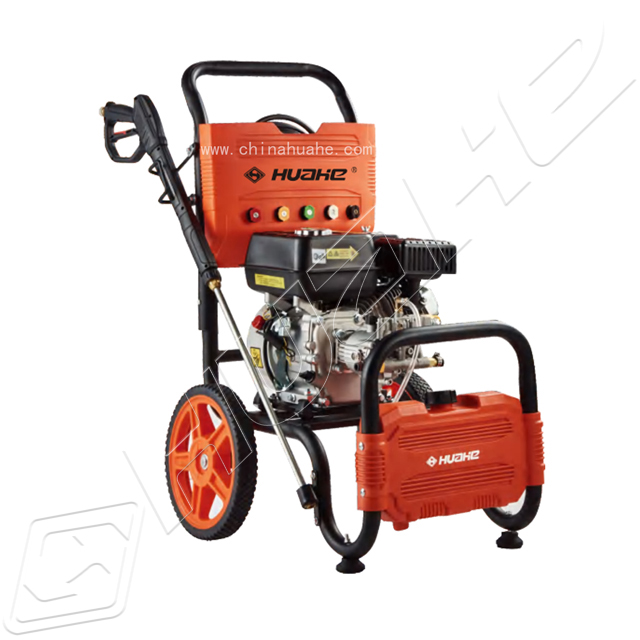
Matching your machine to your specific applications prevents both inadequate cleaning and accidental property damage. The industry generally divides equipment into three operational tiers. You must align your typical chores against these recognized thresholds.
Pressure Tier Applications Overview
Equipment Tier | PSI Range | GPM Range | Ideal Applications | Primary Limitations |
|---|---|---|---|---|
Light-Duty | 1,300 – 1,900 | 1.1 – 1.5 | Vehicles, screens, patio furniture | Ineffective on concrete or deep stains |
Medium-Duty | 2,000 – 2,800 | 2.0 – 2.5 | Fencing, decking, walkways | Can splinter softwood materials |
Heavy-Duty | 2,900 – 3,200 | 2.5+ | Driveways, brickwork, paint prep | Requires gas-powered engine |
Light-duty machines typically operate between 1,300 and 1,900 PSI. They generally deliver between 1.1 and 1.5 GPM. These units excel at delicate tasks around the home. You can safely wash vehicles, rinse patio furniture, and clean window screens. They also handle light mildew removal on outdoor plastics.
Their primary limitation lies in tackling porous materials. Light-duty units lack the necessary stripping force for concrete surfaces. They will fail to lift deep oil stains from garage floors. Using them for heavy tasks simply wastes time and electricity.
Medium-duty models bump the power up significantly. They range from 2,000 to 2,800 PSI. Flow rates usually sit between 2.0 and 2.5 GPM. These machines handle extensive residential maintenance beautifully. They clean wooden fencing, composite decking, standard vinyl siding, and residential walkways effortlessly.
However, this power introduces significant risk factors. You can easily splinter softwoods like cedar or pine. Using incorrect nozzles can force water behind vinyl siding panels. This moisture intrusion often leads to hidden mold growth inside wall cavities. Operators must exercise caution regarding nozzle selection.
Heavy-duty equipment operates between 2,900 and 3,200 PSI. They push 2.5 GPM or more. These robust machines tackle challenging surfaces. You need this tier for expansive concrete driveways, porous brickwork, and preparing surfaces prior to applying fresh paint.
Achieving this level of performance imposes specific hardware requirements. You typically must transition away from standard electric units. Standard household circuits cannot power motors large enough to generate high GPM at these pressures. Gas-powered engines become necessary to achieve the desired output flow reliably.
Commercial operations face entirely different challenges compared to residential chores. When equipment runs daily for hours on end, standard retail units quickly burn out. Scaling up requires specialized components designed specifically for punishing environments.
An industrial high pressure washer generally exceeds 3,500 PSI. Crucially, these machines offer massive water volume, pushing anywhere from 3.0 to over 8.0 GPM. This extreme output suits demanding commercial sectors. Typical applications include fleet vehicle washing, heavy construction equipment degreasing, municipal graffiti removal, and intensive agricultural sanitation.
Raw pressure alone rarely solves industrial grime. Heavy equipment often gets coated in thick layers of grease and hydraulic fluid. Cold water merely pushes grease around. Industrial tasks frequently require integrated hot water or steam systems. Hot water melts and emulsifies petrochemical bonds efficiently. This heat action reduces reliance on harsh chemical detergents, speeding up the workflow significantly.
Purchasing commercial equipment involves forming a long-term operational relationship. Finding a reputable high pressure washer manufacturer ensures your fleet stays operational year-round. You must evaluate several strict engineering criteria.
Pump Architecture: Industrial machines utilize triplex plunger pumps instead of cheap axial cam pumps. Triplex pumps feature ceramic plungers. They run cooler and last thousands of hours longer under continuous stress.
Serviceability: Commercial pumps must be rebuildable. A quality manufacturer ensures immediate availability for packing kits, check valves, and unloader assemblies.
Continuous-Duty Motors: The engine or electric motor must feature a continuous-duty rating. This guarantees the unit can run for eight hours daily without thermal degradation.
Compliance also plays a major role in commercial sourcing. Urban environments enforce strict noise ordinances. Fleet managers must verify decibel ratings. Furthermore, gas or diesel units must meet regional emissions standards. Many industrial sites also require seamless integration into wastewater reclamation systems to prevent chemical runoff.
Owning a powerful machine introduces new responsibilities. Misunderstanding fluid dynamics or material tolerances frequently results in catastrophic equipment failure or costly property damage. You must control the machine properly.
Many operators completely ignore their municipal water supply limits. The physics here remain absolute. A machine cannot output 4.0 GPM if the facility's spigot only supplies 2.5 GPM. The pump will attempt to draw water faster than the hose can provide.
This starvation creates a vacuum inside the pump manifold. Small vapor bubbles form and collapse violently. We call this phenomenon cavitation. Cavitation sounds like marbles rattling inside the pump head. It causes rapid pitting on internal brass components. Running a starved pump destroys the seals and valves in mere minutes. You must perform a bucket test to measure your tap's actual GPM output before turning the machine on.
Excessive force destroys building materials quickly. Users frequently overestimate the durability of common surfaces.
Concrete Etching: Using 3,500+ PSI combined alongside a tight 0-degree nozzle permanently etches concrete. It blasts away the smooth cream layer, exposing rough aggregate underneath.
Wood Fuzzing: Exceeding 1,500 PSI on wooden decks rips the soft fibers apart. This leaves a fuzzy, splintered texture requiring extensive sanding before restaining.
Voided Warranties: Blasting asphalt roof shingles removes essential UV-protective granules. High pressure on modern siding forces moisture behind weep holes. Both actions immediately void manufacturer warranties.
The machine rating only dictates maximum potential force. Your chosen nozzle dictates the actual applied force. Pressure is ultimately controlled right at the wand tip. A red 0-degree nozzle concentrates all energy into a pinpoint, maximizing destruction. A green 25-degree nozzle spreads that same energy out into a wide fan, dropping the impact pressure significantly. Mastering nozzle selection prevents accidental damage while maintaining high GPM flushing capability.
Navigating the equipment market requires a logical approach. Following a structured decision framework helps filter out inappropriate machines quickly. You want a tool matching your exact environment.
Step 1: Define primary and secondary use cases. Always buy a machine optimized for the tasks you perform 80% of the time. If you primarily wash cars weekly and only clean the driveway once yearly, buy a medium-duty unit. Do not buy an oversized machine just for a rare exception. Rent commercial units for those infrequent heavy tasks.
Step 2: Determine Power Source Limitations. Your physical location dictates engine choices. Standard electric units remain capped by 15 or 20-amp household circuits. This bottleneck limits them to roughly 2,000 PSI and 1.2 GPM. If your primary tasks demand heavier flow rates, you must transition into gas or diesel-powered territory.
Step 3: Evaluate Maintenance Requirements. Consider pump lifespan and seasonal upkeep. Axial pumps generally last around 100 hours and cannot be rebuilt easily. Triplex pumps last thousands of hours but require regular oil changes. You must also factor in fuel storage logistics and strict winterization protocols to prevent internal freezing.
Step 4: Sourcing Strategy. Match your purchasing channel to your utilization frequency. Big-box retail units work perfectly for casual weekend chores. However, daily commercial use requires direct-to-manufacturer purchasing. Specialized dealers offer priority service, technical support, and immediate parts availability.
Choosing the correct equipment involves far more than seeking the highest numbers on a spec sheet. The right machine perfectly balances adequate PSI for bond-breaking against sufficient GPM for flushing. This balance remains strictly constrained by the fragility of the surfaces you intend to clean. Overestimating your needs risks severe property damage, while underestimating them guarantees frustrating, lengthy chores.
Take the following actionable steps before making a final purchase:
Perform a simple timed bucket test on your outdoor spigot to determine your maximum available inlet GPM.
Audit your property to identify the most common surfaces you plan to clean regularly.
Calculate your ideal Cleaning Units (CU) target based on those frequent chores.
Consult with an equipment specialist to review specific product lines matching your calculated CU requirements and power constraints.
A: Yes. Excessive PSI can permanently etch concrete driveways, strip automotive clear coats, and force water deep into structural wall cavities. Matching the pressure specifically to the material's tolerance is essential for safe cleaning operations.
A: 3,000 PSI serves as the standard baseline for effectively cleaning concrete. You should ideally pair this pressure with a surface cleaner attachment and a flow rate of at least 2.5 GPM to prevent streaking and speed up the job.
A: Yes, but inlet volume (GPM) is far more critical than inlet pressure. Starving a pump of necessary water volume causes rapid cavitation. This internal vacuum effect leads to catastrophic pump failure in a very short time.
A: For general cleaning and rinsing tasks, higher GPM speeds up the job significantly. Higher PSI is only necessary for breaking stubborn, tightly bonded materials like peeling paint, thick chewing gum, or deep industrial oil stains.
