
Please Choose Your Language


Views: 0 Author: Site Editor Publish Time: 2026-07-29 Origin: Site


Purchasing a cleaning unit often traps buyers in a confusing numbers game. Artificially inflated pressure ratings frequently obscure actual cleaning efficiency and mask true machine longevity. Selecting the wrong equipment leads to severe, costly consequences. You might accidentally ruin delicate surfaces from excessive, unregulated pressure. Conversely, you could waste countless labor hours dealing with inadequate water flow on heavy-duty job sites. Premature equipment failure from mismatched pump grades is another frequent, frustrating nightmare for buyers.
Our goal is to provide a definitive, specification-driven framework for your buying journey. You will learn to evaluate machines based purely on real-world workloads, continuous operational demands, and verifiable performance metrics. By moving past standard marketing fluff, you can match specific commercial or residential tasks to the exact hardware required. This approach ensures you choose a durable machine built to last, saving you time and avoiding endless repair cycles.
True Cleaning Power: Rely on Cleaning Units (CU = PSI × GPM) rather than PSI alone to accurately gauge a machine's efficiency.
Pump Durability Dictates Lifespan: An axial pump is sufficient for weekend tasks, but a triplex pump is mandatory for rigorous, repairable, long-term use.
Application Determines the Build: Gas and electric units serve fundamentally different operational environments; upgrading to an industrial high pressure washer is dictated by weekly usage hours and grease-cutting requirements.
Vendor Reliability: Vetting the high pressure washer manufacturer for replacement part availability is just as critical as evaluating the machine's initial specs.
Many consumers fall into the PSI trap. Big-box retailers heavily market Pounds per Square Inch (PSI) as the ultimate indicator of power. Focusing solely on this metric presents a deeply flawed evaluation method. High pressure effectively breaks the stubborn bond between dirt and a surface. However, it does not actually wash the debris away. Think of PSI as a scraper. It loosens the material, but you still need a broom to clear the path.
This is where Gallons per Minute (GPM) steps in. GPM is the critical metric dictating your actual cleaning speed. It represents the volume of water flowing through the system. Higher GPM means faster debris removal. Plentiful water volume flushes away the loosened grime before it resettles. Upgrading your GPM directly translates to fewer labor hours spent on large flatwork projects like driveways or parking lots.
To accurately evaluate any pressure washer, industry professionals calculate Cleaning Units (CU). This simple formula reveals the true working capacity of a machine.
Formula: PSI × GPM = CU
Let us look at a practical baseline comparison. You might find a consumer unit rated at 3000 PSI delivering 1.0 GPM. This yields 3000 CU. Compare it to a commercial machine rated at 2000 PSI delivering 2.0 GPM. This yields 4000 CU. The second unit will clean significantly faster. Despite having a lower pressure rating, its superior water volume creates a higher overall cleaning efficiency. Prioritize CU over raw PSI every time.
Your primary operational environment dictates the ideal power source. Gas and electric units offer distinct advantages tailored to completely different applications.
Electric units excel in controlled, stationary environments. They are the best choice for indoor use, noise-restricted residential areas, and light-to-medium facility maintenance. Food processing plants and indoor automotive bays rely heavily on them.
Their pros include zero exhaust emissions and significantly lower daily maintenance. You never need to check oil levels or worry about stale fuel. They deliver a highly consistent power output at the press of a button. However, they carry distinct cons. Cord length heavily limits your mobility. Furthermore, standard 120V household outlets physically cap their maximum GPM capabilities. Achieving high flow requires expensive 230V or 460V three-phase wiring installations.
Gas-powered units dominate the rugged outdoor market. They are best for outdoor fleet washing, heavy construction equipment cleaning, and remote job sites lacking electrical infrastructure.
The primary advantage is total mobility. You can load one into a truck bed and clean anywhere. They also produce vastly higher CU output, tearing through heavy mud and oxidation. The main cons involve strict upkeep. Engines require ongoing maintenance. You must manage fuel storage, change spark plugs, and perform proper winterization to prevent carburetor damage. You absolutely cannot run them indoors due to deadly carbon monoxide output.
Power Source | Typical PSI Range | Ideal Environment | Core Advantage | Primary Limitation |
|---|---|---|---|---|
Electric (120V) | 1,000 - 2,000 | Indoors, Residential Patios | Zero Emissions, Quiet | Low GPM, Cord Restricted |
Electric (240V+) | 2,000 - 3,000 | Factories, Wash Bays | Continuous Run, Low Upkeep | Requires Special Wiring |
Gas Engine | 2,500 - 4,000+ | Construction Sites, Fleets | Total Mobility, High CU | Exhaust Fumes, Maintenance |
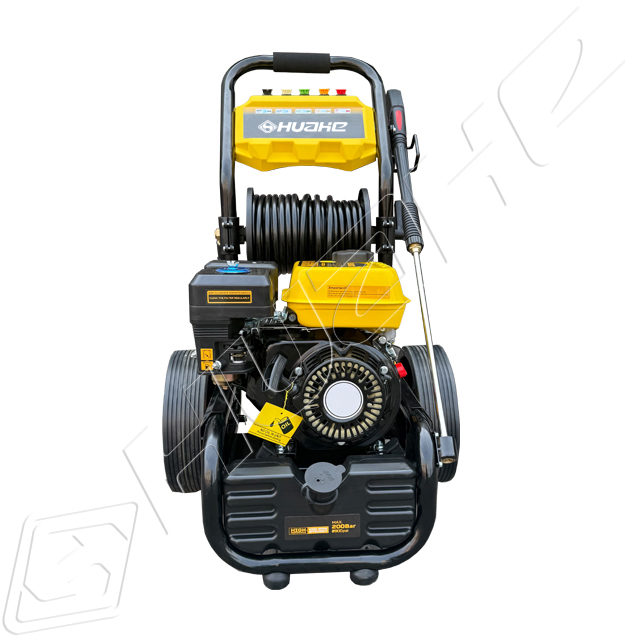
Many buyers struggle to differentiate between heavy-duty consumer units and true industrial equipment. Defining "industrial" grade comes down to duty cycle. Consumer-grade big-box store models target weekend warriors. They are built for seasonal, occasional use. True industrial machines handle daily, prolonged operation. If your team runs equipment for 20 or more hours a week, you absolutely need an industrial high pressure washer.
The type of debris you target determines water temperature requirements. Cold water units are cost-effective and lighter. They are ideal for blasting away dirt, caked mud, and flaking paint. Water impact handles these inert materials perfectly.
Conversely, hot water units act like a dishwasher. They are essential for emulsifying grease, oil, and complex petrochemicals. Cold water simply pushes oil around. Hot water breaks it down. However, upgrading to hot water drastically alters the machine's footprint. These units require a separate diesel-fired burner coil to heat the water. This adds significant weight, complexity, and fuel requirements to your daily operation.
Industrial builds feature distinct power plants. Look for commercial-grade engines like the Honda GX series, which feature cast-iron cylinder sleeves and low-oil shutdown sensors. For electric units, industrial standards demand low-RPM motors (typically 1750 RPM). Low RPM prevents the system from overheating during extended, all-day runs. High-speed consumer motors (3400 RPM) simply burn out under continuous daily stress.
The pump serves as the beating heart of your machine. The internal architecture of the water pump dictates whether a unit lasts one summer or ten years.
Manufacturers place wobble and axial cam pumps in residential and entry-level commercial units. They are compact and incredibly cheap to produce.
Lifespan: Generally rated for a mere 60 to 150 operational hours.
Serviceability: They operate as sealed units in an enclosed oil bath.
Reality: These are typically non-repairable. If the pump breaks, you throw the entire machine away and buy a new one.
You will find triplex plunger pumps standard on any high pressure washer designed for serious commercial or industrial deployment. They utilize three separate ceramic plungers running inside a brass manifold.
Lifespan: Designed to exceed 3,000+ hours of heavy use.
Serviceability: Completely rebuildable. Mechanics can easily access internal check valves, water seals, and ceramic plungers.
Reality: While expensive upfront, they represent a permanent, repairable asset for your business.
How the engine connects to the pump also matters. Direct drive systems connect the pump directly to the engine shaft. The pump spins at the exact same high speed as the engine (usually 3400 RPM). This transfers intense engine vibration directly into the pump housing, accelerating wear.
Belt drive systems utilize a pulley configuration. The belts absorb harsh engine vibration before it reaches the pump. Furthermore, the pulley ratio lowers the pump RPM to a cooler, slower pace (around 1400 RPM) while still delivering massive GPM. Belt drives drastically extend pump life in heavy-duty commercial applications.
A machine's spec sheet only tells half the story. The company standing behind the metal dictates your long-term success. Choosing a reputable high pressure washer manufacturer prevents downtime.
First, analyze component sourcing. Does the manufacturer build their own pumps, or do they assemble third-party parts? Transparency in component origin indicates higher trustworthiness. Top-tier manufacturers openly list the brands of their engines, pumps, and unloader valves. If a brand hides its pump origin under a generic label, you will likely struggle to find replacement parts later.
Next, evaluate parts availability and serviceability. A commercial machine is only as good as its maintenance network. Your crew cannot afford two weeks of downtime waiting for a proprietary gasket. Ensure the manufacturer provides easy access to rebuild kits, standard replacement hoses, and detailed technical schematics. You want a brand that uses universal fittings, not proprietary threads.
Finally, understand warranty realities. Always differentiate between the "engine warranty" and the "pump warranty." A reliable manufacturer offers distinct, transparent warranties for both the power plant and the water pump. Be wary of broad lifetime warranties hiding fine print that excludes "normal wear and tear" on essential pump seals.
Accessories dictate how effectively you transfer power from the pump to the dirty surface. Proper selection maximizes safety and labor efficiency.
Industry standards utilize a universal color system to designate spray angles. Using the wrong angle causes severe property damage.
Red (0°): Emits a pinpoint laser of water. It poses a high damage risk and can easily slice through skin or etch concrete. Use strictly for reaching high, distant spots.
Yellow (15°): Delivers a tight, scraping fan pattern. Excellent for stripping loose paint or tackling heavy mud on industrial tracks.
Green (25°): The standard workhorse. It offers a balanced fan pattern ideal for general washing on siding, brick, and trailers.
White (40°): Features a wide, gentle spray. Perfect for delicate surfaces like vehicle paint, windows, and soft woods.
Black (Soap): Features a large orifice designed specifically to drop system pressure. This triggers the downstream chemical injector for soap application.
Do not underestimate hose materials. Retail units ship with stiff, cheap PVC hoses. They kink constantly, retain memory coils, and burst under moderate site stress. Operational downtime follows rapidly. For commercial work, look for steel-braided rubber. Alternatively, modern polyurethane hoses offer extreme flexibility, non-marking covers, and high abrasion resistance.
Flatwork devours labor hours. Explaining this to your crew changes everything: pairing a high-GPM machine with a rotary surface cleaner reduces flat-surface cleaning time by up to 60%. These attachments hover over concrete, spinning twin nozzles at high speeds. They eliminate zebra-striping patterns caused by manual wand sweeping. This upgrade directly impacts your labor efficiency on every single driveway or warehouse floor.
Choosing the right machine requires a balanced approach rather than blindly chasing the highest pressure rating. You must carefully weigh the targeted surface material against your desired cleaning speed. Equally important is matching the pump and engine grade to your expected weekly usage hours. Industrial workloads demand industrial architecture.
Avoid over-indexing on raw pressure. For commercial and industrial applications, prioritize a high GPM output and a rebuildable triplex pump. Partner with a manufacturer sporting a proven track record of transparent parts availability. High flow rates and durable components clear job sites faster and stay out of the repair shop.
Your immediate next step is to conduct an equipment audit. Document your most frequent cleaning tasks, estimate the weekly labor hours dedicated to washing, and calculate your required Cleaning Units (CU). Armed with these exact metrics, you can confidently request quotes and finalize a purchase that accurately matches your operational reality.
A: The primary differences lie in the pump type, engine continuous-run ratings, and overall frame durability. Commercial units utilize rebuildable triplex pumps and heavy-duty cast-iron sleeve engines designed for all-day use. They are built to be repaired. Residential units use sealed axial pumps and lighter frames. They are generally built for seasonal weekend tasks and are often replaced rather than repaired.
A: Emphatically no. Running hot water through a cold-water pump will melt the internal seals and destroy the pump instantaneously. Hot water applications require specifically designed machines equipped with heat-resistant ceramic plungers and high-temp seals to survive the thermal stress.
A: No. High PSI without adequate GPM results in incredibly slow cleaning speeds. Furthermore, excessive pressure risks severe surface damage, such as etching soft concrete or splintering wood decks. Flow rate (GPM) is equally, if not more, important for efficiently rinsing away loosened debris.
A: Basic maintenance includes daily oil checks for both the engine and the pump. You must perform strict winterization using pump saver antifreeze to prevent internal cracking. Additionally, conduct routine visual inspections of the unloader valve, inline water filters, and the high-pressure hose for external wear or exposed steel braiding.
