
Please Choose Your Language


Views: 0 Author: Site Editor Publish Time: 2026-07-29 Origin: Site


Choosing the wrong cleaning equipment often turns a simple weekend project into a highly frustrating ordeal. Buyers frequently face a severe lack of power, which ultimately doubles their cleaning time. Conversely, purchasing an overpowered machine can easily damage delicate outdoor surfaces. There is no universal best choice on the market today. Your decision between electric and gas models relies entirely on matching true output against your application scale. You must also weigh your specific mobility needs against your personal tolerance for ongoing engine maintenance.
We aim to move buyers past flashy marketing claims and superficial product boxes. You will learn how to evaluate both power types based on raw performance metrics. We explore practical application limits, everyday usability, and vital long-term reliability factors. By the end of this comprehensive guide, you can confidently select a reliable pressure washer tailored to your exact property demands.
Electric Models: Best for light-to-medium residential tasks, vehicle detailing, and noise-restricted environments. They offer lower maintenance but are constrained by cord length and electrical output limits.
Gas Models: Essential for heavy-duty, commercial, and off-grid tasks. They deliver vastly superior flow rates (GPM) for faster cleaning but require strict engine maintenance protocols.
The Deciding Metric: Do not shop on PSI alone. Focus on Cleaning Units (CU = PSI x GPM). Gas units consistently achieve higher CU, driving faster job completion for large-scale projects.
Long-Term Reliability: Sourcing a gas or industrial electric unit from a reputable high pressure washer manufacturer ensures access to serviceable pumps (like triplex pumps), preventing the machine from becoming a disposable asset.
To make an informed purchasing decision, you must intimately understand the underlying performance metrics. Many consumers mistakenly fixate on a single number printed on the box. We evaluate any high pressure washer using two primary specifications: PSI and GPM. Understanding their relationship completely changes how you approach outdoor cleaning.
PSI (Pounds per Square Inch) represents the sheer stripping force. It determines how effectively the concentrated water stream breaks the stubborn bond between dirt and the surface. GPM (Gallons Per Minute) measures the actual rinsing speed. It dictates how quickly the machine washes the loosened debris away from your work area. A common industry mistake involves buying a machine boasting high PSI but delivering very low GPM. This mismatched combination cleans deeply but functions extremely slowly, dragging out driveway cleaning for hours.
Electric units face a rigid power bottleneck. Standard North American household electrical outlets deliver 15 amps at 120 volts. This electrical ceiling physically limits most electric motors. Due to this power cap, electric models typically max out around 1.2 to 2.0 GPM. Gas engines operate completely free from these household electrical restrictions. They easily push beyond 3.0 GPM, which drastically reduces your total job time on large surfaces.
You must also carefully consider the lifespan of the driving mechanism. Entry-level electric models almost exclusively use universal motors. These run very loud, generate excessive heat, and wear out rather quickly. Premium electric units feature induction motors. They run cooler, operate quieter, and last significantly longer under heavy loads. Gas machines utilize either residential-grade engines or robust commercial-grade powerplants. Commercial gas engines feature cast-iron cylinder sleeves and superior internal components. They offer vastly extended lifespans compared to cheaper entry-level alternatives.
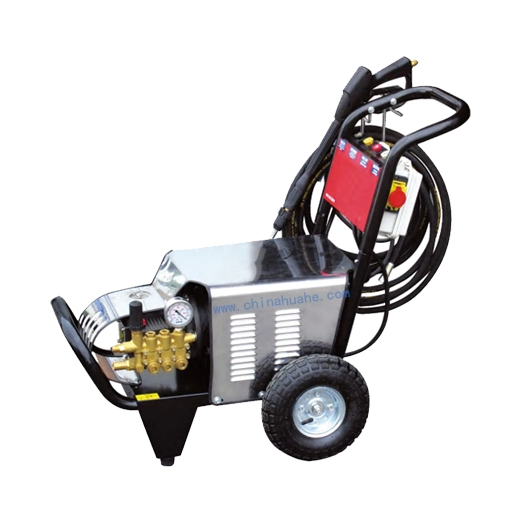
Electric units provide exceptional predictability for residential users. You simply plug them in, attach a garden hose, and start cleaning immediately. They eliminate the frustrating starting procedures often associated with small engines.
They offer significant core advantages for the average homeowner. Electric models produce absolutely zero exhaust emissions. You can safely operate them in semi-enclosed areas like open garages, covered patios, or ventilated warehouses. They generate minimal noise, keeping your neighbors happy during early morning cleaning sessions. You never have to pull a recoil cord to start them. They feature simple push-button operations. Furthermore, you completely avoid the hassle of winterizing complex fuel systems.
However, electric models carry strict operational limitations. You remain perpetually tethered to a power outlet. Using long extension cords causes severe electrical voltage drops. This hidden voltage drop can quickly burn out an electric motor. Most manufacturers will void your warranty if you use improper, thin-gauge extension cords. Electric models also produce fundamentally lower flow rates. Entry-level units frequently utilize non-serviceable axial cam or wobble pumps. When these cheap internal pumps fail, you usually must throw the entire machine away.
Best practices dictate keeping your high-pressure hose and electrical cord untangled to prevent tripping hazards. Always ensure your outlet features GFCI protection before connecting the machine.
Automotive detailing: The lower pressure significantly reduces the risk of expensive clear-coat paint damage.
Routine outdoor cleaning: They easily handle seasonal patio, vinyl siding, and outdoor furniture washing.
Compliance zones: They fit perfectly into strict facilities enforcing rigid noise or emission codes.
Gas-powered units are built specifically to handle serious cleaning demands. They scale effectively for demanding, multi-hour projects where speed remains crucial.
The primary advantage is total mobility. You operate completely untethered from electrical outlets. They deliver significantly higher GPM ratings. This raw water output allows rapid area coverage on massive jobs. Manufacturers deliberately mount these powerful engines on rugged steel frames. They easily withstand daily abuse on rough job sites and uneven terrain.
When you step up to an industrial high pressure washer, the performance gap widens dramatically. These commercial units utilize heavy-duty gas engines to drive robust triplex plunger pumps. Triplex pumps use solid ceramic plungers and thick brass manifolds. They enable continuous, all-day operation without overheating. A common mistake users make is leaving a gas machine running without pulling the trigger. Doing this for more than two minutes causes severe thermal shock to the pump. High-end machines include thermal relief valves to dump this boiling water, protecting the internal seals.
Despite their massive power, gas models present harsh implementation realities. They run extremely loud, requiring proper hearing protection. They feature heavy footprints, making them very difficult to lift into truck beds manually. Exhaust emissions strictly prohibit any indoor use. Furthermore, they demand absolute dedication to preventative engine maintenance.
Large-scale flatwork: They excel at cleaning vast concrete driveways, parking lots, and commercial fleet vehicles.
Heavy-duty stripping: They easily handle tough paint stripping and deep oil stain removal on masonry.
Remote job sites: They operate flawlessly in off-grid locations entirely lacking reliable electrical infrastructure.
Choosing the right model requires matching machine capabilities to your daily reality. We use a structured evaluation framework to simplify this complex process. You must critically assess your actual workload before looking at price tags.
Your primary household or commercial projects dictate your required performance tier. Buying below your required tier guarantees frustration.
Light-Duty Tasks (0-2000 PSI / <1.5 GPM): Choose electric models. They are highly ideal for washing cars, cleaning patio grills, and brightening small wooden decks.
Medium-Duty Tasks (2000-2800 PSI / 2.0-2.5 GPM): Choose premium electric or entry-level gas machines. They expertly tackle larger decks, second-story vinyl siding, and standard suburban driveways.
Heavy-Duty Tasks (2800-4000+ PSI / 3.0+ GPM): Choose gas models. They remain strictly mandatory for extensive concrete flatwork, commercial property maintenance, and washing heavy agricultural equipment.
Performance Tier | Power Source | Typical PSI Range | Typical GPM Range | Best Suited For |
|---|---|---|---|---|
Light-Duty | Electric | Under 2000 | 1.1 - 1.5 | Vehicles, grills, small patios |
Medium-Duty | Premium Electric / Small Gas | 2000 - 2800 | 2.0 - 2.5 | Fences, siding, standard driveways |
Heavy-Duty | Commercial Gas | 2800 - 4000+ | 3.0 - 4.0+ | Large flatwork, paint prep, fleets |
Evaluate your local operating environment carefully. Check local noise ordinances and Homeowner Association rules. Powerful gas engines might violate strict community noise restrictions. Examine the physical layout of your cleaning area. Measure the distance to the nearest electrical outlet. If you need total mobility across multi-acre properties, electric models inevitably fall short.
Consider the physical demands placed directly on the operator. Gas engines require manual pull-starting, which requires some shoulder strength. Operators must maneuver heavy steel-frame carts over uneven grass and gravel. Lightweight plastic electric units require much less physical strength. They roll easily and stow away on standard garage shelves.
Long-term reliability hinges heavily on pump quality and your personal maintenance dedication. Evaluating the strict upkeep requirements beforehand helps prevent premature equipment failure. Buyers who ignore maintenance schedules quickly destroy their investments.
Entry-level electric units typically feature very low upfront purchase prices. Unfortunately, they often become disposable household items. Their sealed wobble pumps generally cannot be repaired. Conversely, commercial gas units demand a much higher initial investment. However, they can easily last for several decades. You simply need to maintain the pump and the engine properly.
Gas machines inherently carry a heavy maintenance burden. Owners must perform regular oil changes on both the engine and the pump. You must routinely inspect and replace spark plugs and air filters. You have to add quality fuel stabilizers to prevent stale gas from gumming up internal lines. Ignoring annual carburetor cleanings often results in a machine that stubbornly refuses to start come springtime.
Winterization remains a critical reality for both power types. Water naturally expands when it freezes. Leaving residual water inside any pump will violently crack the internal brass or aluminum manifold. Both power types require running pump saver or marine antifreeze through the system before winter storage. Gas models require additional winterization specifically for their fuel systems. You must either drain the fuel tank completely dry or run stabilized fuel through the carburetor until the engine shuts off.
Serviceability remains the ultimate deciding factor for true longevity. You must verify the availability of replacement parts before finalizing any purchase. Sourcing your equipment directly from a reputable high pressure washer manufacturer ensures you can rebuild the pump later. It prevents a minor ten-dollar seal leak from ruining an expensive machine. By prioritizing serviceability, your equipment remains a valuable asset for years rather than ending up in a landfill.
Choosing between electric and gas models requires an honest assessment of your specific cleaning habits. Electric units clearly win on overall convenience. They offer incredibly low maintenance and quiet operation for the average suburban homeowner. Gas models remain entirely non-negotiable for sheer speed, raw power, and demanding commercial-grade tasks.
Your next step involves calculating your required Cleaning Units. You multiply your target PSI by your desired GPM to find the machine's true capability. Audit your available garage storage space carefully. Assess your personal capacity to handle routine engine maintenance. We strongly recommend shortlisting two or three models featuring highly serviceable pumps. Look for robust induction motors on electric units. Seek out durable triplex pumps on gas models. Making an informed, metric-driven choice ensures you spend less time scrubbing and much more time enjoying your pristine property.
A: Yes, provided you use a wider degree nozzle (like a 40-degree tip), stand at a safe distance, and keep the engine RPMs manageable. However, an electric unit is generally much safer and highly preferred for automotive detailing. It drastically reduces the risk of accidental paint damage.
A: Entry-level models featuring universal motors can certainly overheat if run continuously for hours. Premium electric models featuring induction motors are specifically designed to handle longer, more demanding cleaning sessions without suffering thermal failure.
A: Pressure loss in gas units is often tied directly to cavitation caused by an inadequate water supply. It can also stem from a worn unloader valve or degraded internal pump seals. Unlike cheap electric models, high-end gas pumps can usually be rebuilt easily.
A: It is only worth it if your property demands frequent, massive-scale cleaning. Examples include long concrete driveways or large agricultural properties. For a standard suburban home, the high upfront costs and rigorous maintenance schedules far outweigh the benefits.
