
Please Choose Your Language


Views: 0 Author: Site Editor Publish Time: 2026-08-04 Origin: Site


Investing in a new cleaning system often brings a major hesitation for facility managers and homeowners alike. They worry a powerful spray might cause expensive property damage instead of simply removing dirt. We understand this fear completely. Repairing etched concrete or shredded siding ruins your maintenance budget quickly. Surface damage rarely happens because the equipment itself is inherently flawed. Instead, it usually stems from a dangerous mismatch. You cannot blame the tool when improper pressure levels hit delicate surfaces. Operators often select the wrong nozzle or misjudge a material's natural tolerance. Preventing structural harm requires looking closely at equipment beyond raw cleaning power. You must focus on adjustable features and proper accessories. By sourcing from a reputable builder who prioritizes safety, you ensure your cleaning tasks remain effective. You can protect your property while achieving professional results every single time.
Material Limitations: Porous and fragile materials (e.g., asphalt shingles, aging masonry, painted wood) are highly susceptible to irreversible etching and water intrusion.
PSI vs. GPM: High pressure (PSI) strips away grime, but excessive PSI causes damage; high flow (GPM) is often a safer variable to increase for faster cleaning on sensitive surfaces.
Equipment Evaluation: Commercial and industrial applications require machines with variable pressure controls and a full suite of precision nozzles.
Vendor Trust: Choosing a verified high pressure washer manufacturer ensures access to compliant, tested equipment with reliable unloader valves and safety mechanisms.
How does water break solid concrete? We must examine the actual physics of kinetic energy. A high pressure washer forces water through a tiny restrictor nozzle. This restriction creates intense fluid velocity. When this concentrated stream hits a surface, it transfers massive kinetic energy. If this energy exceeds the structural integrity of the target material, permanent damage occurs instantly.
This physical process causes severe pitting in soft stone. It causes deep splintering in wooden decks. It leads to rapid mortar degradation in older brick walls. You essentially blast away the protective top layer of the material. Professionals always test a small, hidden corner first. They assess material integrity before applying full power.
Surface erosion represents only one part of the problem. High pressure easily forces water behind protective building barriers. Water blasts behind vinyl siding sections. It penetrates compromised window seals. It creeps beneath overlapping roofing tiles. Once water breaches these exterior defenses, unseen problems multiply rapidly. You risk hidden mold growth inside your wall cavities. Structural rot weakens wooden framing over several months. You might not notice the resulting damage until costly repairs become necessary.
We must also discuss the zero-degree nozzle threat. The industry commonly calls this the red tip. It acts exactly like a water scalpel. It concentrates all cleaning power into a single pinpoint stream. Operators use it for extreme spot cleaning on heavy machinery. However, it causes the vast majority of accidental property damage. It can easily slice through rubber tires or heavy work boots. You should never use a zero-degree nozzle on standard residential or commercial building surfaces.
Many common building materials cannot survive intense cleaning methods. You must identify these vulnerable areas before starting any machine. Applying raw power to the wrong surface guarantees failure. Here are five surfaces you should carefully protect.
Asphalt Shingles & Roofing: High pressure strips away protective UV granules instantly. These granules keep the shingles waterproof and sun-resistant. Removing them drastically reduces your roof lifespan. It will also void most manufacturer warranties. You must use specialized chemical treatments instead.
Historical Masonry & Brick: Old mortar becomes highly brittle over decades. Intense water streams blow out old mortar entirely. This process is called spalling. It leaves bricks loose and structurally unstable. You will face expensive repointing costs to fix the wall.
Painted Wood & Lead Paint: Extreme force gouges soft wood fibers easily. It creates deep, irreparable splinters. The wood surface becomes fuzzy and ruins future stain applications. Furthermore, intense washing easily strips old paint. If your home has lead paint, blasting it creates hazardous toxic paint chips. Avoid intense washing unless you intentionally want to strip the wood bare.
A/C Units & Heat Pumps: HVAC units feature delicate aluminum cooling fins along their exterior. These fragile fins bend or crush under minimal physical force. Flattened fins destroy airflow immediately. This ruins your system efficiency and causes internal overheating.
Window Seals & Glass: High pressure shatters glass panes easily. It also breaks the airtight seals found inside double-pane windows. Double-pane windows rely on trapped argon gas for insulation. Broken seals let this gas escape and let moisture inside. This causes permanent window fogginess and ruined climate control.
Operators must adapt their cleaning methods for fragile materials. You cannot treat every surface like industrial concrete. We rely on two primary techniques in the field. Understanding the difference prevents catastrophic accidents.
Soft washing uses chemical detergents alongside low-pressure delivery systems. Operators typically keep output under 500 PSI. The cleaning chemicals do the actual hard work. They kill algae, destroy mold spores, and break down heavy dirt. The water simply rinses the debris away gently. This requires patience and proper chemical dwell time.
Knowing when to use which method remains crucial. A standard pressure washer handles hard washing exceptionally well. You apply hard washing to durable metal gratings. You use it on exposed aggregate and thick warehouse floors. Soft washing suits fragile environments perfectly. You must use it on vinyl siding and decorative stucco. It remains the only safe option for roofing and delicate stonework.
Surface Type | Recommended Method | Maximum Safe PSI | Key Considerations |
|---|---|---|---|
Standard Concrete | Hard Washing | 3,000 - 4,000 PSI | Keep nozzle moving to avoid localized etching. |
Vinyl Siding | Soft Washing | 500 - 1,500 PSI | Use downstream chemical injectors. Avoid spraying upward into overlapping panels. |
Asphalt Roofs | Chemical Treatment Only | Under 100 PSI | Never apply pressurized water. Rely entirely on specific roof-cleaning soaps. |
Wood Decking | Moderate Washing | 1,000 - 1,500 PSI | Follow the wood grain. Keep a 40-degree tip at least 12 inches away. |
You need a machine capable of handling both extremes safely. Seamless transition between high-pressure blasting and low-pressure chemical injection saves operational time. Good equipment features dedicated downstream chemical injectors. They allow you to apply soap safely. You avoid running corrosive chemicals directly through the internal pump.
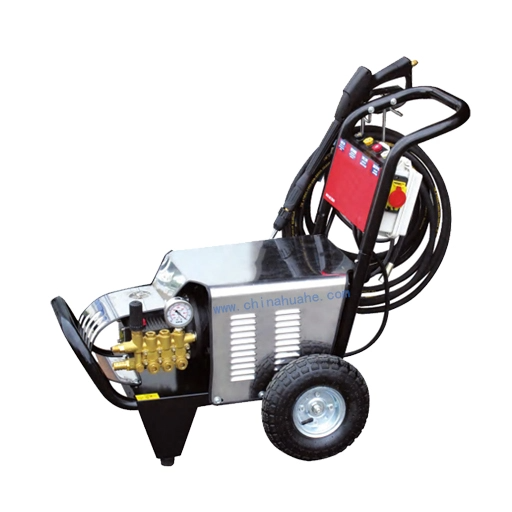
Commercial tasks require serious, adaptable equipment. You must look past flashy marketing metrics on the box. Buyers often focus entirely on maximum PSI ratings. This narrow approach leads to damaged property and broken equipment. Let us examine the true markers of a reliable industrial high pressure washer.
Adjustable Unloader Valves: Commercial operations demand flexibility. An unloader valve routes water into a safe bypass loop. This allows the operator to dial down the PSI manually. You can clean sensitive tasks without changing machines. Buyers routinely purchase machines lacking unloader valves. This limits operational safety severely.
GPM (Gallons Per Minute) Prioritization: Flow rate dictates your cleaning speed. High GPM provides massive flushing power. For heavy-duty cleaning without damaging surfaces, GPM matters more than extreme PSI. It washes lifted debris away much faster safely.
Hot Water vs. Cold Water Capabilities: Cold water brute force requires dangerous pressure to remove stubborn oil. Hot water melts grease away effortlessly by breaking molecular bonds. You can use lower, safer pressures while achieving superior results on factory floors.
Build Quality & Fail-Safes: Machine malfunction causes sudden pressure spikes. Unpredictable spikes cause severe accidents. Look for high-grade ceramic plungers. They resist friction wear and tear better than metal. Thermal relief valves represent another critical fail-safe. They dump overheated water automatically before it destroys the internal pump seals.
Where you buy your equipment matters immensely. The market floods unwary buyers with cheap, disposable machines. These lower-tier units often lack basic safety regulations and rigorous quality control. You must partner with a verified high pressure washer manufacturer. This relationship ensures access to compliant, reliable equipment.
Reputable builders do not guess their technical specifications. They pressure-test pumps rigorously in controlled environments. They calibrate internal gauges precisely before shipping. This ensures the advertised PSI matches reality exactly. Accurate output prevents accidental damage from hidden pressure surges. Big-box store machines often advertise peak burst PSI rather than true working pressure.
Reliable vendors adhere to strict industrial safety compliances. They hold CE or ISO certifications proudly. They provide clear, transparent warranties covering internal components. These official documents protect your financial investment long-term.
User error causes most property damage incidents. A good manufacturer provides extensive training documentation. They explain nozzle selection and safe PSI adjustments clearly. They share operational best practices openly. This continuous education minimizes dangerous operator mistakes in the field.
Pumps require regular maintenance routines. Unloader valves wear out eventually. Spray tips lose their sharp edge over time. You must source OEM replacement parts easily. A strong manufacturer support network keeps your operations safe and running smoothly for years. It eliminates the need for unsafe aftermarket modifications.
A powerful cleaning machine absolutely can damage surfaces if deployed recklessly. However, operators fully mitigate this risk through proper material assessment. Smart equipment selection prevents accidents entirely. You must match your tools to your specific environment.
Buyers must move away from bad purchasing habits. Do not adopt the highest-PSI-for-the-lowest-price mindset. You should evaluate machines based on adjustability instead. Focus heavily on GPM ratings, unloader valves, and internal build quality.
Protect your property starting today. Consult a specialized equipment provider immediately. Ask them to spec a machine tailored exactly to your facility. Address your specific operational risks before making any purchase.
A: Generally, 1,200 to 1,500 PSI is the maximum safe limit for vinyl or wood siding. Use a 40-degree nozzle and rely on detergents rather than pressure.
A: Yes. While concrete is durable, using a zero-degree nozzle or exceeding 3,000 PSI too close to the surface can cause permanent "etching" or pitting, especially on concrete less than a year old.
A: Pressure can be reduced by swapping to a wider-angle nozzle (like 40 degrees), increasing your physical distance from the surface, or adjusting the unloader valve if your machine is equipped with one.
A: Yes, for commercial and industrial users. Buying a versatile industrial high pressure washer and using variable controls or wider nozzles offers flexibility for both heavy-duty concrete cleaning and delicate surface washing.
