
Please Choose Your Language


Views: 0 Author: Site Editor Publish Time: 2026-08-27 Origin: Site


Procuring a fleet of cleaning equipment at scale magnifies both operational efficiency and capital risk. Buying the wrong units creates compounded downtime across your entire operation. It also voids warranties and inflates maintenance bills unexpectedly. Procurement teams face a difficult challenge when evaluating overseas suppliers. A mismatched specification or an unreliable partner disrupts multi-shift operations immediately. You need an objective framework to assess these risks. We provide this exact framework for buyers navigating complex global supply chains. This guide helps fleet managers and distributors evaluate technical specifications thoroughly. You will learn how to verify manufacturer reliability before issuing a bulk purchase order. We examine critical factors like pump architecture, thermal configurations, and compliance standards in detail. This ensures your investment yields long-term performance instead of endless, costly repair cycles.
Spec-to-Task Alignment: Base procurement decisions on Cleaning Units (PSI x GPM) and expected daily duty cycles, not just peak pressure claims.
Supplier Transparency: A credible high pressure washer manufacturer must provide clear documentation on pump sourcing (e.g., Triplex vs. Axial) and engine OEM partnerships.
TCO Over Unit Price: Bulk viability depends heavily on the standardization of wear parts, warranty terms for commercial use, and compliance certifications (UL/CE/OSHA).
Pilot Testing: Always mandate a single-unit operational test in actual site conditions before finalizing a bulk contract.
Performance claims often mislead buyers on standard spec sheets. You must deconstruct these metrics to find the true cleaning capability of any machine. Evaluate the delicate balance between PSI and GPM. PSI dictates the stripping force of the water stream. It determines how well water cuts through embedded grime or rust. GPM represents the flushing speed of the machine. It decides how fast debris washes away from the work area. Multiply these two numbers to find the Cleaning Units (CU). This metric offers a highly realistic view of machine performance. Match the expected CU directly to your specific site requirements.
A standard pressure washer might deliver 3000 PSI at 2.5 GPM, yielding 7500 CU. Heavy-duty tasks often demand 10,000 CU or more to remain efficient. Do not buy high-PSI units if your operators mainly flush large volumes of loose mud. High GPM serves mud removal much better than high PSI.
Duty cycle requirements dictate the ultimate survival of your fleet. You must differentiate between intermittent-use consumer models and continuous-duty machines. An industrial high pressure washer requires a true 100% duty cycle rating. Multi-shift operations destroy consumer-grade units in mere weeks. You need equipment built for endless hours of operation under severe stress.
Pump architecture determines the lifespan of your entire fleet. Mandate commercial-grade Triplex plunger pumps for all bulk orders. These pumps utilize dense ceramic pistons to handle extreme heat and friction. They allow for easy rebuilding and simple field maintenance. Avoid sealed axial cam pumps entirely for commercial applications. Mechanics cannot rebuild axial pumps easily. A single internal failure requires replacing the entire pump mechanism.
Frame and build quality matter just as much as the engine block. Assess weld integrity closely. Inspect vibration isolation mounts on every model. These thick rubber mounts protect the engine and pump from shaking themselves apart. Evaluate material thickness carefully. Aircraft-grade aluminum resists chemical corrosion and reduces overall fleet weight. Powder-coated steel offers high physical durability but risks rusting if job site debris scratches the coating. Ensure the chassis build matches your expected fleet longevity.
Calculate Cleaning Units (PSI x GPM) for every model under consideration.
Verify a 100% duty cycle for continuous industrial shift use.
Specify Triplex plunger pumps over sealed axial cam pumps.
Check rubber vibration isolation mounts on the main chassis.
Matching powertrains to job sites prevents costly operational bottlenecks. Electric motors and internal combustion engines serve very different commercial environments. Choosing incorrectly renders the equipment unusable.
Electric powertrains excel indoors. They create zero harmful exhaust emissions. They operate at significantly lower noise levels. Food processing plants, indoor automotive bays, and warehouses demand electric units. However, you must perform phase and voltage compatibility checks immediately. Industrial facilities usually require three-phase power for large electric motors. Plugging a commercial electric unit into a standard wall outlet causes immediate breaker failure. Always verify NEMA plug configurations before ordering.
Gas and diesel powertrains offer unmatched job site portability. They dominate remote construction sites, agricultural facilities, and municipal cleaning tasks. Evaluate engine displacement carefully to ensure adequate torque. Check the fuel tank capacity on every unit. Larger tanks provide prolonged runtime between refills. This prevents constant labor interruptions during massive cleaning jobs. Diesel engines produce higher low-end torque, pushing larger pumps with less strain compared to gas engines.
Cold and hot water capabilities dictate your daily cleaning efficiency. Identify your target applications early in the procurement cycle. Do your operators clean oil, heavy grease, or sanitized environments? Cold water units handle dirt, mud, and loose paint perfectly. They cost less upfront and require much simpler maintenance routines.
Hot water units behave entirely differently. They introduce complex boiler maintenance to your schedule. You must manage a secondary burner fuel source like kerosene or diesel. However, hot water drastically reduces expensive chemical costs. It melts grease on contact. This saves countless hours of labor time on heavy industrial sites.
Use the selection matrix below to align your drive and thermal choices:
Configuration Type | Best Use Cases | Primary Advantage | Main Drawback |
|---|---|---|---|
Electric Drive | Indoors, Food Prep, Warehouses | Zero emissions, very quiet | Requires specific electrical phases |
Gas/Diesel Drive | Construction, Agriculture, Roads | Extreme portability anywhere | Exhaust emissions, loud operation |
Cold Water Systems | Mud, Dirt, Paint Prep, Siding | Low maintenance complexity | Struggles heavily with grease |
Hot Water Systems | Grease, Oil, Fleet Sanitization | Fastest grease removal possible | Requires burner fuel and boiler upkeep |
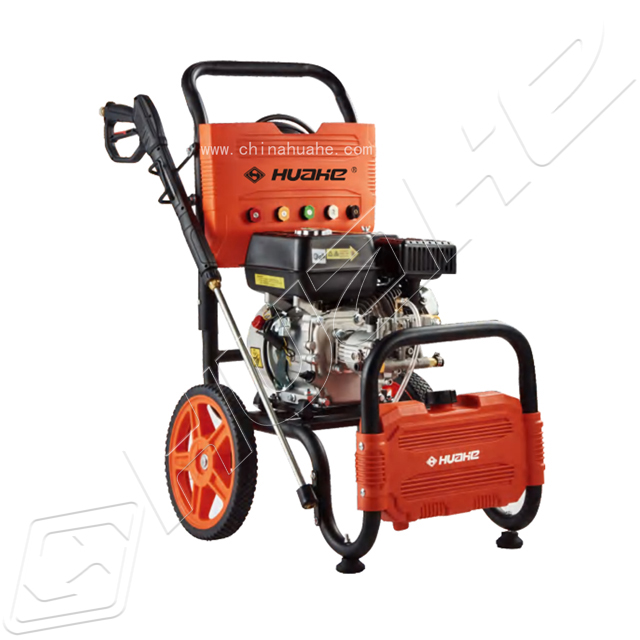
Supply chain transparency protects your massive capital investment. Demand component-level visibility from your potential suppliers. A reliable high pressure washer manufacturer openly discloses the origin of all crucial components. Ask exactly where they source their engines. Look for reputable global partnerships like Honda, Vanguard, or Kohler. Verify the pump origins next. Brands like AR, General Pump, or Cat Pumps indicate high commercial quality. A manufacturer hiding component origins often uses unbranded, untestable parts.
Production capacity and quality control require strict verification. Check the manufacturer's ISO certifications directly. Ask about their factory end-of-line testing protocols. Excellent factories conduct live water testing on every single unit before boxing. Ask to see their test bench procedures. Ensure they can scale up production without diluting build quality. A small sample batch might pass inspection flawlessly. A massive bulk order tests their true operational capacity and consistency.
Assess their customization capabilities early in negotiations. Bulk orders often require highly specific modifications. Will they adjust standard standard models for you? You might need custom non-marking hose lengths for unique sites. Specific flow-actuated unloader valves might suit your operators better than trapped-pressure valves. Custom branded powder coating helps identify your fleet on busy, multi-contractor job sites.
Logistics and lead times make or break a bulk deal. Evaluate their global shipping capabilities thoroughly. Check their shipping container packing efficiency. Poorly packed containers increase international freight costs dramatically. Investigate their historical adherence to promised delivery windows. Delays in equipment arrival cause massive operational bottlenecks and missed client deadlines.
Consider these best practices during factory vetting:
Request full Bills of Materials (BOM) for major machine components.
Review their ISO certification documents for current validity.
Inquire about custom chassis branding and specific valve requests.
Demand a clear, penalized timeline for international freight delays.
Scaling a fleet requires careful planning around long-term maintenance logistics. Wear parts standardization remains critical for keeping machines active. Ensure the chosen high pressure washer utilizes universal, industry-standard fittings. Non-proprietary high-pressure hoses, spray nozzles, and brass quick-connects save significant time. Standard O-rings prevent frustrating supply chain bottlenecks during peak season. Proprietary parts force you into expensive, single-source purchasing models. Mechanics should be able to source standard fittings locally in an emergency.
Analyze the physical maintenance infrastructure of the machines. Mechanics need extremely easy access to the pump oil drain port. Engine maintenance points like spark plugs and air filters must sit within immediate reach. Unloader valves require regular adjustment and eventual replacement. High-maintenance designs bury these crucial components behind steel frames or large gas tanks. This exponentially increases labor costs across a large fleet. A simple oil change should never take an hour.
Parts availability guarantees secure your investment over a multi-year horizon. Secure a strict Service Level Agreement (SLA) before signing the bulk purchase order. This agreement must guarantee the long-term availability of OEM replacement parts post-purchase. You cannot afford to scrap expensive machines because a simple proprietary gasket becomes obsolete two years later. Demand a five-year parts availability guarantee.
Avoid these common fleet maintenance mistakes:
Accepting proprietary hose threads trapping you into buying branded replacements.
Ignoring oil drain accessibility, leading mechanics to skip vital maintenance schedules.
Failing to secure a documented parts availability SLA for the coming years.
Overlooking the cost of specialized tools required for unique pump rebuilds.
Regulatory certifications ensure safe and fully legal operation. Verify that the equipment meets strict regional safety and emissions standards. Gas engines require EPA or CARB compliance for legal operation in North America. Electrical components demand UL, CSA, or CE marks depending on your region. Failing to check these certifications leads to hefty municipal fines and confiscated equipment. OSHA inspectors frequently check commercial machinery for missing compliance tags.
Safety features protect your operators from severe injury. Evaluate integrated bypass mechanisms carefully. Thermal relief valves automatically dump hot water before it melts the internal pump seals. Burst-resistant, wire-braided hoses prevent dangerous high-pressure water injections. Never compromise on these safety integrations to save a few dollars per unit.
Warranty exclusions hide deep in the fine print. Scrutinize every document carefully. Ensure the warranty explicitly covers heavy commercial and industrial use. Many standard warranties instantly void if you use the machine outside light residential parameters. Separate engine and pump warranties remain standard in this industry. Evaluate each warranty term individually. An engine might carry a three-year commercial warranty, while the pump only carries a 90-day guarantee. Read the specific clauses regarding dirty water usage and cavitation damage.
Procuring cleaning equipment in massive quantities demands a rigorous, analytical approach. Narrow down your supplier list based on strict component transparency. Prioritize factories offering robust commercial warranty viability. Focus on maintenance ease to keep long-term operational expenses as low as possible. Standardize your wear parts to streamline future fleet repairs and limit downtime.
Take immediate action before issuing the final bulk purchase order. Request a complete sample unit from your shortlisted suppliers. Conduct severe field testing under actual operational stress for at least a week. This pilot test reveals the true performance and ergonomic flaws of the machine. Do not commit to the Minimum Order Quantity (MOQ) until the sample unit proves its extreme durability. Taking these calculated steps guarantees a resilient, highly efficient fleet ready for industrial demands.
A: Yes, most manufacturers allow mixed containers to reach the required shipping volume. You can often combine cold and hot water units or electric and gas models in one container. However, mixing models might affect the Minimum Order Quantity (MOQ) rules per specific SKU. Clarify bulk tier pricing adjustments with your supplier before finalizing a mixed container.
A: Typical manufacturing timelines range between 30 and 90 days. Custom components and specific engine sourcing add weeks to production. International ocean freight and customs clearance also impact the schedule heavily. Always add a 15-day buffer to the manufacturer's final estimate when planning your fleet deployment.
A: Reputable factories usually ship an agreed percentage of free spare parts alongside the initial bulk order. This covers immediate, minor warranty issues. For major component failures, they often utilize localized third-party service networks or ship replacement parts via expedited air freight at their own expense.
A: Absolutely. We strongly recommend ordering an initial allocation of pump rebuild kits, unloader valves, and high-pressure hoses. Shipping these parts inside the same container incurs negligible extra freight costs. Having them physically on hand minimizes immediate downtime during the first year of heavy fleet operation.
