
Please Choose Your Language


Views: 0 Author: Site Editor Publish Time: 2026-08-28 Origin: Site


For brands, distributors, and industrial suppliers, scaling a private-label equipment line requires more than just a white-label sticker. It requires a strategic manufacturing partner. You cannot simply rely on basic assembly to capture market share. Transitioning from distributing third-party equipment to building proprietary assets demands a clear understanding of production capabilities. You must know what a specialized OEM can actually deliver. Poor vendor selection often leads to catastrophic supply chain failures. This guide breaks down the specific engineering, production, and compliance services a manufacturing partner provides. We highlight key evaluation criteria, implementation realities, and hidden risks. You will learn what to consider before signing a production contract. Our breakdown ensures you secure a reliable production line. By the end, you will possess a clear roadmap for your next big product launch.
End-to-End Engineering: Top-tier OEMs provide full-stack services, from CAD chassis design and pump selection to final assembly and packaging.
Component Flexibility: Buyers can specify exact PSI/GPM targets, engine brands, and pump types to match distinct commercial or industrial use cases.
Compliance & QA: Reliable partners absorb the friction of regulatory compliance (CE, UL, EPA) and implement rigorous load-testing before shipment.
Scalability Risks: Tooling costs, Minimum Order Quantities (MOQs), and aftermarket parts availability are the primary hurdles in vendor evaluation.
Companies often confuse buying off-the-shelf units and commissioning custom builds. You must clarify these operational boundaries early. An ODM (Original Design Manufacturing) model means white-labeling pre-engineered models. This route works best for fast time-to-market. It requires lower upfront capital. However, it offers limited brand differentiation.
Conversely, an OEM (Original Equipment Manufacturing) partnership involves building to exact proprietary specifications. This path demands heavier upfront investment. It yields a highly differentiated product. Choosing between these models dictates your market positioning. Determine which model aligns seamlessly with your brand distribution network. Consider your target margin goals carefully.
Many brands start an ODM line to test the waters. They later transition into full OEM production. This step-by-step strategy minimizes early financial exposure. A reliable pressure washer assembly partner will usually offer both pathways to support your growth.
Partnership Model | Initial CapEx | Time to Market | Product Differentiation | Best Use Case |
|---|---|---|---|---|
ODM (White-Label) | Low | Fast (30-60 days) | Low to Medium | Testing new retail markets quickly. |
OEM (Custom Build) | High | Slow (90-180 days) | High | Establishing proprietary commercial product lines. |
Building an industrial high pressure washer involves extensive engineering. True customization goes far beyond mere cosmetic changes. You must dictate the internal mechanics and structural integrity. Top manufacturing partners offer deep flexibility across three main hardware categories.
You must match the right engine or motor with specialized pumps. Gas engines offer excellent remote mobility. Electric motors suit indoor commercial spaces perfectly. Diesel engines power heavy-duty industrial rigs. You combine these powerplants with specific pump architectures. Axial cam pumps suit medium-duty tasks well. Triplex plunger pumps dominate rigorous industrial applications. You define the exact PSI (Pounds per Square Inch) and GPM (Gallons per Minute) tolerances. The factory engineers ensure the engine horsepower matches the pump requirements perfectly. Furthermore, you must evaluate a manufacturer's supply chain network. Check their relationships with tier-1 component suppliers. Access to premium internal components guarantees long-term reliability.
Custom frame design separates professional tools from consumer toys. Evaluate materials based on severe working environments. Aircraft-grade aluminum resists rust beautifully. However, it costs significantly more. Powder-coated steel offers immense structural strength. It absorbs intense engine vibration effectively. The environment dictates your material choice. Marine applications demand aluminum. Construction sites favor heavy steel tubing. You also control the form factor adaptation. Skid mounts fit seamlessly into truck beds. Custom trailer builds handle municipal cleaning tasks. Compact mobile carts serve indoor facility maintenance teams. Your partner will draft CAD models to balance weight distribution and mobility.
Accessories dictate the final user experience. Integrating proprietary unloader valves protects the pump during bypass mode. Specialized nozzle sets define the cleaning spray pattern for specific tasks. Thermal relief systems prevent catastrophic overheating. A quality vendor helps you select reinforced, wire-braided hoses. They source ergonomic trigger guns designed for all-day comfort. These small details drastically improve operator satisfaction. They reduce operator fatigue and minimize warranty claims.
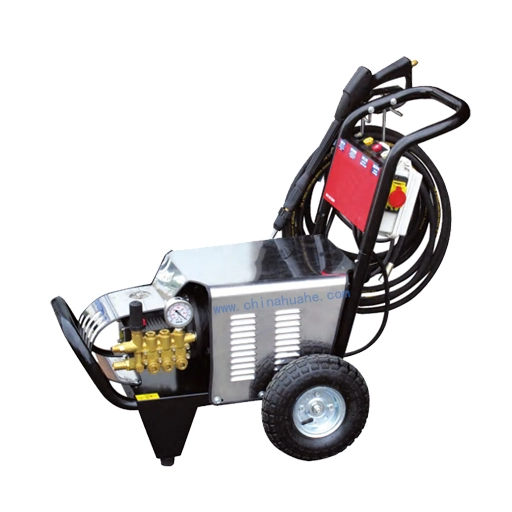
Navigating the regulatory landscape for high-pressure equipment demands strict oversight. You cannot afford compliance failures. A single recalled batch can destroy brand equity overnight. Reliable partners manage this regulatory friction directly.
Emissions standards pose significant engineering hurdles. Gas-powered units require strict EPA and CARB compliance. Factory engineers must test exhaust outputs rigorously. Wastewater handling considerations also dictate certain design choices in industrial settings. Electrical safety remains equally critical. Electric and heated units need UL, CE, and CSA certifications. A competent partner integrates these compliance checks directly into their assembly line.
Trustworthy manufacturers execute rigorous Factory Acceptance Testing (FAT) protocols. They provide documented testing data for every batch. You should demand visibility into these four critical QA steps:
Wet-Testing Procedures: Technicians hook units to water lines. They check for seal leaks under active pressure.
Burst-Pressure Validation: Engineers push hoses and fittings beyond stated limits. They ensure safety margins exist above maximum PSI ratings.
Continuous-Duty Cycle Logging: The factory runs sample units for extended periods. This reveals thermal weaknesses in the pump casing.
Vibration Frequency Analysis: Operators test frame stability. They ensure chassis welds hold firm under maximum engine RPM.
Best Practice: Always request video documentation of the FAT process for your first production run. Do not rely solely on written inspection spreadsheets.
Custom manufacturing is rarely plug-and-play. You must assess financial and operational friction points realistically. Tooling and prototyping demand initial capital expenditure (CapEx). You pay for custom injection molds, metal bending jigs, and first-article inspections. These expenses occur long before you sell a single unit. Honest partners outline these fixed costs immediately.
Minimum Order Quantity (MOQ) thresholds present another major hurdle. You must balance per-unit cost savings against inventory holding costs. High volume reduces unit price but traps cash flow. A skilled high pressure washer manufacturer offers tiered pricing structures. They help you scale production batches as your sales velocity increases.
Lead times fluctuate wildly due to global supply chain variables. Raw material volatility impacts delivery dates heavily. Brass manifolds, structural steel, and imported engine blocks face shipping delays. A competent manufacturer communicates these delays transparently. They secure raw materials in advance to protect your launch schedule.
Common Mistake: Many buyers ignore the supply chain volatility of raw brass. They assume standard lead times apply year-round. Always build a 30-day buffer into your inventory planning.
You need a skeptical buyer’s framework for auditing potential OEM partners. Do not trust glossy marketing brochures alone. Audit their actual production capabilities thoroughly. Your vendor becomes an extension of your own business.
Evaluate their production capacity versus their operational agility. Can they scale from a 50-unit pilot run to a 5,000-unit quarterly order? They must achieve this growth without degrading quality assurance. Tour their facility virtually or in person. Check their assembly line organization and worker safety standards.
Assess their aftermarket and warranty support infrastructure. A high pressure washer is a high-wear tool. Internal seals degrade. Unloader valves fail. Your brand reputation depends entirely on replacement part logistics. Demand a strict Service Level Agreement (SLA) for parts availability. They must ship replacement pumps and hoses quickly.
Prioritize intellectual property (IP) protection heavily. Ensure Non-Disclosure Agreements (NDAs) and non-compete clauses remain legally enforceable. These documents protect your proprietary design choices from direct competitors.
Verify existing compliance certificates (ISO 9001, CE, EPA).
Request case studies of previous OEM partnerships.
Demand a clear breakdown of their warranty claim processes.
Audit their raw material storage to gauge financial stability.
Partnering with an OEM transforms your brand completely. You evolve from a mere distributor into a product owner. You gain control over margins, features, and market positioning. However, long-term success relies heavily on QA stringency and supply chain transparency. You must select a partner willing to engineer solutions, not just assemble parts.
Take immediate action to secure your supply chain. First, draft a comprehensive specification sheet outlining your desired PSI/GPM, preferred components, and target unit cost. Next, request a capability deck from shortlisted vendors. Finally, demand a pilot-run proposal to test their agility. Proactive evaluation today prevents catastrophic inventory shortages tomorrow.
A: Costs vary drastically based on your customization level. Modifying an existing tubular steel frame requires low tooling fees. However, executing a clean-sheet CAD design with custom injection-molded plastic housings demands high initial capital. Expect fees ranging from a few thousand to tens of thousands of dollars.
A: The standard timeline typically spans 60 to 120 days. This period encompasses initial CAD design, component sourcing, prototype assembly, and rigorous compliance testing. Revisions and specific regulatory approvals can extend this timeline further.
A: Yes. Established manufacturers usually maintain open supply chains. They hold accounts with major engine suppliers. However, strict Minimum Order Quantities (MOQs) may apply if you request specialized or uncommon commercial engines outside their standard inventory.
A: The OEM warranties the manufacturing quality directly to the buyer. They cover defects in materials and workmanship. However, the buyer's brand generally remains responsible for honoring the end-user warranty and managing consumer claims.
