
Please Choose Your Language


Views: 0 Author: Site Editor Publish Time: 2026-08-22 Origin: Site


Moving from basic commercial cleaning to industrial sanitation requires serious equipment. Modern industries push far beyond simple wash-downs. Upgrading to an industrial high pressure washer is rarely about basic aesthetics. You face strict regulatory compliance, necessary asset preservation, and high labor costs. Operations cannot afford downtime caused by inadequate cleaning methods. Relying on manual scrubbing or undersized units drains your budget quickly and degrades workforce morale.
Our guide explores the primary sectors relying on these heavy-duty systems. We align specific operational challenges directly to equipment specifications. You will discover why maximizing flow rate often beats increasing raw pressure for most applications. Finally, we provide a clear framework for evaluating vendors and implementing safe cleaning protocols. You will learn exactly how to choose the right machine for your facility, minimizing delays and maximizing overall productivity.
Core Sectors: Agriculture, construction, fleet management, and food processing rely heavily on industrial high pressure washers for compliance and asset longevity.
Specification Alignment: Cleaning efficiency depends more on balancing PSI (stripping force) and GPM (flushing speed) than maximizing pressure alone.
Thermal Capabilities: Heavy grease and bio-hazards in manufacturing and food sectors require hot water systems, whereas cold water suffices for basic dirt and sediment removal.
Vendor Evaluation: Choosing a high pressure washer manufacturer requires vetting pump durability (e.g., triplex plungers), warranty terms, and local parts availability to minimize operational downtime.
Many facility managers delay upgrading their sanitation equipment. They often view industrial cleaning systems as an unnecessary capital expense. However, this mindset ignores severe hidden costs. A standard pressure washer cannot handle daily heavy-duty abuse. You must look at the broader operational impact.
Manual scrubbing consumes countless employee hours every single week. Mechanized cleaning slashes this time dramatically. You directly reduce operational expenditures (OpEx) across the board. Employees complete sanitation tasks in a fraction of the time. Faster turnaround times mean your production lines resume operation quicker. You can then redirect expensive labor toward core business activities. Quantifying these saved hours reveals a rapid return on equipment investment.
Meeting strict OSHA safety standards remains entirely non-negotiable. Modern industrial units facilitate safe, chemical-free cleaning protocols. They use extreme heat and high flow rates instead of toxic solvents. This approach helps you navigate complex EPA wastewater regulations easily. Using harsh chemicals triggers expensive disposal requirements. Water reclamation accessories capture hazardous run-off effortlessly. You avoid crippling regulatory fines. Furthermore, your facility maintains a stellar environmental safety record.
Heavy machinery faces constant environmental attacks daily. Corrosive materials destroy expensive metal components rapidly. Road salt eats away vehicle undercarriages during winter months. Concrete dust ruins sensitive hydraulic seals on earthmovers. Chemical residues degrade protective paint layers in manufacturing plants. Regular high-powered cleaning removes these destructive elements permanently. You significantly extend the lifecycle of your critical assets. Preventing premature equipment failure saves millions of dollars over a decade.
Different industries face entirely unique contamination challenges. Standardized cleaning approaches fail miserably in specialized environments. You must match the machine to the specific industrial application.
Farms battle constant bio-security risks year-round. Disease transmission in livestock enclosures spreads rapidly without intervention. Tractors and harvesters develop heavy mud caking in wet fields. These problems demand highly specific equipment solutions.
Business Problem: Pathogen buildup in barns threatens entire herds. Dried manure ruins farm equipment mechanics.
Solution Criteria: You need high GPM systems immediately. High flow rates provide rapid flushing power. Mud and manure wash away instantly. You also need hot water capabilities to sanitize breeding areas. Extreme heat destroys dangerous pathogens on contact.
Construction sites generate incredibly stubborn debris. Cured concrete sticks aggressively to mixer trucks. Hydraulic fluid spills create dangerous slipping hazards. Earthmoving equipment suffers severe abrasive wear from silica dust.
Business Problem: Hardened cement blocks moving parts. Abrasive dirt destroys heavy-duty hydraulic cylinders.
Solution Criteria: These sites require massive stripping force. Look for high PSI systems exceeding 3,000 PSI. They strip dense particulate matter effortlessly. You prepare metal surfaces for necessary recoating. Operators can easily blast away hardened cement chunks.
Logistics companies struggle to maintain commercial trucks. Corrosive road salts destroy exposed metal parts. Exhaust soot coats exterior surfaces stubbornly. Obscured undercarriages cause immediate DOT inspection failures.
Business Problem: DOT violations ground commercial fleets. Rust compromises structural chassis integrity.
Solution Criteria: Fleet managers need medium PSI setups primarily. High GPM systems work best here. You must pair them with specialized undercarriage wands. Hot water cuts through stubborn chassis grease effortlessly. You pass mandatory DOT inspections seamlessly.
Food processing plants face intense daily scrutiny. Strict FDA and USDA sanitation requirements govern all operations. Bacterial buildup threatens consumer safety constantly. Processing lines accumulate heavy animal fats and stubborn vegetable oils.
Business Problem: Cross-contamination forces massive product recalls. Bio-films resist standard cold-washing techniques.
Solution Criteria: You cannot use gas-powered engines indoors safely. Electric-powered units remain strictly mandatory. Hot water and steam generation dissolve animal fats quickly. You must also specify food-grade hoses. These specialized hoses prevent dangerous cross-contamination during wash-downs.
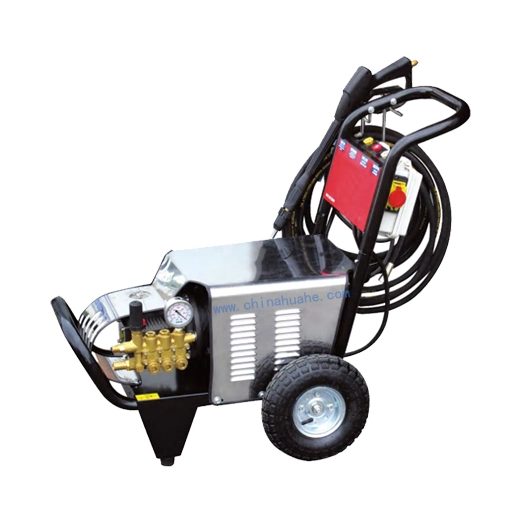
Equipment buyers often struggle to choose a heating configuration. You must match thermal capabilities to your exact dirt profile. A standard high pressure washer comes in both varieties. Choosing incorrectly wastes both water and valuable labor hours.
System Type | Primary Targets | Key Technical Benefit | Ideal Industry Application |
|---|---|---|---|
Cold Water | Sand, dirt, mud, loose debris | Lower upfront cost, highly portable | Agriculture (exterior), Construction sites |
Hot Water | Grease, oil, animal fats, bio-hazards | Breaks down molecular bonds rapidly | Food Processing, Fleet Maintenance |
Cold water excels at mechanical removal tasks. It blasts away sand, dirt, and wet mud effortlessly. You can easily sweep loose debris across large concrete pads.
Best for: Sand, dirt, mud, and sweeping loose debris.
Advantage: These units cost significantly less upfront. They demand much less routine maintenance. Cold water systems remain highly portable around vast job sites. You do not worry about burner maintenance.
Grease and oil resist cold water entirely. You need heat to melt heavy fats. Hot water handles complex sterilization requirements perfectly.
Best for: Grease, oil, fats, and strict sterilization requirements.
Advantage: Heat reduces the need for harsh chemical detergents. Hot water breaks down molecular bonds in hydrocarbons rapidly. You clean faster and much safer. The elevated temperature sanitizes surfaces naturally.
Many buyers mistakenly chase the highest PSI available. We must clarify this common industry misconception. Higher PSI is not always better for cleaning. Excessive pressure damages soft surfaces and strips valuable paint. It can even force water into sealed engine bearings.
GPM (Gallons Per Minute) actually dictates flushing speed. Flow rate determines how fast debris washes away. Insufficient GPM leaves dirt swirling in place uselessly. Low GPM creates a true bottleneck in labor efficiency. You need high GPM to move massive volumes of mud. Balance your equation properly based on the contaminant volume.
Selecting the right vendor impacts your daily operations directly. A reliable high pressure washer manufacturer builds machines for extreme enterprise abuse. You must look past marketing brochures and analyze internal components.
Pump architecture completely determines the machine lifespan. Avoid consumer-grade axial cam pumps for enterprise use entirely. They fail quickly under continuous daily operation. Require industrial-grade triplex plunger pumps instead. Triplex pumps feature three individual plungers. Ceramic components ensure maximum longevity under extreme heat. They dissipate thermal energy effectively. Your mechanics will spend much less time rebuilding broken pumps.
Drive systems dictate exactly where you can operate safely. You must evaluate your facility infrastructure first.
Gas/Diesel Engines: Remote sites require combustion engines. Construction zones and vast agricultural fields lack reliable electrical grids. Gas provides unmatched mobility. However, gas introduces dangerous exhaust hazards indoors.
Electric Motors: Indoor environments demand absolute zero emissions. Warehouses and food processing plants must use electric motors safely. These units run much quieter. However, they require dedicated high-voltage lines.
You must rigorously assess the manufacturer’s supply chain. Equipment downtime costs money instantly in commercial settings. Prioritize vendors offering standard, easily replaceable brass fittings. Avoid proprietary hoses requiring weeks to ship from overseas. Demand exceptionally strong warranty coverage. Focus your warranty review specifically on the pump and burner rings. Local parts availability remains your strongest defense against downtime.
Fleet deployment requires highly specific mounting hardware. Evaluate if the manufacturer provides custom trailer units. Skid-mounted systems bolt directly into commercial truck beds securely. Custom solutions streamline your mobile cleaning operations significantly. Some vendors integrate massive water tanks directly onto the skid. This customization proves invaluable for remote highway maintenance crews.
Deploying heavy-duty equipment introduces new facility challenges. You must prepare your physical infrastructure beforehand. Ignoring these realities causes immediate operational failures.
High flow machines require massive continuous water volume. Address your facility's water supply limits immediately. Plumb lines must deliver adequate gallons per minute consistently. Starving the machine causes severe pump cavitation instantly. Cavitation creates microscopic implosions inside the water stream. This phenomenon destroys expensive internal valves within minutes. Always test your spigot flow rate before purchasing high GPM equipment.
Industrial power poses serious physical threats to operators. Highlight the extreme risks of zero-degree nozzles. These red-tipped nozzles destroy soft surfaces instantly. They slice through protective boots effortlessly. Proper PPE (Personal Protective Equipment) is strictly required. Operators must wear safety goggles, heavy gloves, and reinforced steel-toe boots. You must prevent catastrophic fluid injection injuries through rigorous safety training.
Washing industrial equipment creates severe environmental liabilities. You face the strict reality of capturing hazardous run-off. Washing heavy equipment releases oil, grease, and chemical residue. Detail your exact plan for treating this contaminated wastewater. Municipal storm drains cannot accept untreated industrial wash water legally. Install proper containment booms and advanced filtration mats. Many facilities build dedicated wash pads featuring built-in oil interceptors.
Industrial cleaning demands systematic planning and precise execution. Summarize your evaluation process carefully before making any purchases. First, identify your specific primary contaminant. Choose between agricultural mud, loose dirt, or heavy industrial grease. Second, choose the correct thermal requirement accordingly. Decide between cold water and hot water heating systems. Third, calculate your required flow rate accurately to maximize flushing speed.
Follow these action-oriented next steps for successful deployment:
Do not default to the highest PSI available automatically.
Consult a specialized manufacturer to spec your machine properly.
Balance GPM, temperature, and durable pump architecture carefully.
Ensure maximum ROI by minimizing your scheduled operational downtime.
Train all operators on strict PPE and safety protocols immediately.
A: Commercial units handle intermittent cleaning tasks like washing small sidewalks. Industrial models run continuously for multiple hours daily. They feature heavy-duty triplex pumps, robust steel frames, and advanced heating coils. Industrial machines withstand incredibly harsh environments like construction sites and continuous manufacturing lines.
A: If you clean mud, dirt, or loose paint, cold water works perfectly. If you clean engine grease, hydraulic fluid, or animal fats, you need hot water. Heat melts hydrocarbons quickly and sanitizes surfaces effectively without requiring harsh chemical detergents.
A: Cleaning earthmoving machinery usually requires 3,000 to 4,000 PSI. This strong force breaks apart cured concrete and packed clay. However, you also need a high flow rate (4 to 5 GPM) to push the heavy debris away rapidly.
A: Yes, provided you use a fully electric-powered model. Gas and diesel engines produce deadly carbon monoxide exhaust indoors. Electric units run safely and quietly. You must ensure proper floor drainage and use indoor-safe heating methods like electricity or enclosed steam.
A: You should check the pump oil daily before operation. Most manufacturers recommend changing the pump oil every 3 months or after 500 hours of use. You must inspect high-pressure hoses and ceramic plungers monthly to prevent sudden catastrophic failures.
