
Please Choose Your Language


Views: 0 Author: Site Editor Publish Time: 2026-08-30 Origin: Site


Sourcing industrial equipment carries inherent risk. Partnering with an unverified manufacturer can lead to operational downtime. It can also cause voided insurance policies or severe safety liabilities. For B2B buyers, distributors, and commercial contractors, evaluating a pressure washer extends far beyond basic PSI and GPM specifications. The underlying manufacturing standards dictate long-term reliability and legal compliance across your daily operations. You need to know exactly what labels matter. This guide breaks down the essential safety, performance, and quality certifications. You must demand these from any vendor before finalizing your procurement shortlist. You will learn how to verify these credentials quickly. We also explain how to navigate compliance databases. This protects your business from expensive operational failures. Understanding these standards is critical for long-term success. Manufacturers often claim high durability, but only proper testing proves it. Our framework gives you the exact questions to ask.
Safety First: Electrical and functional safety marks (UL, ETL, CSA, CE) are non-negotiable baselines for commercial liability and OSHA compliance.
Performance Verification: Industry-specific standards (like CETA) separate verified industrial performance from exaggerated marketing claims.
Manufacturing Consistency: ISO 9001 certification ensures the manufacturer has standardized quality control, reducing defect rates in bulk orders.
Verification is Mandatory: Always cross-reference manufacturer claims with third-party testing directories (e.g., Intertek, UL) before purchase.
Industrial cleaning tasks demand highly robust equipment. Operating uncertified machines introduces major hazards into your daily workflows. Buyers must mitigate these risks proactively before signing procurement contracts.
Electrical shocks from poorly sealed motor housings.
Thermal burns from unregulated boiler heating coils.
Mechanical failures from unverified hose burst pressures.
Workers rely on you to provide safe tools. You jeopardize their safety by ignoring certification requirements. This brings us directly to OSHA and liability implications. Utilizing uncertified equipment impacts your workplace safety compliance heavily. OSHA inspectors actively look for recognized safety marks during routine audits. They want to see Nationally Recognized Testing Laboratory (NRTL) labels clearly affixed to the chassis.
Using equipment without these marks violates the OSHA General Duty Clause. This clause strictly requires employers to provide a safe, recognized workplace. If an accident occurs, insurance companies will investigate the equipment immediately. They check for these specific NRTL marks. They will likely deny claims if the machine lacks valid third-party testing validation. Your company assumes full financial responsibility in these unfortunate cases. Proper certification transfers a significant portion of this liability back to the manufacturer. It proves you conducted proper due diligence during the purchasing phase.
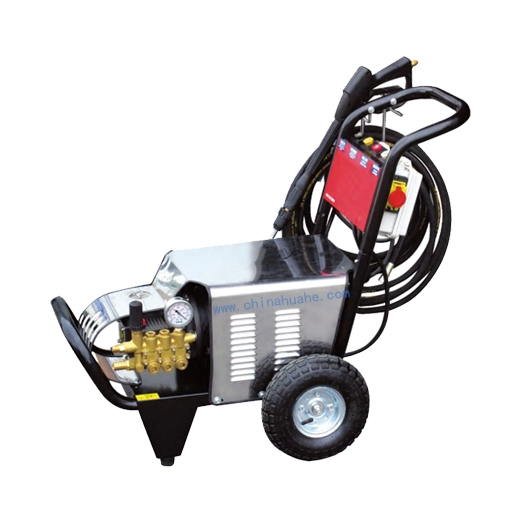
Sourcing an industrial high pressure washer requires strict attention to regional testing standards. Different global markets mandate entirely different testing protocols. You must match the equipment certification to your intended operating region.
Three primary marks dominate the North American commercial market. UL (Underwriters Laboratories) remains the most universally recognized label. It validates electrical components rigorously through dielectric voltage-withstand testing. It checks motor safety mechanisms to prevent overheating. It also evaluates heating elements extensively. This is especially crucial for hot water units. High temperatures and water create a highly dangerous mix. UL testing ensures the internal electrical insulation holds up under intense moisture.
ETL (Intertek) serves as another major NRTL mark in this industry. It acts as definitive proof of compliance with North American safety standards. Many buyers wonder if ETL is somehow inferior to UL. It is not. ETL is functionally equivalent to UL for all legal and regulatory purposes. Both testing laboratories measure equipment against the exact same published ANSI and OSHA standards. ETL often offers faster testing queues for manufacturers. You can accept ETL marks with complete confidence during procurement.
CSA (Canadian Standards Association) represents the third major pillar. It is legally required for commercial distribution and operation within Canada. Commercial operators in Canadian provinces must look for this specific mark. The US market also widely respects CSA testing protocols. Many modern manufacturing labels combine these marks into single icons (like cULus). This indicates compliance across both US and Canadian borders.
European markets rely heavily on the CE mark (Conformité Européenne). This specific mark is mandatory for selling equipment within the European Economic Area (EEA). It indicates strict conformity with health, safety, and environmental protection standards. A CE mark shows the manufacturer actively followed all relevant European machinery directives.
Warning Node: You must learn to differentiate between the legitimate CE mark and the fake "China Export" mark. The symbols look incredibly similar to untrained eyes. The legitimate CE mark features specific geometric spacing. The letters sit further apart, forming two intersecting circles. The "China Export" letters sit much closer together. To verify compliance, you must always request the Declaration of Conformity. This document lists the exact European directives the machine successfully passed. Do not accept a generic CE sticker at face value without this accompanying paperwork.
Certification Mark | Primary Region | Key Focus Area | Legal Status (Commercial) |
|---|---|---|---|
UL | United States | Electrical/Thermal Safety | OSHA NRTL Approved |
ETL | United States / Canada | General Safety Standards | OSHA NRTL Approved |
CSA | Canada | Machinery / Electrical | Mandatory in Canada |
CE | European Union (EEA) | Health / Environment / Safety | Mandatory in EEA |
Safety certifications keep your workers alive and compliant. Performance standards ensure you actually get what you pay for. The commercial cleaning industry frequently suffers from rampant specification exaggeration. Buyers need tools to verify performance claims objectively.
The Cleaning Equipment Trade Association (CETA) created the critical CPC-100 standard. This standard brings much-needed transparency to equipment performance ratings. Unverified manufacturers often inflate their marketing materials aggressively. They might claim impossible PSI (pressure) or GPM (flow rate) numbers to win bids.
The CETA CPC-100 standard prevents this harmful "spec-inflation". It requires strictly standardized, third-party testing methodologies. The test measures output directly at the nozzle tip. It does not measure theoretical output at the bare pump. This testing distinction matters immensely for commercial fleets. Standardized testing accounts for friction loss inside the hose and fittings. When you buy a CETA-certified machine, the specifications are totally real. The unit will deliver the exact cleaning power advertised on the box. This protects your operational efficiency and project timelines.
Quality management determines overall production consistency. This explains why ISO 9001 matters deeply for any equipment manufacturer you choose. It dictates the consistency of the entire factory assembly line. ISO 9001 audits the sourcing processes for raw materials. It tracks exactly how the factory handles internal defect resolution.
Fleet buyers absolutely need predictable reliability. ISO 9001 reduces the heavy risk of receiving "lemon" units in a large order. If you order twenty identical machines, they should all perform identically out of the box. Non-certified factories often struggle with massive batch-to-batch variations. ISO 9001 factories follow strict, documented workflows based on the Plan-Do-Check-Act cycle. This rigorous standardization ensures high-quality output on every single assembled unit.
ISO 9001 Phase | Manufacturer Action | Benefit to B2B Buyer |
|---|---|---|
Plan | Establish component sourcing standards and tolerances. | Prevents cheap part substitutions during production. |
Do | Assemble units using standardized operating procedures. | Ensures uniform build quality across large fleet orders. |
Check | Test machines at the end of the line for leaks and pressure drops. | Catches defective units before they ship to your facility. |
Act | Adjust assembly techniques if a defect pattern emerges. | Continuously improves the product lifecycle and durability. |
Modern businesses must prioritize strict environmental compliance alongside safety. Environmental regulators aggressively fine companies for ignoring operational emission rules. This scrutiny applies to both exhaust air quality and hazardous materials in the equipment itself.
Gas-powered and diesel models require extremely strict engine emission controls. The EPA (Environmental Protection Agency) sets the baseline legal standards in the US. EPA compliance is absolutely essential for any combustion engine. It ensures the motor burns fuel efficiently under load. It dramatically reduces harmful exhaust particulates near the operator.
CARB (California Air Resources Board) compliance goes a significant step further. California enforces much stricter baseline emission standards. Operators inside California must use CARB-compliant machines exclusively. However, commercial buyers nationwide often use CARB certification as a premium quality benchmark. If an engine passes strict CARB testing, it represents top-tier engineering. It runs cleaner and often lasts significantly longer. Many top-tier manufacturers design all their engines to meet CARB rules by default.
Environmental compliance extends deeply to the individual component level. RoHS regulations restrict hazardous substances during manufacturing. It severely limits heavy metals like lead, mercury, and cadmium. These toxic materials commonly appear in older electrical housings or cheap brass fittings. REACH serves as a similar overarching European regulation. It manages the registration and restriction of harmful industrial chemicals.
These specific rules affect the hoses, spray wands, and internal wiring harnesses. Global equipment distribution requires strict compliance with both RoHS and REACH. It protects factory workers from chemical exposure during final assembly. It also protects the local environment when you eventually dispose of the machine. Heavy metals can leach into groundwater during heavy outdoor use. Always ask your prospective supplier about component-level chemical compliance.
Knowing the legal standards is only the first part of procurement. You must actively vet your high pressure washer supplier using a structured approach. A reliable manufacturer welcomes your intense scrutiny. Follow this evaluation framework before placing any bulk commercial orders.
Documentation Requests: Always request the official Certificate of Compliance (CoC). Ask for the formal Declaration of Conformity for CE marks. Legitimate vendors will email these PDF documents immediately without making excuses.
Third-Party Directory Verification: Never trust a shiny sticker blindly. Run the manufacturer’s specific registration number through official online databases. Use the UL Product iQ portal. You can also search the Intertek directory for ETL marks. If the number does not appear, walk away immediately.
Association Memberships as Trust Signals: Look for active participation in major industry bodies. Check if they belong to PWNA, CETA, or WJTA. These specific memberships signal a deep commitment to industry advancement. They show the manufacturer values rigorous self-regulation.
Warranty Alignment: Review the official warranty terms carefully. A manufacturer's warranty should explicitly cover all certified components. The warranty length should logically align with the expected lifecycle of industrial-grade equipment. Short warranties on supposedly certified machines signal a major red flag.
Even experienced buyers make structural errors during vendor selection. Avoid these common mistakes when evaluating bids:
Assuming a high price tag automatically guarantees NRTL safety certifications.
Accepting self-certified testing documents without independent laboratory involvement.
Failing to specify region-specific safety standards in formal purchasing contracts.
Sourcing an industrial machine requires a strict, methodical evaluation process. You must verify the manufacturer's true commitment to established industry standards. We explored how electrical and structural integrity relies entirely on NRTL labels. Performance claims need CETA validation to prove their accuracy. Environmental footprints require proper EPA or CARB oversight to avoid massive regulatory fines.
Never compromise on primary NRTL safety marks like UL or ETL. Always prioritize CETA-verified specifications when purchasing units for commercial fleets. Defective or uncertified equipment risks employee safety and ruins your business reputation.
Define your strict procurement criteria clearly today. Request comprehensive compliance documentation from your shortlisted vendors immediately. You can also contact our dedicated sales engineering team for a consultation on fully certified commercial equipment. Make safety and verifiable performance your non-negotiable procurement standard moving forward.
A: While not inherently illegal for residential use, OSHA heavily regulates workplace equipment. Using uncertified equipment in a commercial setting violates OSHA general duty clauses and jeopardizes insurance coverage. Businesses face severe fines and assume full financial liability for workplace injuries if they operate uncertified machinery.
A: ISO 9001 certification means the manufacturer undergoes rigorous external audits for their quality control processes. This results in consistent product reliability across large production runs. Non-certified manufacturers often struggle with batch inconsistencies, leading to higher defect rates and unpredictable equipment lifespans in commercial applications.
A: No. The CE mark is strictly for the European market. While it indicates general safety compliance, US commercial regulations generally require an NRTL mark like UL, ETL, or CSA for workplace compliance. OSHA inspectors look specifically for North American testing standards during site audits.
A: CETA standards ensure that the advertised PSI (pressure) and GPM (flow rate) are highly accurate. They are tested under uniform, real-world conditions at the nozzle. This prevents buyers from purchasing underpowered equipment based on inflated marketing specs, ensuring you get the cleaning power you paid for.
