
Please Choose Your Language


Views: 0 Author: Site Editor Publish Time: 2026-08-31 Origin: Site


Procurement for commercial cleaning equipment goes far beyond simple utility. Today, a pressure washer serves as a critical operational lever. It drives labor efficiency, ensures strict environmental compliance, and reduces long-term operational costs. Rising labor costs demand better operator ergonomics across all industries. Meanwhile, stricter EPA and OSHA regulations force buyers to re-evaluate their equipment lifecycles. Corporate sustainability mandates also require greener alternatives to traditional fossil-fuel machines. This guide provides procurement officers and business owners an evidence-based framework. You will learn to evaluate emerging technologies and mitigate early adoption risks. We will also show you how to shortlist reliable vendors effectively. Making informed equipment choices protects your profit margins and ensures uninterrupted daily operations.
Electrification is maturing: Battery-powered units are now viable for mid-duty commercial applications, though heavy industrial applications still rely on optimized fuel engines.
Water conservation is a compliance necessity: Advanced flow-control and reclamation technologies are shifting from "nice-to-have" features to baseline requirements for municipal and industrial contracts.
Smart telemetry drives ROI: IoT integration in heavy-duty units allows fleet managers to track predictive maintenance and operator efficiency, lowering the Total Cost of Ownership (TCO).
Vendor criteria have shifted: Choosing a high pressure washer manufacturer now requires prioritizing localized parts availability, compliance transparency, and aftermarket technical support over pure upfront cost.
Redefining performance is necessary for modern commercial needs. Buyers historically evaluated a high pressure washer based solely on maximum PSI and GPM. These raw output metrics are no longer sufficient today. Modern business problems require a broader perspective. You must consider how equipment impacts daily labor operations. High power means nothing if the machine breaks down frequently or exhausts your operators.
Labor-centric design plays a massive role here. Ergonomic improvements directly reduce operator fatigue during long shifts. Less vibration means fewer workplace repetitive strain injuries. Lighter components allow workers to maneuver easily around tight spaces. These improvements directly lower staff turnover rates. Happy operators work faster and safer. A well-designed machine keeps your crew energized.
This shifts the purchasing criteria toward outcome-based evaluation. You should measure success by "cleaning units per hour" instead of technical specifications alone. This approach reveals the true lifetime value of the equipment. Efficient machines reduce billable labor hours. They also consume fewer resources over their entire lifespan. Look for equipment designed around human limitations.
Lithium-ion technology has matured significantly over recent years. Battery-powered units now handle commercial daily use quite effectively. They offer realistic capabilities for mid-duty surface cleaning tasks. Occasional residential use is no longer their only domain. Commercial contractors can rely on them for consistent daily performance. However, watch out for exaggerated run-time claims from lesser-known brands.
Consider the long-term financial balance carefully. You face a higher initial procurement cost for electric units. However, you eliminate diesel and gasoline costs entirely. Oil changes become obsolete overnight. Carburetor maintenance disappears from your service schedule. This shifts the financial model from ongoing variable expenses to upfront capital investment.
Adoption risks do exist and require planning. Continuous run-times remain limited for high-volume commercial cleaning. You need transparent expectations regarding battery life.
Match your typical duty cycles to battery capacity carefully.
Purchase extra battery packs for uninterrupted continuous operation.
Train staff on proper charging protocols to extend battery health.
Monitor battery degradation over the first twelve months.
Noise compliance offers a major competitive advantage. Electric models operate very quietly. Contractors can easily bypass strict municipal noise ordinances. This capability opens up lucrative early morning contracts. Late-night commercial jobs also become highly accessible. You can clean near hospitals or schools without causing disruptions.
The compliance landscape is shifting rapidly worldwide. Stricter municipal wastewater regulations dictate new equipment choices constantly. EPA guidelines closely monitor runoff from active cleaning sites. Ignoring these rules brings heavy fines and legal trouble. You must capture and control the water you use.
Water-saving innovations answer these regulatory challenges directly. Many modern units utilize highly precise nozzle designs. Steam integration drastically cuts overall water consumption. Optimized flow rates ensure you use exactly what is necessary. You clean faster while conserving precious natural resources. Watch out for cheap nozzles wearing out and ruining your efficiency gains.
Reclamation and filtration systems are highly viable now. Closed-loop systems capture, filter, and reuse water on-site. This feature is crucial for hazardous material management. Industrial site cleaning often mandates this specific capability by law. You prevent contaminated wastewater from entering local storm drains. This protects your company from severe environmental liabilities.
Chemical reduction represents another major engineering advancement. Advanced heating elements in hot water washers break down grease quickly. You reduce your reliance on harsh chemical detergents. Expensive chemical additives become less necessary for tough jobs. This protects the local environment and lowers your daily supply costs.
Smart sensors are transforming modern fleet management. Telemetry systems track critical performance metrics automatically. Managers monitor pump hours and fuel levels remotely. You can check real-time operational status from anywhere via mobile apps. This eliminates the guesswork from daily equipment tracking.
Predictive maintenance is rapidly replacing reactive emergency repairs. Data-driven service schedules prevent catastrophic pump failures. You avoid costly downtime by servicing parts right before they break. This proactive approach keeps industrial operations running smoothly. It extends the working life of your most expensive assets.
Automated and robotic solutions are gaining immense traction. Semi-autonomous surface cleaners handle massive warehouse floor spaces. Automated drive-through wash systems maintain heavy machinery efficiently. These systems require minimal human intervention. They free up your labor force for more complex tasks.
Evaluating this smart technology requires a clear framework. You must decide if the premium price tag is justified. Does your fleet size warrant full IoT integration? Below is a matrix to help you evaluate your technology needs.
Fleet Size | Operational Complexity | Recommended Tech Level | Expected Benefit |
|---|---|---|---|
1-5 Units | Low (Single site) | Basic manual tracking | Low initial cost, simple maintenance |
6-20 Units | Medium (Multi-site) | Entry-level telemetry | Improved maintenance scheduling |
21+ Units | High (Hazardous/Industrial) | Full IoT integration | Minimized downtime, maximum labor savings |
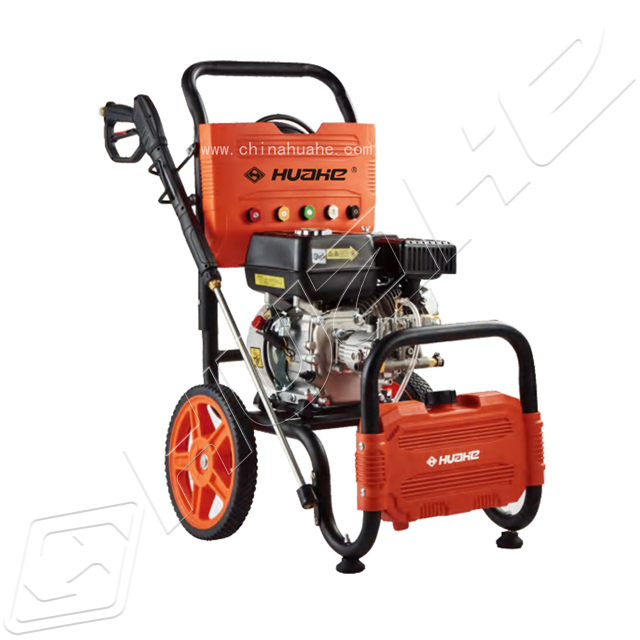
An industrial high pressure washer equipped with sensors often pays for itself rapidly in large fleets. The data collected helps identify inefficient operators and poorly maintained engines.
Looking beyond the basic spec sheet is essential. A reliable high pressure washer manufacturer must offer supply chain stability. Their localized parts ecosystem is as critical as machine capabilities. You cannot afford to wait weeks for simple replacements. Downtime destroys profitability faster than anything else.
Engineering and customization capabilities matter greatly for specialized jobs. Assess their ability to provide tailored unit configurations. Do they offer custom skid mounts? Can they build specific trailer setups? Niche industrial applications demand specific pump and engine pairings. A good vendor works like an engineering partner.
Evaluate their Service Level Agreements very carefully. Review their warranty terms in close detail. Check their authorized service center networks in your specific region. Inquire about typical lead times for replacement parts. Hoses, wands, and pump rebuild kits must be readily available locally.
Compliance and certifications are entirely non-negotiable. Ensure the manufacturer meets global safety standards rigorously. Look for ETL, UL, and CE safety marks. CETA standards indicate high environmental compliance for wash water. These certifications protect your business from costly liability claims.
Organizations should always pilot test new technology first. Try a single high-end battery model initially. Test it in real-world conditions before attempting a fleet-wide rollout. This identifies potential workflow issues early. It also gives your crew time to adjust to new mechanics.
Factor in operator training requirements heavily. New digital interfaces present a definite learning curve. Specialized rotating nozzles demand updated safety protocols. Maintenance of complex reclamation systems requires specific technical knowledge. Proper training ensures safe and highly efficient operation.
Use a step-by-step logic to shortlist your options:
Define your exact daily duty-cycle requirements.
Identify strict site compliance needs regarding water and noise.
Assess the vendor's local reliability and service network.
Compare warranty terms across your top three choices.
Calculate the expected return on investment for each model.
Take actionable next steps immediately. Request demonstration units from your shortlisted vendors. Ask for detailed service network maps for your operating regions. Analyze the long-term operational savings calculations for each proposed model. Demand transparency regarding common failure points.
Future-proofing your cleaning fleet is a strategic necessity today. Align your next purchase with electrification and smart tech trends. This approach protects your business against sudden regulatory changes. It also mitigates the negative impact of ongoing labor shortages. Efficient equipment makes your operators significantly more productive.
Prioritize holistic value over the lowest initial price tag. Upgrading heavy industrial equipment is a major financial decision. Reliability, environmental compliance, and strong vendor support yield better long-term results. Smart investments made today guarantee smoother, more profitable operations tomorrow.
A: Yes, modern battery-powered units handle mid-duty commercial applications effectively. They clean sidewalks, vehicles, and building facades reliably. However, heavy-duty industrial tasks still require optimized fuel engines. Match your daily duty cycle to the battery capacity to avoid unexpected downtime.
A: Water reclamation systems offer a fast return on investment. They drastically cut municipal water costs. You also avoid hefty fines for improper wastewater disposal. Advanced systems use fewer chemicals, further accelerating the payback period.
A: Cold water units work best for dirt, sand, and mud. Hot water units are essential for grease, oil, and sterilization. If you clean engines, industrial kitchens, or heavy machinery, hot water breaks down oils quickly without excessive chemical use.
A: A heavy-duty unit typically lasts five to seven years. Smart telemetry extends this lifespan significantly. Predictive maintenance alerts prevent catastrophic pump failures. By servicing components exactly when needed, you maximize the equipment's usable life.
