
Please Choose Your Language


Views: 0 Author: Site Editor Publish Time: 2026-08-15 Origin: Site


A stock washing setup rarely comes optimized for specialized cleaning tasks. Relying strictly on out-of-the-box components often limits your daily efficiency. It also increases your manual labor time significantly. You might struggle to clean tough surfaces. You might even damage fragile materials accidentally. Whether you manage facility maintenance, fleet washing, or commercial contracting, proper equipment matters immensely. Pairing a high pressure washer alongside the right attachments bridges a critical gap. It connects raw pump power directly to precise application. Proper tools ensure you apply force safely and effectively. This comprehensive guide breaks down the core accessory categories you need. We explore crucial compatibility standards and vital performance metrics. We will also outline the evaluation criteria necessary to build a highly efficient, task-specific cleaning system. By the end, you will understand exactly how to upgrade your existing setup.
Capability Expansion: Specialized accessories (surface cleaners, foam cannons) reduce cleaning time by up to 60% compared to standard spray wands.
Strict Compatibility: Accessories must precisely match the PSI (pressure) and GPM (flow rate) ratings of your machine to prevent equipment damage or performance drops.
Safety & Compliance: Upgraded hoses and telescoping wands reduce worksite liabilities by minimizing ladder use and burst risks.
Manufacturer Specs: Consulting a reputable high pressure washer manufacturer ensures appropriate fitting standards (Quick Connect vs. M22) and validated warranty compliance.
Standard equipment often yields inconsistent results across different job sites. You might notice unwanted surface damage. You might also experience severe operator fatigue. Basic wands demand intense physical effort over long shifts. Operators must fight the constant backward thrust. Upgrading your tools solves these operational headaches immediately. You replace brute force with mechanical advantage.
Evaluating new accessories requires looking at three core success metrics. First, measure the distinct reduction in your labor hours. Time saved translates directly into higher daily productivity. Second, calculate the decrease in chemical and water waste. Efficient application systems use less detergent. Third, verify the protection of the underlying surface you clean. Avoiding property damage saves immense liability costs.
High-output machines demand heavy-duty accessories to function properly. Cheap consumer-grade attachments fail rapidly under intense commercial workloads. They crack, leak, or blow out internal O-rings frequently. Investing in industrial-grade components guarantees daily reliability. It also protects your initial machine investment from unnecessary wear. Quality attachments handle massive flow rates seamlessly. They endure harsh environments. They resist aggressive cleaning chemicals. You must view these accessories as critical productivity multipliers. They transform a basic pump into a specialized cleaning machine.
Spray nozzles act as the primary modifier for your entire system. They dictate the exact angle and force of your water stream. Industry standards use a universal color-coded system. This system allows for quick visual identification on the job.
Color | Degree Angle | Primary Application | Risk Level |
|---|---|---|---|
Red | 0° | Stripping tough stains or mud from hard steel | High (can cut concrete/wood) |
Yellow | 15° | Heavy-duty stripping on resilient surfaces | Medium-High |
Green | 25° | General washing, brick, sweeping debris | Medium |
White | 40° | Washing vehicles, siding, fragile materials | Low |
Black | Soap | Applying low-pressure detergents | Very Low |
Rotary or turbo nozzles combine immense force. They utilize a zero-degree impact stream. They rotate this intense stream rapidly across a 25-degree coverage area. They are ideal for cleaning hard concrete and masonry. However, they pose a high risk for softer materials. You should never use them on wood or vehicle paint. They will strip coatings instantly.
Sizing logic remains critical when selecting any nozzle. The orifice size must mathematically align accurately. It must match your machine's exact GPM and PSI. Undersized nozzles overwork the pump severely. They trigger internal bypass loops prematurely. This creates dangerous heat buildup. Oversized nozzles drastically reduce your cleaning pressure. They allow too much water to escape. You lose the mechanical impact needed to remove dirt.
High-pressure hoses also dictate your workflow and mobility. You must evaluate the hose material carefully before upgrading.
Polyurethane: These hoses feel lightweight and maneuver easily. However, they mark light-colored surfaces easily. They also degrade faster under intense daily use.
Wire-Braided Rubber: This material provides heavy-duty, kink-resistant performance. It serves as the standard for any industrial high pressure washer. It handles extreme heat and abrasion safely.
Consider the relationship between hose length and pressure drop. Extending your hose beyond 100 feet requires careful flow calculation. Friction loss impacts the final pressure delivery. This drop occurs right at your spray gun. You might lose up to 100 PSI per extra 50 feet of hose. Thicker internal diameters mitigate this friction loss. Always calculate your needed reach before buying excessive hose lengths.
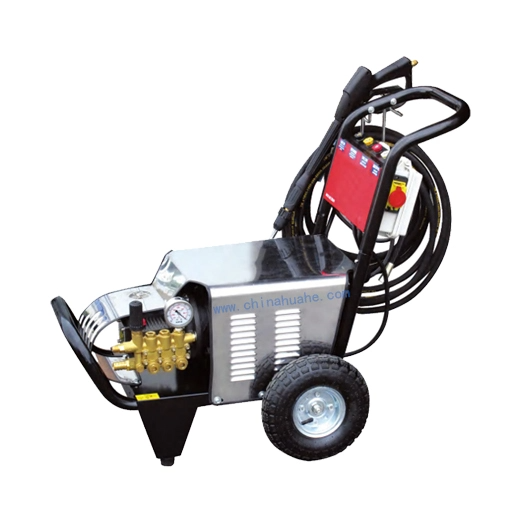
Flat surface cleaners transform how you handle large horizontal areas. Their mechanism features dual or triple rotating nozzles. These nozzles sit securely housed under a protective outer dome. The spray bar spins rapidly just inches above the ground.
This brilliant design delivers exceptional cleaning outcomes consistently. It completely eliminates "zebra striping" on concrete driveways. Zebra striping happens when you use a standard wand unevenly. The dome also contains dirty overspray effectively. It protects nearby walls and delicate landscaping. This tool accelerates driveway and warehouse floor cleaning immensely. You can clean large expanses four times faster.
However, you face specific operational constraints. The attachment requires a minimum of 2.5 to 3.0 GPM. It needs this heavy flow to function effectively. Lower flow rates cause the rotary bar to stall. If the bar stalls, the unit stops cleaning entirely. Always check your machine's flow rate before purchasing a wide surface cleaner.
Telescoping wands and extension lances handle your vertical cleaning challenges. They provide crucial reach for specific elevated applications. You can clean second-story siding easily. They also help wash large commercial vehicles safely. You eliminate the need for dangerous scaffolding. You also avoid climbing wet ladders.
You must consider the associated physical risks carefully. High leverage increases operator fatigue rapidly. Holding a fully extended wand requires significant core strength. Using these tools safely requires specialized support belts. You must also manage thrust kickback at high PSI. The backward force can destabilize an unprepared operator. Start with a wide-angle nozzle to test the kickback. Work your way up to higher pressures slowly.
Chemical application dictates the success of a deep cleaning job. Water alone cannot remove heavy grease or organic growth. Downstream chemical injectors offer a highly reliable solution. They utilize a simple Venturi effect. They pull detergent into the water flow after the pump.
This specific placement protects your pump's internal seals. Harsh chemicals like bleach or heavy degreasers never enter the pump. They only flow through the hose and gun. This mechanism represents the current industry standard. Professionals rely on it heavily for soft-washing houses. It also excels at heavy equipment degreasing. You can switch between soap and fresh water seamlessly. You simply change your nozzle to activate the chemical draw.
Foam cannons serve a distinctly different cleaning purpose. They aerate the detergent aggressively before spraying it. This action creates a thick, clinging foam layer. The foam sticks to surfaces heavily.
You evaluate a foam cannon based on chemical dwell time. It maximizes how long chemicals sit on vertical surfaces. The foam sticks and breaks down dirt slowly. It proves highly effective for fleet washing and auto detailing. The thick suds encapsulate abrasive dirt particles securely. This prevents micro-scratches during the agitation phase.
However, foam cannons require specific internal orifice tuning. You must match the internal orifice properly. It must align to your pressure washer output perfectly. A mismatched orifice produces watery soap instead of thick foam. Most cannons ship with a 1.25mm orifice installed. You might need a 1.1mm orifice for lower flow machines.
You cannot attach parts blindly to high-powered equipment. You must respect the strict PSI and GPM ceilings. Never attach an accessory rated for a lower output. For example, do not put a 3,000 PSI surface cleaner on a 4,000 PSI industrial unit. The excess pressure will destroy the accessory's rotary union quickly. It could also cause catastrophic failure during operation.
Fitting standards determine how components connect together securely. You must understand these connection types thoroughly.
Quick Connects (1/4", 3/8"): These serve as the absolute standard for commercial agility. They allow rapid swapping between different tools. You pull the collar back and snap the new tool in place.
Threaded (M22): You see these commonly on prosumer units. They provide secure, leak-free connections. However, they swap much more slowly. Cross-threading remains a common issue if you rush.
Trust Factor: Always verify the internal metal composition. Choose between brass and stainless steel based on your chemical usage. Stainless steel resists corrosive downstream chemicals much better than brass. Brass will pit and corrode over time.
Follow a strict shortlisting logic when buying new parts. Do not buy accessories just because they look impressive. Use a methodical approach to upgrade your system.
Audit your most frequent cleaning tasks over the last month. Record where you spent the most time.
Identify the primary bottleneck restricting your speed. Is it time, physical reach, or chemical application?
Select the single accessory category that directly resolves that specific bottleneck.
Verify the PSI, GPM, and fitting compatibility thoroughly before purchasing.
Test the new accessory on a small, inconspicuous area first. Ensure it performs as expected without causing damage.
Upgrading your cleaning setup remains a highly strategic exercise. It involves matching specific tools to distinct operational bottlenecks. You maximize daily efficiency by replacing generic wands with specialized attachments. You can clean faster, safer, and more thoroughly. You also reduce operator fatigue significantly.
Take direct action today to optimize your workflow. First, audit your machine’s exact GPM and PSI specifications carefully. Second, inspect your current hose and wand fittings for visible wear. Third, identify your most tedious cleaning chores. Finally, prioritize purchasing the precise accessories that eliminate your highest-friction cleaning tasks. Small upgrades yield massive returns in time saved.
A: Brand matters far less than your fitting type and flow ratings. You must match Quick Connect or M22 styles. Always align the PSI and GPM ratings exactly. Matching components from a verified high pressure washer manufacturer guarantees seamless integration and protects your warranty.
A: This problem usually indicates a severe GPM mismatch. Your machine's flow rate might be too low for the cleaner's diameter. Alternatively, you might have clogged nozzles on the internal rotary bar. Clearing debris from the nozzle orifices often restores full spinning speed instantly.
A: No. Turbo nozzles deliver a highly concentrated, zero-degree impact. They will easily strip paint, splinter wood decking, or damage delicate vehicle exteriors. You should reserve them strictly for robust surfaces. They work best on concrete, solid brick, and heavy industrial degreasing jobs.
