
Please Choose Your Language


Views: 0 Author: Site Editor Publish Time: 2026-08-13 Origin: Site


Deciding between a portable and stationary configuration goes far beyond a simple equipment purchase. You are making a critical investment in your daily operational workflow. Choosing the wrong configuration inevitably leads to premature equipment failure. It can also cause wasted labor during daily setup or highly inefficient cleaning cycles. Portability often seems universally beneficial at first glance. However, fixed wash stations deliver massive efficiency gains for repetitive, location-specific tasks. They eliminate daily setup hurdles entirely. To make the best choice, we must evaluate both setups objectively. We will introduce a practical, use-case-driven framework to help you compare these systems. You will learn how to assess your daily workflow and facility infrastructure. We will also explore asset security and environmental considerations to guide your final decision.
Workflow rules the decision: Stationary units eliminate daily setup/teardown time, while portables offer necessary flexibility for multi-site jobs.
Durability and power constraints: Stationary systems typically house heavier, industrial-grade components that outlast portable equivalents under continuous use.
Hidden implementation costs: Stationary washers require upfront infrastructure investment (plumbing, hardwired electrical, drainage compliance).
Asset security: Bolted, stationary machines drastically reduce the risk of job-site theft and transit damage.
Understanding the fundamental differences between equipment configurations is your first step. Each design serves a distinct operational purpose. Manufacturers engineer these machines to solve specific logistical challenges.
Portable Units (Wheeled/Handheld)
Manufacturers design portable units primarily for multi-site mobility. They are entirely self-contained systems. You can easily roll or carry them between different job sites. Engineering these units requires a strict focus on weight-to-power ratios. Too much weight destroys maneuverability. Therefore, designers often compromise on component size to keep the machine light. They remain the go-to solution for contractors who travel constantly.
Stationary Units (Wall-Mounted/Floor-Stand)
Stationary units are permanently installed systems. You connect them directly to your facility utilities like plumbing and electrical lines. They serve as the beating heart of dedicated wash bays. Because operators never move them, these machines utilize massive, heavy-duty components. You will typically find them in fixed processing areas. They offer an unmatched "plug-and-play" experience for daily users.
The Middle Ground: Skid-Mounted Systems
Skid-mounted systems offer a unique hybrid solution. They feature frame-mounted construction designed to sit permanently inside truck beds or heavy trailers. You get the heavy-duty components of a stationary unit. However, the vehicle itself provides the mobility. They represent the ideal choice for rigorous commercial applications. You completely avoid the physical vulnerability of wheeled carts on rough terrain.
Configuration | Primary Advantage | Mobility Level | Ideal Component Size | Daily Setup Required |
|---|---|---|---|---|
Portable | Multi-site flexibility | High (Wheels/Handles) | Lightweight / Compact | High (Hoses, Power, Water) |
Stationary | Maximum longevity | None (Bolted down) | Oversized / Heavy-duty | None (Always connected) |
Skid-Mounted | Mobile heavy-duty power | Vehicle-dependent | Oversized / Heavy-duty | Moderate (Hose reels) |
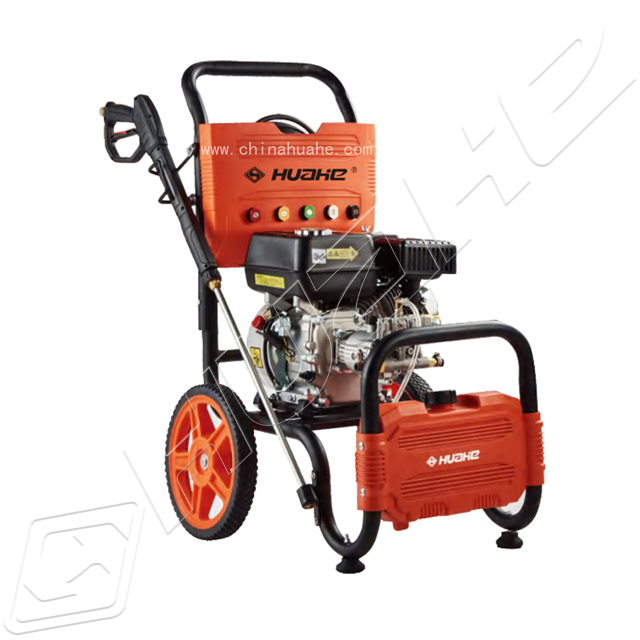
Weight limits severely restrict portable equipment design. You can only make a wheeled cart so heavy before it becomes useless. Stationary systems completely ignore these weight limits. This freedom allows manufacturers to use low-RPM, high-torque motors. These motors turn massive, oversized pumps. Slower pumps generate significantly less friction. They run much cooler and last years longer under continuous use.
Consistent output remains crucial for effective cleaning. You must evaluate true PSI (Pounds per Square Inch) and GPM (Gallons per Minute) over extended duty cycles. An industrial high pressure washer in a stationary setup excels here. It consistently delivers stable heating for hot water applications. It also maintains sustained pressure without dropping performance during a long shift. Portable units often struggle to maintain peak performance during all-day operation.
The "plug-and-play" advantage of fixed units transforms daily operations. Stationary setups require absolutely zero daily setup. Operators simply walk up and grab the hose. They flip a switch and begin washing immediately. This instant readiness encourages staff to clean more frequently. It removes the psychological barrier of equipment preparation.
Conversely, mobile units impose a heavy "mobility tax" on your workflow. Every single use requires daily utility connections. You must manage tangled cords and heavy water hoses. Operators spend time finding appropriate power outlets or refueling gas tanks. They must physically maneuver the heavy machine around obstacles. This repetitive preparation wastes valuable hours every single month.
Theft prevention is a massive concern on modern job sites. Portable units are highly susceptible to theft. A thief can easily roll a portable pressure washer into a pickup truck in seconds. Stationary units eliminate this threat entirely. You securely bolt them to facility infrastructure. Stealing one requires heavy tools, time, and significant effort.
Environmental protection also dictates equipment lifespan. You typically install stationary units indoors. This protects the sensitive pump manifolds from freezing winter temperatures. Portable units face severe environmental risks. You must implement strict winterization protocols if you transport them. Storing them in unheated environments without proper antifreeze will crack the pump block overnight.
Matching the machine configuration to your specific industry guarantees better results. Every industry handles messes differently. You must look at how dirt and equipment interact in your daily workflow.
When to Choose Portable (or Skid-Mounted):
Several industries absolutely require mobility. The cleaning target physically cannot move. You must bring the cleaning power directly to the problem area. Consider these prime examples:
Property management and exterior building maintenance.
Mobile fleet washing services for parked commercial trucks.
Construction site cleanup and heavy machinery degreasing.
Contract cleaning services handling diverse daily locations.
The primary decision driver here is simple. The cleaning target cannot be brought to the machine. You have no choice but to deploy a portable or skid-mounted system.
When to Choose Stationary:
Other industries operate within highly controlled environments. They bring the dirty items to a specific location for processing. A fixed wash station dominates these scenarios. Consider these workflows:
Manufacturing plants cleaning specific machine parts on a schedule.
Food processing facilities sanitizing conveyor belts and floor mats.
Vehicle wash bays handling daily rental fleet returns.
Heavy equipment yards performing maintenance teardowns.
The decision driver changes completely here. The cleaning targets are consistently brought to a dedicated wash zone. A fixed system handles this repetitive traffic flawlessly.
Evaluating these systems requires a deep look at installation realities. Portables have a very low barrier to entry. You unbox them, add fluids, and start washing. Stationary units demand a much more rigorous installation phase. You must plan for professional plumbing hookups. You often need dedicated, hardwired electrical connections. Gas or diesel heated units will strictly require professional exhaust ventilation.
Maintenance and downtime look very different for each setup. Transit vibration destroys equipment over time. Portable units suffer higher wear-and-tear from constant movement. Operators frequently drop them or bump them into walls. They endure constant exposure to harsh weather elements. These factors accelerate component failure.
Stationary setups offer a much friendlier maintenance environment. Technicians service them in clean, well-lit, controlled areas. Because they never move, they do not suffer from transit vibration. A fixed unit typically requires far fewer replacement parts over a standard five-year operational cycle.
Workplace safety and regulatory compliance also favor fixed installations. Stationary setups completely eliminate dangerous tripping hazards. You no longer have electrical extension cords crossing wet floors. You can route high-pressure hoses via overhead booms. This keeps walkways clear. These engineered solutions heavily aid OSHA and workplace safety compliance.
Selecting the right equipment builder is just as crucial as picking the configuration. You need a partner who understands heavy-duty industrial demands. Not all brands engineer their equipment for rigorous daily abuse.
Supply Chain and Parts Availability
Equipment inevitably requires new seals and valves. Ensure the high pressure washer manufacturer guarantees long-term availability for wear parts. You should explicitly look for machines using non-proprietary components. Standardized unloaders, seals, and spray nozzles prevent you from being locked into expensive branded parts. Good manufacturers use universally recognized pump brands.
Customization Capabilities
Fixed installations often require specific modifications. Look for manufacturers offering robust custom configurations. You might need remote control stations mounted across the room. Auto-start and auto-stop functionality drastically reduces pump wear. You may also require very specific voltage builds to match your facility's existing electrical panel.
Warranty Transparency
You must rigorously scrutinize the fine print. Commercial warranties look very different from consumer guarantees. A reputable builder will cover pump manifolds and electric motors differently. They will not hide behind vague "limited warranty" terminology. Ensure they specifically cover industrial duty cycles rather than occasional weekend use.
The choice between portable and stationary configurations ultimately relies on one operational question. Does the mess come to the machine, or must the machine go to the mess? Answering this dictates your entire equipment strategy.
If you operate a dedicated facility, absorb the initial installation logistics of a stationary high pressure washer. The superior longevity and drastically lower daily setup effort make it the superior choice. It will transform your cleaning workflow. However, if multi-site capability remains non-negotiable for your business, invest heavily in a premium portable or skid-mounted unit.
Take time this week to audit your daily wash routines. Calculate the exact hours your team wastes on daily setup and teardown. Contact a qualified sales or support team for a tailored site assessment today.
A: Yes, provided you purchase true commercial-grade units. Look for machines featuring solid brass pump heads and highly reliable commercial engines. However, you must understand their limitations. They will always require more frequent maintenance than stationary units under identical workloads due to transit vibration and environmental exposure.
A: Generally, no. Manufacturers build stationary units on rigid, heavy steel frames without transit vibration isolators. They are often permanently wired for 230V or higher facility power. These massive components make them incredibly heavy and highly impractical to modify for mobile use.
A: Long-term operational efficiency heavily favors stationary units. They require significantly less frequent maintenance over time. You completely eliminate daily setup labor hours. You also drastically reduce the ongoing risks of job-site theft and physical transit damage, making them highly efficient despite demanding a rigorous initial installation process.
