
Please Choose Your Language


Views: 0 Author: Site Editor Publish Time: 2026-08-10 Origin: Site


Few things are more frustrating than pulling your equipment out for spring cleaning, only to find the pump dead after just one season. This early equipment failure hits hard. It carries a real financial impact for homeowners and commercial operators alike. We often assume a machine will last for years based on its purchase date. However, a lifespan is accurately measured in operating hours, not seasons or years. Total longevity depends heavily on three factors. You must evaluate the power source, the pump architecture, and strict adherence to maintenance protocols. Some units are built for occasional weekend chores. Others are engineered for daily, rigorous deployment. Understanding this difference saves you significant money. This guide provides objective lifespan benchmarks for different equipment tiers. We also offer a concrete framework to help you decide. You will learn exactly when to repair an aging unit and when to invest in a commercial-grade upgrade.
Electric (Residential): Typically lasts 100–300 operating hours (3–5 years of average home use).
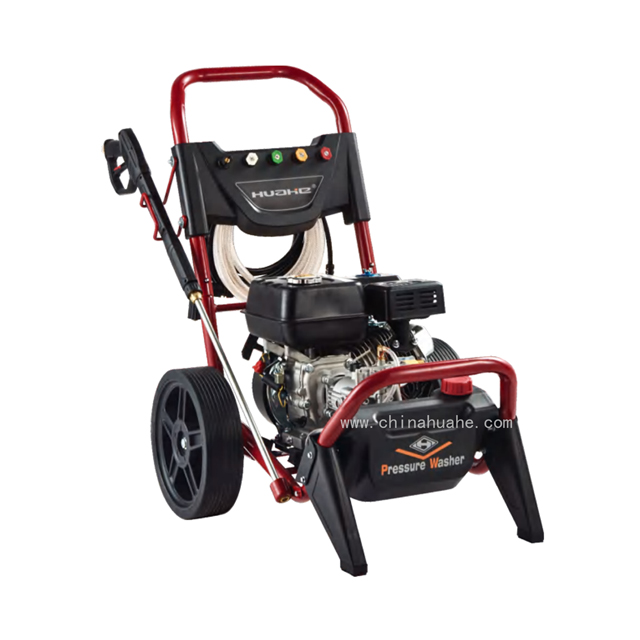
Gas (Residential/Prosumer): Averages 300–500+ hours (5–10 years) if properly maintained.
Industrial High Pressure Washer: Built for 2,000–3,000+ hours with rebuildable pumps.
The Golden Rule: 90% of premature pump failures are caused by user error (running dry, freezing, or leaving the machine running in bypass mode), not manufacturing defects.
Replacement Logic: If repair costs exceed 50% of the price of a new unit, or if an aluminum pump cracks, replacement is the mathematically sound choice.
Setting realistic expectations begins by categorizing machines correctly. Manufacturers engineer different tiers for very specific use cases. You must align your purchase with your actual duty cycles. Matching the machine to the workload prevents early burnout and buyer's remorse.
Many buyers purchase these light-duty units expecting a decade of service. The reality differs greatly. You will typically get 100 to 300 hours of operation. These machines feature sealed wobble pumps. You cannot service these internal components. They are ideal for occasional weekend use, like washing a small car or rinsing patio furniture. Once an internal seal blows, the pump dies completely. Repairing these entry-level models makes no economic sense. The replacement parts often cost as much as a brand-new unit.
These mid-tier models offer significantly more power. They usually provide 300 to 500 hours of active use. Reliable engines from brands like Honda or Briggs & Stratton dominate this category. Interestingly, the engine itself rarely fails first. The engine will almost always outlast the pump. Your maintenance habits dictate the true lifespan. You must change the engine oil frequently. Proper winterization is also absolutely mandatory. Neglecting these steps will destroy the unit long before it reaches 500 hours.
Commercial operations rely on daily operational compliance. Businesses simply cannot afford equipment downtime. An industrial high pressure washer meets these demanding requirements easily. Engineers design them for heavy-duty, continuous cycles. They utilize lower RPM motors. Many incorporate complex belt-drive systems. These design choices separate the pump from engine heat. They also drastically reduce operational vibration. This extends the overall lifecycle immensely. You can expect 2,000 to 3,000 hours of performance. Decades of use become entirely possible if you rebuild the pump periodically.
Buyers often focus entirely on the engine brand. This is a common mistake. You must shift your evaluation to the pump. The pump acts as the heart of the machine. It is also the primary point of failure. Understanding pump mechanics helps you predict durability accurately.
You will find these pumps in 80% of consumer units. They utilize an angled plate to push pistons back and forth. They are highly compact and cheap to produce. However, their lifespan is strictly fixed. The industry considers them "throwaway" components. Manufacturers build them using lightweight aluminum. This material choice introduces severe limitations. Aluminum construction is highly susceptible to heat warping. It also degrades rapidly under cavitation damage. Once the aluminum manifold cracks, the machine is finished.
Professionals demand a different standard. Triplex plunger pumps power almost all commercial and industrial models. They use a crankshaft to drive three plungers. This delivers smoother, more consistent water flow. Manufacturers build these manifolds using forged brass. Brass resists cracking under intense pressure spikes. Most importantly, triplex pumps are completely rebuildable. You can replace worn valves and blown seals easily. This routine maintenance costs a fraction of a new machine. Rebuilding ensures a near-infinite lifespan for the equipment.
Pump Architecture Comparison Chart
Pump Type | Primary Material | Serviceability | Expected Lifespan | Best Application |
|---|---|---|---|---|
Wobble Pump | Plastic / Cast Aluminum | Non-serviceable (Sealed) | 100 - 300 Hours | Occasional residential chores |
Axial Cam Pump | Aluminum | Limited (Hard to source parts) | 300 - 500 Hours | Frequent residential use |
Triplex Plunger Pump | Forged Brass | Fully Rebuildable | 2,000 - 3,000+ Hours | Daily commercial operations |
Premium components cannot survive poor operational habits. Industry forum data highlights a harsh reality. Many machines suffer catastrophic failure in under 30 hours. These breakdowns rarely stem from brand flaws or manufacturing defects. They result directly from operational mistakes. You can protect your investment by avoiding three critical risks.
This is the most common execution error. Users often start the engine and walk away to move hoses. Leaving your pressure washer running without pulling the trigger initiates bypass mode. The unloader valve loops water continuously inside the pump chamber. Friction from the moving parts heats this trapped water rapidly. It can reach boiling temperatures within three to five minutes. This extreme heat melts internal rubber seals instantly. It also distorts the metal tolerances. Always turn the engine off if you stop spraying for more than two minutes.
Cavitation sounds complex, but it represents a simple mechanical starvation. It occurs when you operate the machine using an insufficient water supply. Kinked hoses also cause this phenomenon. The pump demands more volume than the hose provides. This creates a severe vacuum inside the pump chamber. The vacuum forces the water to boil at room temperature. Tiny vapor bubbles form rapidly. These bubbles collapse violently against the metal walls. We call these microscopic implosions. They pit and destroy metal components, stripping away brass and aluminum alike.
Cold weather serves as the final killer of healthy equipment. Failing to use a dedicated pump saver or RV antifreeze is disastrous. Water naturally expands when it freezes. Even a few drops of frozen water left inside the pump will exert massive force. This expansion easily cracks a solid aluminum manifold. A cracked manifold cannot hold pressure. You cannot weld or patch it effectively. The unit becomes an immediate total loss.
Every operator eventually faces a broken machine. Making an emotional decision often leads to wasted money. You need an objective, ROI-based matrix to guide your next steps. Following a logical framework removes the guesswork.
Assess the "50% Rule"
Calculate the total cost of the required repair. Include both parts and labor. Compare this figure against the current retail price of an identical new model. If a replacement pump or major engine repair costs more than 50% of a brand-new unit, stop. Replacing the entire high pressure washer is the superior investment.
Evaluate Current vs. Future Needs
Analyze your workload scale. Many users start small and grow. If you use a residential unit for commercial-level tasks, it will inevitably burn out. Daily fleet washing or massive driveway cleaning exceeds residential design limits. In this scenario, upgrading is a requirement, not an optional luxury. Do not spend repair money on an undersized machine.
Verify Parts Availability
Sometimes the manufacturer makes the decision for you. You might own a high-quality unit from a decade ago. However, manufacturers frequently discontinue OEM replacement parts. They stop producing the specific rebuild kits. This forced obsolescence dictates a full replacement. You cannot safely operate equipment using ill-fitting, third-party aftermarket hacks.
Buying a new unit presents an opportunity to upgrade your standards. You should approach the purchasing process defensively. Guide your search using strict shortlisting criteria. Knowing what to look for separates durable equipment from disposable junk.
Look for companies that proudly publish their specifications. Cheap entry-level brands obscure their internal materials. They hide pump origins and motor RPMs. Conversely, a reputable builder provides absolute component transparency. They will clearly state the internal materials. Look for mentions of ceramic plungers and forged brass manifolds. Ceramic resists wear better than stainless steel. Slower motor RPMs generate less heat. Transparent specifications prove the builder prioritizes durability over cost-cutting.
A warranty tells you exactly how long the builder trusts their own product. Read the fine print carefully. A reliable high pressure washer manufacturer will offer comprehensive warranties on both the engine and the pump. Many brands warranty the engine for years but only cover the pump for 90 days. Avoid those uneven policies. Furthermore, verify the long-term availability of wear parts. Check if they actively sell seal kits, unloader valves, and replacement hoses on their website.
You can identify a professional machine by simply looking at its frame. Evaluate how easily you can service the daily maintenance items. An exposed pump allows for rapid visual inspections. Accessible oil drain plugs encourage users to change the fluid regularly. Standard quick-connect fittings allow you to swap hoses and wands universally. These physical design choices indicate a machine built for long-term maintenance, not a quick trip to the landfill.
A pressure washer’s life expectancy is not a mystery. It relies on a direct calculation. You must multiply the underlying build quality by your own user discipline. Triplex pumps will always outlast axial cams. However, even the best brass manifold will shatter if left outside to freeze. Maximize your operating hours by changing the oil, maintaining water flow, and avoiding bypass mode.
Audit your current machine’s condition immediately. Check the oil color and look for active water leaks around the manifold.
Assess your true PSI and GPM needs based on your most frequent cleaning tasks.
Reach out to a certified dealer or manufacturer for a unit scaled to your specific application.
Purchase a pump saver fluid today to prepare for the upcoming off-season.
A: Only on commercial units with Triplex pumps or high-end gas models where the engine is in pristine condition. For cheap electric models, no.
A: Typically after the first 50 hours of use (break-in period), and every 100 hours or once a season thereafter, depending on the manufacturer's spec.
A: Usually due to a clogged nozzle, worn unloader valve, or damaged pump seals caused by improper winter storage or running dry.
