
Please Choose Your Language


Views: 0 Author: Site Editor Publish Time: 2026-08-18 Origin: Site


Concrete forms the rugged foundation of our driveways, sidewalks, and commercial spaces. It is a highly porous surface. It easily traps dirt, motor oil, and stubborn algae over time. Using an underpowered cleaning machine simply wastes your valuable time. Conversely, applying the wrong technique or excessive localized pressure can permanently etch the cement paste. You need the right tool to avoid costly surface degradation.
Selecting the ideal equipment requires a careful balance. You must weigh pressure against flow rate. You need to match the power source to your job scale. Investing in proper attachments is equally critical. This approach ensures uniform cleaning without unwanted damage. This guide provides a strict, evidence-based evaluation framework. We will help you shortlist the exact equipment you need. Whether you maintain residential driveways, commercial hardscapes, or industrial facilities, you will learn how to clean concrete effectively and safely.
Concrete cleaning requires a baseline of at least 3,000 PSI and 2.5 GPM for efficient, streak-free results.
Cleaning Units (PSI × GPM) provide a more accurate metric for comparing machine performance than PSI alone.
For surfaces larger than a small patio, a surface cleaner attachment is mandatory; this requires matching the attachment diameter to the machine's GPM (4 inches of diameter per 1 GPM).
Commercial and continuous-duty concrete cleaning demands triplex pumps and potentially hot water capabilities, typically requiring an industrial high pressure washer rather than a consumer-grade unit.
Evaluating performance requires understanding two primary metrics. You must look beyond simple marketing claims. Buyers often focus entirely on pressure. However, water volume plays an equally vital role in effective concrete maintenance.
Pounds per Square Inch (PSI) determines your raw stripping power. It provides the force required to break the bond between stubborn contaminants and the porous concrete surface. We recommend a minimum requirement of 3,000 PSI for concrete applications. Falling below this threshold leaves deep stains intact.
Gallons per Minute (GPM) dictates your rinsing speed. It determines the volume of debris you can push away from the work zone. High pressure breaks the dirt loose, but high flow actually moves it. The minimum requirement for efficient concrete work stands at 2.5 to 3.0 GPM. Using less flow severely slows down the entire operation.
You can determine true machine efficiency using a simple formula. Multiply the PSI by the GPM to find the Cleaning Units (CU). This metric provides a highly accurate snapshot of overall performance.
Consider a standard evaluation scenario. A 3,000 PSI / 2.5 GPM machine produces 7,500 CU. A 4,000 PSI / 1.5 GPM machine produces only 6,000 CU. The lower-pressure machine will drastically outperform the higher-pressure model on flatwork. The superior water volume rinses the surface faster. When selecting a pressure washer, always prioritize a balanced CU score over a single inflated metric.
Many consumers believe maximum pressure guarantees better results. This misconception causes severe property damage every year. Excessive PSI combined with a concentrated nozzle will permanently scar residential concrete. Contractors typically pour standard residential driveways at 3,500 to 4,000 PSI compressive strength.
Common Mistake: Hitting 3,500 PSI concrete with a 4,200 PSI blast strips the top cream layer completely. This exposes the raw aggregate beneath. It leaves permanent, irreparable wand marks etched into the stone. Always balance your pressure to protect the substrate.
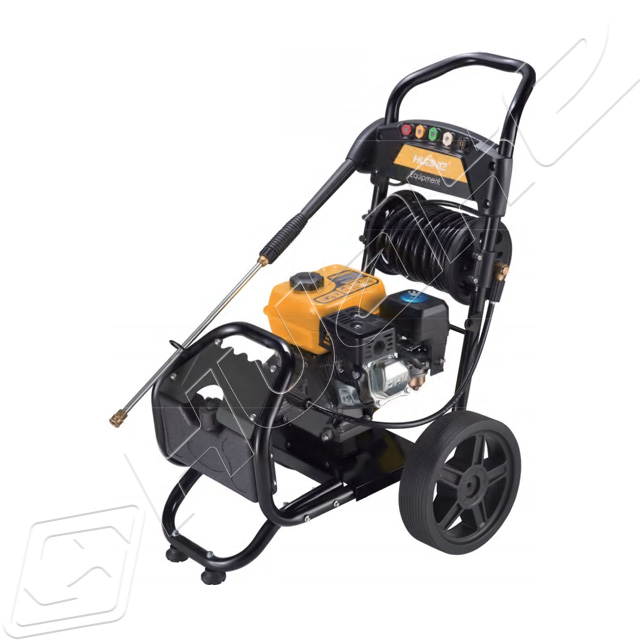
Your workload scale dictates the necessary power source. Buying a massive rig for a tiny walkway wastes money. Buying a small consumer unit for a parking garage wastes time. You must align your equipment specifications directly with your daily square footage.
Electric units typically max out between 1.2 and 2.0 GPM. They plug into standard household outlets. These machines work best for small walkways, single-car garage aprons, and spot-cleaning minor oil drips. However, they carry strict limitations. They operate too slowly for standard driveways. Furthermore, their low flow rates render them completely incompatible with most standard surface cleaner attachments.
Gas models offer significantly more mobility and power. They usually deliver 2.5 to 4.0 GPM alongside 3,000 to 4,000 PSI. These specifications make them best for multi-car driveways, large patios, and standard residential property maintenance.
Despite their power, you must monitor their internal components. Lower-end gas models often use axial cam pumps. These pumps have a limited lifespan. They generally fail after 100 to 300 hours of use. You cannot run them continuously without risking severe heat damage.
Professional applications require serious hardware. These systems deliver 4.0 to 8.0+ GPM. They utilize robust belt-driven or gear-driven configurations. They are best for commercial plazas, parking garages, heavy equipment pads, and continuous daily operation.
An industrial high pressure washer provides distinct operational advantages. It easily runs dual wands simultaneously. It powers oversized surface cleaners ranging from 20 to 24 inches. Many of these units integrate hot water burner systems. Hot water efficiently melts hardened grease and chewing gum upon contact.
Machine Type | Average GPM | Average PSI | Ideal Concrete Application | Primary Limitation |
|---|---|---|---|---|
Electric (Light-Duty) | 1.2 - 2.0 | 1,500 - 2,500 | Small walkways, spot cleaning | Incompatible with surface cleaners |
Gas (Prosumer) | 2.5 - 4.0 | 3,000 - 4,000 | Large driveways, patios | Short pump lifespan (axial cam) |
Industrial Rig | 4.0 - 8.0+ | 3,500 - 5,000 | Plazas, continuous daily use | Requires heavy vehicle mounting |
The engine generates the power, but the pump does the actual work. Pump architecture determines how long your investment will survive. You must understand the internal engineering to make an informed purchasing decision.
Consumer models generally rely on axial cam pumps. Manufacturers seal them at the factory. They offer a maintenance-free experience initially. However, they remain unrepairable once they fail. They are acceptable for occasional, seasonal residential use.
Triplex plunger pumps represent the commercial standard. They run significantly cooler than axial designs. A well-maintained triplex pump lasts thousands of hours. It allows for full rebuilds and routine seal replacements. You must select a triplex pump for any commercial concrete cleaning operation.
The method used to connect the engine to the pump impacts heat generation. You will encounter two primary drive systems in the market.
Direct Drive: The pump mounts directly to the engine shaft. It spins at full engine speed, typically around 3,400 RPM. This design remains compact and affordable. Unfortunately, the high RPM causes the pump to run hot, transferring engine vibration directly to the seals.
Belt Drive: A belt and pulley system connects the engine to the pump. This reduces the pump speed to roughly 1,500 RPM. It pulls water from buffer tanks efficiently. It runs much cooler and significantly extends the overall pump life.
The unloader valve serves as the crucial safety mechanism. It diverts water flow when you release the trigger wand. Evaluate models featuring externally plumbed bypass unloaders. Internal bypass systems trap water in a small closed loop inside the pump head. This trapped water heats up rapidly and destroys internal seals within minutes.
Best Practice: External bypass systems route the diverted water back to an external buffer tank. This keeps the pump cool even during long periods of idling. We highly recommend this setup for professional users.
Cleaning large expanses of concrete with a single wand is a mistake. You need specialized attachments to achieve professional results. The surface cleaner stands as the most critical accessory in your arsenal.
Using a standard wand on a massive driveway causes uneven results. Operators inevitably vary their wand distance and angle during a long job. This causes "tiger striping." Tiger striping refers to the permanent, uneven cleaning lines left behind on the concrete. Furthermore, wand cleaning takes roughly four times longer to complete.
A surface cleaner eliminates this issue. It encloses spinning spray bar nozzles inside a circular dome. This ensures a perfectly uniform distance and constant pressure across the entire slab. It produces pristine, even results in a fraction of the time.
You cannot simply buy the largest surface cleaner available. You must strictly size the attachment to the machine's flow rate. Ignore the pressure rating during this calculation. Focus entirely on the GPM.
Identify your machine's exact GPM output.
Multiply the GPM by 4.
The resulting number is your maximum surface cleaner housing diameter in inches.
For example, a 2.5 GPM machine maxes out at a 10-to-12-inch surface cleaner. A 4.0 GPM machine can easily drive a 16-inch cleaner. An 8.0 GPM industrial rig can power massive 32-inch walk-behind units.
Understanding the risk of a mismatch is vital. Putting a 20-inch cleaner on a 2.5 GPM machine results in failure. The low water volume produces insufficient nozzle rotation speed. The cleaner will leave circular streaks across the concrete. You will find yourself making endless overlapping passes to correct the mess.
Where you purchase your equipment determines your long-term success. Big-box retail stores serve homeowners well. Commercial operators require a different procurement strategy entirely.
Big-box retail units often feature proprietary fittings. These non-standard threads severely limit your ability to purchase aftermarket upgrades. You cannot easily swap hoses, wands, or quick-connect fittings. Furthermore, retail units utilize non-serviceable pumps. When they break, they end up in the landfill.
Commercial buyers need direct industry partnerships. You should pivot away from retail if purchasing equipment for a property management company, municipality, or commercial washing business. Working directly with a dedicated high pressure washer manufacturer unlocks immense operational value.
Direct partnerships offer profound advantages. You gain access to customized builds. Manufacturers can engineer specific skid mounts or trailer setups tailored to your fleet vehicles. You receive guaranteed availability of specialized replacement parts. Furthermore, you gain direct technical support for complex pump troubleshooting.
Compliance and safety represent another major factor. Industrial manufacturers ensure their equipment meets stringent OSHA noise standards. They also design systems compatible with proper wastewater containment protocols. Commercial site compliance strictly requires these features to avoid heavy municipal fines.
Choosing the right equipment for concrete cleaning requires moving beyond simple pressure ratings. The most successful operators prioritize water volume and durable internal components. Taking a strategic approach protects both your concrete surfaces and your equipment investment.
For occasional residential use, a reliable gas-powered unit offering at least 2.5 GPM and 3,000 PSI delivers the best return on investment. For commercial hardscapes, always prioritize a minimum of 4.0 GPM. Demand triplex pumps and insist on belt-driven designs over raw, peak pressure.
Your next step requires a simple site audit. Measure the square footage of the concrete you intend to clean regularly. Determine the ideal surface cleaner size needed for that area. Finally, calculate the strict minimum GPM required to drive that attachment before you compare specific models or request quotes.
A: Yes, but it will be highly inefficient. The low GPM means you are restricted to a standard wand or a miniature (10-inch) surface cleaner, significantly increasing the time required for the job.
A: Only if the concrete is stained with heavy hydrocarbons (motor oil, hydraulic fluid, grease) or chewing gum. For standard dirt, tannin stains, and algae, cold water paired with a proper pre-treatment (like a mild bleach/surfactant mix) is entirely sufficient.
A: A 0-degree nozzle concentrates the water stream to a pinpoint, which acts like a water jet cutter. It can easily exceed the tensile strength of the concrete surface, blasting away the top cream layer and exposing the aggregate beneath. Use a surface cleaner or a 25-degree (green) nozzle instead.
