
Please Choose Your Language


Views: 0 Author: Site Editor Publish Time: 2026-08-24 Origin: Site


Manual cleaning and outdated equipment silently drain your facility resources. They act as hidden sinks for labor costs and prolong expensive facility downtime. To stop this daily waste, you need to shift your operational perspective. Enter the pressure washer. It is not just a standard cleaning tool. It serves as a powerful efficiency multiplier mechanizing heavy dirt removal. We must rethink what cleaning efficiency actually means in commercial and industrial contexts. Real efficiency goes beyond simply blasting away grime. It means measurable time saved during critical operational shifts. It includes vital water conserved across large-scale washdowns. It also requires maintaining surface integrity without causing accidental structural damage. This sets a strict baseline for equipment evaluation. You will learn how flow rates dictate cleaning speed alongside pressure. We will explore crucial equipment variations and how specific attachments scale your daily output. Finally, you will discover the hidden risks to avoid when upgrading your fleet.
True cleaning efficiency is calculated by multiplying water pressure (PSI) by flow rate (GPM), not by pressure alone.
Upgrading to an industrial high pressure washer can reduce labor times by up to 70% compared to standard hose-and-brush methods.
Water conservation is a measurable benefit; high-pressure systems use less total water per square foot cleaned than low-pressure alternatives.
Selecting the right nozzles, surface cleaners, and heating elements scales output without requiring a larger machine.
Partnering with a reliable high pressure washer manufacturer ensures adequate aftermarket support and compliance with safety standards.
Buyers often fall into a common specification trap. They wrongly assume higher pressure automatically equals faster cleaning. This misconception leads to mismatched equipment and damaged property. To understand true efficiency, we must introduce the industry-standard formula: Cleaning Units (CU) = PSI x GPM. This simple calculation proves volume matters just as much as raw force. You cannot optimize a cleaning routine by focusing on a single metric.
Pounds per Square Inch (PSI) represents the stripping force. You need this specific force to break the physical bond between a contaminant and your surface. Think of PSI as a scraper. It lifts dried paint, baked-on grease, or hardened mud away from the substrate. However, you must establish strict operational limits. Excessive PSI damages surfaces rather than improving your cleaning efficiency.
Applying 4,000 PSI to soft wood causes severe splintering. Using extreme pressure on aging concrete leads to irreversible pitting and surface degradation. Operators must match the PSI to the material they are cleaning. High force applied blindly creates expensive repair liabilities. You should only use enough pressure to break the bond. Any excess force simply wastes engine power and risks structural harm.
Gallons per Minute (GPM) acts as your flushing mechanism. If PSI is the scraper, GPM is the broom. High PSI without sufficient GPM results in a frustrating cycle of re-depositing dirt. You might break the dirt loose, but you lack the water volume to push it down the drain. This forces operators to wash the same area multiple times.
High GPM is absolutely critical for large-scale facility washdowns. When removing heavy mud from agricultural tractors, a 5.0 GPM machine cleans significantly faster than a 2.5 GPM machine, even if both share the exact same PSI rating. The heavy water volume physically carries the debris away. This prevents suspended dirt from settling back onto your freshly cleaned floors. Maximizing your GPM translates directly to faster job completion.
We must translate technical specifications into tangible business outcomes. A machine specification sheet means very little unless it generates measurable resource savings. By mechanizing your cleaning protocols, you transform variable labor costs into predictable, manageable metrics.
Compare the labor hours required for manual scrubbing against mechanized high-pressure cleaning. A maintenance crew might spend six hours manually degreasing a warehouse floor using push brooms and chemical buckets. A single operator using the right pressure equipment can finish that identical task in under two hours. You immediately recapture four hours of labor per shift.
Beyond direct wage savings, we must highlight downtime mitigation. Returning operational areas to service faster generates massive value. When heavy machinery sits idle for cleaning, it produces zero revenue. Speeding up the washdown process means delivery trucks return to the road sooner. Manufacturing lines resume production faster. Efficiency here directly impacts your broader operational profitability.
High-pressure cleaning presents a fascinating paradox. While the flow rate (GPM) is high during operation, the job finishes exponentially faster. This dynamic results in a significantly lower net water consumption compared to using a standard garden hose. A standard hose outputs around 10 GPM at minimal pressure. It takes an hour to clean a driveway, wasting 600 gallons. A pressure system outputting 4 GPM at high pressure finishes the same driveway in 15 minutes, using only 60 gallons.
This massive reduction in water usage helps facilities meet strict sustainability targets. Furthermore, using less water means generating less wastewater. This makes compliance with environmental runoff regulations much easier to manage. Controlling your wastewater output protects local storm drains and shields your facility from regulatory fines.
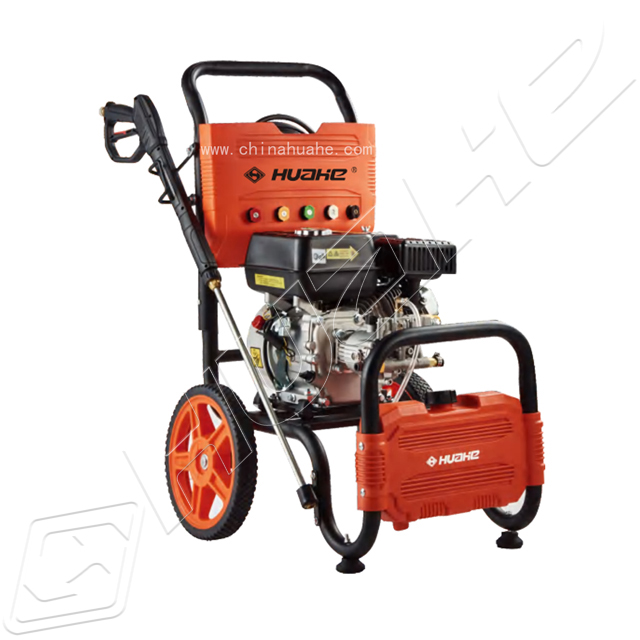
You need a solid decision framework for shortlisting the correct category of equipment. Choosing a machine depends entirely on your usage frequency and contaminant severity. Buying an underpowered unit leads to premature failure. Buying an overpowered unit wastes capital. Let us break down the primary categories to guide your selection.
Standard commercial units hit the sweet spot for intermittent use. They are best deployed for roughly 10 to 20 hours a week. We recommend them for light fleet washing, standard property maintenance, and occasional sidewalk brightening. They usually feature direct-drive pumps, making them compact and cost-effective.
However, you must acknowledge their distinct limitations:
Pump heat buildup: Direct-drive pumps spin at the same high RPM as the engine, generating significant internal heat.
Motor fatigue: They cannot handle continuous, eight-hour daily operation without risking thermal shutdown.
Vibration transfer: The direct connection transfers engine vibration straight to the pump, increasing wear over time.
When you face heavy grease, manufacturing plants, or large agricultural facilities, you need an upgrade. This is where an industrial high pressure washer becomes mandatory. These machines are engineered for continuous, daily operation. They thrive in environments where downtime is unacceptable.
The key differentiators make them highly resilient. They utilize belt-driven pumps. A belt system allows the pump to spin at a much lower RPM than the engine. This drastically reduces heat friction and vibration. They also feature heavy-duty unloader valves designed for thousands of bypass cycles. Furthermore, these industrial units frequently integrate hot water or steam capabilities. Pumping water heated to 200°F physically melts oil-based contaminants, cutting cleaning times in half.
Below is a quick reference comparison to help distinguish the two categories.
Feature | Standard Commercial | Industrial Grade |
|---|---|---|
Usage Frequency | 10–20 hours / week | 40+ hours / week (Continuous) |
Pump Drive Type | Direct-drive (High RPM) | Belt-drive (Low RPM, less heat) |
Primary Application | Light fleet, property maintenance | Heavy degreasing, manufacturing, agriculture |
Thermal Resilience | Low to Moderate | High (designed for extreme duty) |
You do not always need to buy a bigger machine to clean faster. Attachments seamlessly modify your baseline high pressure washer to increase square-footage coverage. Smart accessory integration scales your daily output dramatically while keeping your core unit unchanged.
Cleaning large flat concrete floors with a standard wand takes immense time. Operators use a "wand sweep" method, swinging the nozzle back and forth. This manual sweeping often leaves distinct, unsightly zebra-striping on the concrete due to uneven distance and pressure.
Rotary surface cleaners eliminate this problem entirely. These attachments look like small lawnmowers. They house a spinning bar with two nozzles underneath a protective dome. The nozzles maintain a perfect, consistent distance from the ground. This guarantees uniform cleaning without stripes. More importantly, a surface cleaner speeds up flat-surface cleaning by up to 400%. You save energy, water, and vast amounts of time.
Your nozzle dictates exactly how the water strikes the surface. Selecting the wrong spray angle destroys efficiency. A wide fan spreads pressure too thin. A narrow stream covers too little area. You must map specific spray angles to specific efficiency outcomes.
Spray Angle | Visual Color Code | Best Efficiency Outcome / Application |
|---|---|---|
0° (Zero Degree) | Red | Maximum impact force for spot-cleaning tar, gum, or extreme mud. Very small coverage area. |
15° (Fifteen Degree) | Yellow | Heavy-duty stripping for paint preparation, concrete cleaning, and hard surface degreasing. |
25° (Twenty-Five Degree) | Green | Standard sweeping and flushing. Excellent for fleet washing, sweeping leaves, and general dirt removal. |
40° (Forty Degree) | White | Gentle washing for fragile surfaces like windows, soft wood, or rinsing detergents away safely. |
Turbo nozzles represent the ultimate efficiency hack. They combine the raw, pinpoint force of a 0° stream with the wide coverage area of a 25° fan. The nozzle mechanically spins a 0° jet in a rapid circle. This tears through thick mud or heavy scaling at incredible speeds. When operators switch to a turbo nozzle, they often see a 30% reduction in stubborn stain removal times.
Every equipment upgrade carries distinct realities and potential pitfalls. Demonstrating awareness of these risks protects your facility from unnecessary liability. We must look closely at what to avoid when overhauling your washing protocols.
Facility managers sometimes adopt a "bigger is better" mentality. This is a dangerous trap. Buying a machine with significantly too much PSI for your intended surface leads directly to property damage. If your primary task involves washing lightweight delivery vans, hitting them with 5,000 PSI will strip decals, destroy clear coats, and damage window seals. Over-specifying creates massive liability. Always buy based on your most fragile, high-frequency cleaning surface.
Downtime carries a hidden, compounding cost. If your equipment breaks down and parts are six weeks away, your mechanized efficiency drops to zero. Evaluating the high pressure washer manufacturer is just as critical as evaluating the machine's specifications. You must heavily scrutinize their warranty terms. Check their replacement part availability. Ensure they possess a robust local service network. A cheaper upfront machine becomes a massive liability if the manufacturer cannot provide prompt aftermarket support.
Mechanized dirt removal introduces high-velocity hazards. You cannot skip operator safety training. Facilities must mandate strict Personal Protective Equipment (PPE), including impact-resistant eyewear, closed-toe non-slip boots, and hearing protection. Operators must understand kickback risks. When pulling the trigger on a high-GPM machine, the wand pushes back forcefully. Unprepared workers risk shoulder strain or dropping the wand.
Furthermore, operators need basic mechanical training. They must understand proper unloader valve maintenance. When a machine runs but the wand is closed, water bypasses internally. If left in bypass too long, the water overheats and destroys the pump seals. Training staff to turn off machines during pauses prevents catastrophic bypass overheating.
Maximizing your cleaning efficiency requires matching the machine’s total Cleaning Units (PSI x GPM) and specialized accessories to your specific operational challenge. Force alone will not save you time; you need flow to carry the debris away. By carefully selecting industrial equipment designed for your exact usage frequency, you protect your capital investment.
To move forward successfully, take these actionable next steps:
Audit your current cleaning hours to identify exactly where manual labor drains your budget.
Identify your primary contaminants. Decide if you are moving standard dirt or breaking down heavy grease.
Determine if a hot water integration is necessary to thermally melt oil-based stains.
Request a site evaluation or physical equipment demo before issuing any final purchase order.
By implementing these strategies, you will drastically cut downtime, conserve water, and keep your facility running at peak performance.
A: A baseline of 2,500 to 3,000 PSI is generally sufficient for most concrete surfaces, walkways, and commercial fleet vehicles. This range safely removes dirt without damaging underlying substrates. However, heavy industrial tasks, such as stripping paint or cleaning thick agricultural mud, usually require 4,000 PSI or higher.
A: Yes, it often does. Standard municipal building spigots typically max out around 4 to 8 GPM. If you purchase an industrial unit that draws 8 GPM or more, a standard hose connection will starve the pump of water. You will likely need to install a dedicated buffer tank to ensure a consistent water supply.
A: Hot water units are significantly more efficient when dealing with specific contaminants like oil, grease, and fats. The heat thermally breaks down the molecular bonds of oil much like washing greasy dishes in a sink. This drastically reduces overall cleaning time and minimizes your reliance on harsh, expensive chemical detergents.
