
Please Choose Your Language


Views: 0 Author: Site Editor Publish Time: 2026-08-19 Origin: Site


Industrial cleaning is never just an aesthetic task. It stands as a critical requirement for maintaining operational uptime, extending equipment longevity, and ensuring workplace safety. Facility managers know excessive downtime destroys profit margins. When dirt, grease, and hardened scale accumulate, heavy machines overheat and eventually fail. You cannot solve these heavy-duty problems using standard commercial-grade units. True industrial systems require you to match specific mechanical outputs—like pressure, flow, and temperature—to exact chemical and physical contaminants. Evaluating a heavy-duty pressure washer demands a strategic, engineering-focused approach rather than a simple purchase order. This guide provides facility managers and procurement teams with a clear evaluation framework. You will learn how to deploy these systems effectively, navigate complex safety protocols, and maximize daily cleaning efficiency.
Application-Driven Sizing: An industrial high pressure washer must be selected based on the specific contaminant (e.g., grease vs. scale) rather than default maximum power.
Thermal Dynamics Matter: Heating capabilities (hot water/steam) often reduce the need for high PSI and harsh chemicals, lowering surface degradation risks.
Risk & Compliance: Proper deployment requires strict adherence to wastewater management (EPA guidelines) and operator safety protocols (OSHA standards).
Vendor Due Diligence: Selecting the right equipment relies on evaluating the engineering support and custom configurations offered by the manufacturer.
Industrial environments face relentless exposure to stubborn, abrasive contaminants every single day. You need precise mechanical solutions to maintain peak efficiency across your entire operation. A reactive cleaning approach leads to catastrophic equipment failures. We must look at how targeted washing protocols resolve highly specific industry bottlenecks.
Mud, sticky hydraulic fluid, and corrosive materials bake onto heavy machinery in the field. Removing them promptly prevents premature mechanical wear on joints, pistons, and tracks. Thick grime acts as an insulator. It forces engines and hydraulic systems to retain heat, which accelerates part degradation. Clean fleets also simplify routine inspections. Mechanics can spot hairline cracks, loose fittings, or minor fluid leaks much faster when they look at bare metal. Using targeted water blasts keeps your excavators, loaders, and transport trucks in the field rather than the repair shop.
Production lines, mixing vats, and facility flooring require intense, daily sanitization. Hygiene compliance remains strictly non-negotiable in this sector. You must remove hazardous biofilms completely to prevent dangerous bacterial blooms. High-temperature washdowns provide the thermal energy necessary for total pathogen control. Facilities facing strict FDA or USDA inspections rely on steam-capable machines to sanitize stainless steel conveyors without introducing toxic chemical residues. Eliminating these residues protects product flavor profiles and consumer safety alike.
Factory floors endure aggressive chemical spills, metal shavings, and heavy grease buildup. You must clear these slippery hazards immediately to prevent catastrophic slip-and-fall accidents among your workforce. Routine degreasing prepares metal surfaces properly for fresh protective coatings or precise welding operations. Paint will not adhere to oily steel. Welds fail when impurities compromise the joint. Deep cleaning ensures your manufacturing outputs meet strict quality control standards.
We can link these diverse applications directly to improved profitability. Maintenance teams spend significantly less time scrubbing parts by hand. This directly reduces your overall labor costs. Maintenance downtime shrinks from hours to mere minutes. Asset life cycles extend significantly because you eliminate the corrosive agents eating away at your infrastructure.
Choosing the right thermal category ultimately determines your cleaning success. You must audit your primary facility contaminants before making a selection. Water temperature drastically alters how contaminants react to pressurized streams.
Cold water units excel at general particulate removal. They effectively blast away caked dirt, sand, and loose mud from concrete and steel. Maintenance teams often use them for stripping flaking paint from sturdy surfaces before applying fresh primer. However, they carry distinct limitations. Cold water simply cannot break the rigid molecular bonds of heavy oils and sticky grease. If you attempt to clean a greasy engine block with cold water, you only push the oil around. You would need heavy reliance on harsh, expensive detergents to compensate for the lack of heat.
Adding heat changes the cleaning equation entirely. Hot water actively emulsifies grease, thick oil, and tough petrochemical resins. Heat lowers the surface tension of the water, allowing it to penetrate stubborn grime instantly. This massive efficiency gain dramatically reduces your required PSI. It also shortens overall cleaning time drastically. Steam adds yet another layer of power. Steam achieves temperatures capable of denaturing proteins and destroying resilient bacteria.
Guide your procurement process by mapping contaminants to thermal requirements. Use the matrix below to audit your facility needs.
System Type | Optimal Contaminant Target | Key Operational Limitations | Overall Efficiency Impact |
|---|---|---|---|
Cold Water | Dirt, sand, flaking paint, loose debris | Ineffective on oil/grease without heavy chemicals | Requires higher PSI for stubborn grime |
Hot Water | Oils, grease, petrochemical resins | Higher initial equipment cost and footprint | Reduces cleaning time and lowers required PSI |
Steam | Biofilms, pathogens, hardened food byproducts | Slower flow rates generally | Maximizes pathogen control and chemical reduction |
Understanding equipment specifications prevents costly misapplications. Buyers frequently misunderstand the relationship between pressure and flow. You must balance two critical metrics to achieve optimal results.
PSI represents the actual "stripping force." It provides the violent energy needed to break the physical bond between the contaminant and the underlying surface. Many buyers mistakenly chase the highest possible PSI. However, severe diminishing returns occur quickly. Excessive over-pressurizing poses massive surface damage risks. Blasting a delicate surface with 5,000 PSI will strip the grime, but it might also gouge the concrete or destroy the weather stripping.
GPM represents the "flushing force." Once the PSI breaks the dirt loose, the water volume must carry it away. We frame GPM as the true driver of cleaning speed. It maximizes labor efficiency in heavy industrial settings. A low-GPM machine leaves dirty sludge sitting on the surface. High GPM washes the debris down the drain immediately. When cleaning massive factory floors, higher GPM saves countless labor hours.
Your facility layout and ventilation dictate the necessary power source.
Electric: Ideal for indoor or fixed continuous use. They generate lower noise levels and produce zero toxic exhaust emissions. Facilities running stationary wash bays rely heavily on electric motors.
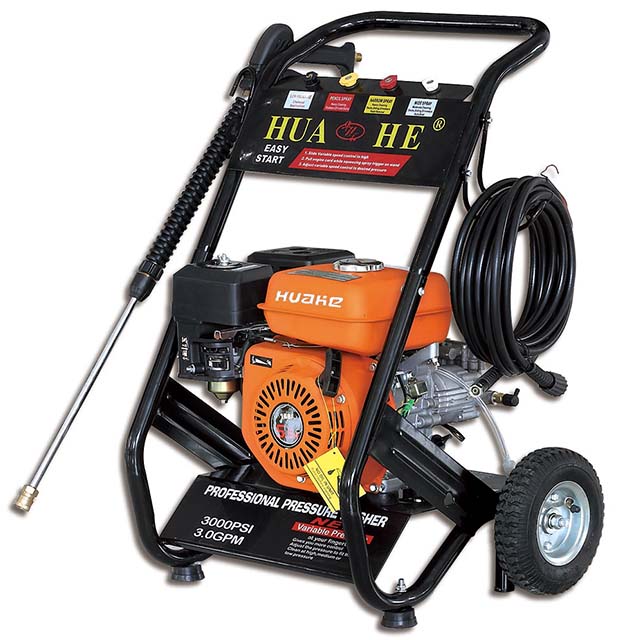
Gas/Diesel: Necessary for remote, highly mobile applications. Agricultural sites and expansive construction yards require the tether-free freedom provided by internal combustion engines.
We advise buyers to calculate "Cleaning Units" (PSI multiplied by GPM) as a baseline metric for comparing machines. For instance, a 3,000 PSI machine flowing at 4 GPM yields 12,000 Cleaning Units. However, always prioritize a high pressure washer with excellent GPM for bulk debris removal. If two machines share similar Cleaning Units, the one with the higher GPM will clear wide areas much faster.
Deploying powerful equipment introduces serious environmental and safety liabilities. You must navigate these risks carefully to avoid severe fines and tragic workplace injuries.
Environmental compliance requires strict water recovery protocols. Wash water frequently captures heavy metals, caustic chemicals, or toxic petrochemicals. You must reclaim this hazardous runoff properly. Never send industrial wash water down public storm drains. Doing so triggers massive EPA violations. Industrial facilities install specialized catch basins, oil-water separators, and closed-loop filtration systems to remain fully compliant with local and federal wastewater regulations.
High velocity water easily destroys vulnerable mechanical components. Facility managers must create strict boundaries regarding what operators can and cannot wash.
Electrical Panels: Never spray junction boxes, unsealed motors, or live conduits.
Bearing Housings: High pressure forces water past rubber seals, displacing vital lubricants and rusting internal bearings.
Soft Masonry: Historical brickwork and aging mortar crumble instantly under intense localized pressure.
Aging Seals: Weather stripping around doors or control cabs will fail, causing rapid internal water intrusion.
Pressurized water acts exactly like a sharp blade. Injection injuries occur rapidly when operators accidentally pass their hands over the nozzle. High-pressure fluid enters the bloodstream, carrying toxic bacteria deep into the tissue. This requires immediate, specialized surgical intervention. Operators must wear designated protective gear. Mandatory equipment includes shatter-proof face shields, heavy neoprene gloves, and steel-toed reinforced boots. Deploying an industrial high pressure washer mandates formalized, rigorous operator training programs.
Your choice of vendor determines your long-term success. You must look far beyond flashy exterior features and aggressive marketing brochures. Focus entirely on engineering integrity.
Seek out manufacturers fully capable of modifying their base systems. Complex facility layouts frequently require highly custom configurations. Chemical plants might require specialized explosion-proof ratings (such as Class I Division 1 certifications) to prevent catastrophic ignition. Massive food processing floors benefit immensely from customized multi-drop pump stations, allowing several workers to tap into a single centralized high-pressure line simultaneously.
Assess the inherent quality of all internal components relentlessly. Heavy industrial environments quickly destroy cheap consumer-grade parts. Ensure the high pressure washer manufacturer utilizes solid ceramic plungers rather than basic steel. Ceramic resists heat and friction far better. Look for heavy forged brass manifolds, which resist cracking under extreme thermal stress. Select units featuring low-RPM motors. They run significantly cooler, pulling less strain on the electrical grid and lasting years longer.
Machine downtime directly equals lost production revenue. You must evaluate the vendor based on their replacement part availability and strict service SLAs (Service Level Agreements). A machine is useless if a replacement valve takes three weeks to arrive. Robust preventative maintenance programs ensure long-term equipment reliability. Consistent service schedules protect your initial capital investment and guarantee ongoing peak performance.
Successful industrial cleaning relies entirely on precise mechanical alignment. You must expertly balance water temperature, flow rate, and pressure against your specific facility challenges. Avoid a dangerous one-size-fits-all mentality when evaluating heavy equipment. Facility decision-makers should conduct a comprehensive site audit immediately. Map out your toughest localized contaminants, test your electrical power availability, and verify your drainage capacity. Armed with this data, request a targeted demonstration from a highly qualified vendor. Seeing the equipment tackle your actual facility grime confirms its true capability and secures your investment.
A: Industrial units feature continuous run-time capabilities for demanding multi-shift operations. They utilize heavier-duty pump components, such as rugged belt-drive systems rather than basic direct-drive mechanisms. They also offer custom power configurations suited for harsh environments. Commercial units are built primarily for intermittent, lighter-duty daily use.
A: Often, yes. High-temperature steam and hot water models easily emulsify grease and thick oils. They effectively sanitize processing surfaces instantly. This thermal action significantly reduces chemical dependencies, minimizing both purchasing costs and environmental runoff hazards.
A: Base your required PSI on the bond-strength of your toughest daily contaminant. Once you establish that minimum stripping force, maximize your GPM. Higher GPM reduces labor time by flushing debris away much faster. Your choices are only constrained by the facility's water supply and drainage capacity.
