
Please Choose Your Language


Views: 0 Author: Site Editor Publish Time: 2026-04-27 Origin: Site


Fleet managers constantly balance the need for raw, uncompromised lifting power against the pressure of managing long-term operational costs. Finding the right equipment often means navigating this tight rope. A diesel forklift is an internal combustion industrial vehicle powered by diesel fuel. Manufacturers design them specifically for heavy-duty, outdoor material handling. Choosing one today requires a hard look at business realities. Buyers must navigate strict emissions compliance and accurately calculate the Total Cost of Ownership (TCO). You also need to match specific environmental demands where electric or LPG alternatives inevitably fall short. Understanding these factors ensures you maximize productivity without sacrificing your budget. By evaluating fuel costs, regulatory requirements, and infrastructure limits, procurement teams can make data-driven decisions and secure the best machinery for their specific site.
Performance: Unmatched sustained torque for high-capacity loads, steep inclines, and extreme weather.
Infrastructure: Ideal for off-grid or remote sites lacking the high-voltage electrical infrastructure required for lithium-ion charging.
Cost Dynamics: Lower initial purchase price (CapEx) compared to electric, but higher ongoing maintenance and fuel costs (OpEx).
Compliance: Subject to tightening global emissions standards (e.g., Stage V) and strict OSHA training protocols based specifically on drive type.
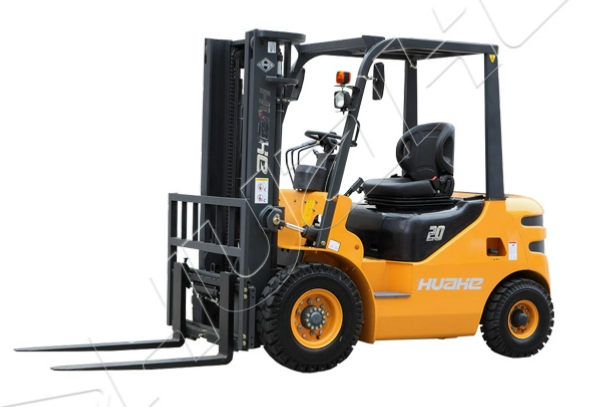
To understand diesel performance, we must examine the internal mechanics driving these massive machines. They rely on internal combustion (IC) to convert fuel into kinetic energy. This process generates immense physical force.
Modern diesel engines deliver exceptional durability and incredible power. However, their fundamental design prioritizes raw mechanical output over energy conservation. The thermal efficiency of a top-tier diesel engine peaks around 40% to 45%. The remaining energy escapes as heat or exhaust. This might seem inefficient compared to modern electric motors. Yet, this aggressive power delivery is exactly what you need to lift massive weights. The engine produces high torque at low RPMs. This allows the vehicle to lift rapidly without stalling under pressure.
You cannot separate engine power from how the vehicle grips the ground. Manufacturers equip IC forklifts with specialized tires tailored to distinct environments.
Tire Type | Composition | Ideal Operating Environment | Primary Application |
|---|---|---|---|
IC Pneumatic | Air-filled or solid rubber | Rough, unpaved outdoor terrain | Lumber yards, construction sites, ports |
IC Cushion | Solid press-on rubber | Smooth indoor/outdoor concrete | Warehousing, manufacturing floors |
Most heavy-duty diesel models feature pneumatic tires. They absorb shocks from uneven gravel and potholed lumber yards. Cushion tires occasionally appear on niche models. It is critical to differentiate between the two before purchasing. Running a cushion-tire model on rough dirt will destroy the wheels and damage the chassis.
Diesel models completely dominate the heavy-duty tier of material handling. They routinely cover the 1.5-ton to 25+ ton capacity range. Heavy counterweights give them unmatched stability. This matters immensely when handling asymmetrical loads. Shipping containers, massive concrete pipes, and oversized steel coils require steady balance. A heavy-duty forklift relies on its dense diesel engine block and solid frame to prevent tipping during these extreme lifts.
Procurement teams must match machinery capabilities directly to operational demands. Certain environments make diesel the only logical choice.
A diesel engine provides distinct advantages during dynamic operations. It offers aggressive acceleration even while carrying maximum weight. Sustained lifting speeds remain constant throughout a shift. You can navigate full-load inclines without experiencing battery drain or motor overheating. Electric models often suffer voltage drops when pushed up steep ramps repeatedly. Diesel engines simply rev higher and push through the resistance.
Operations in freezing conditions severely degrade battery efficiency. Lithium-ion and lead-acid power cells lose capacity rapidly in the cold. Diesel engines excel here. Once running, the engine generates abundant heat. This heat warms the operational fluids and the operator cabin. You can rely on these machines to perform consistently in sub-zero lumber yards and frozen ports.
Many remote sites lack robust electrical grids. Greenfield construction sites and expansive agricultural facilities rarely have dedicated charging bays. Diesel provides true grid independence. You can refuel a truck from a mobile tank in five minutes. This quick refueling acts as a distinct advantage for 24/7 continuous operations. You avoid the multi-hour downtime required to recharge heavy industrial batteries.
High-vibration outdoor shifts historically caused extreme operator fatigue. Modern flagship models address this directly. They integrate advanced suspension systems to smooth out rough terrain. Fully enclosed, climate-controlled cabins protect operators from extreme weather, dust, and noise. Better ergonomics directly reduce workplace accidents and increase daily productivity.
Best Practice: Always upgrade to an enclosed cabin if your primary operating environment involves frequent rain, high winds, or temperatures below freezing.
Looking only at the sticker price is a dangerous procurement mistake. You must analyze both capital expenditures (CapEx) and operational expenditures (OpEx) over a multi-year timeline.
The initial cost dynamics heavily favor internal combustion models. The upfront procurement cost of a diesel unit is noticeably lower. Equipping an electric fleet requires buying expensive batteries and installing specialized charging stations. However, operational costs tell a different story. You must factor in fuel volatility. Diesel commodity pricing remains unpredictable. Predicting your fuel costs over a 5-to-10-year lifecycle introduces significant financial risk.
We must provide transparent comparisons regarding maintenance. Internal combustion engines involve hundreds of moving parts. They require routine preventative maintenance.
Diesel Engines: Require service every 500 hours. You must change the oil, replace air filters, swap fuel filters, check belts, and top off coolant.
Electric Drivetrains: Feature far fewer moving parts. They often push routine service intervals past 1,000 hours. They require no oil changes or spark plug replacements.
Failing to adhere strictly to the 500-hour maintenance schedule will destroy a diesel engine. You must factor these labor and parts costs into your TCO analysis.
Equipment eventually ages out of your primary fleet. A robust secondary market exists for used diesel equipment. They hold their value well, particularly in regions with less stringent environmental regulations. Smaller operations readily buy used diesel machines because they do not require charging infrastructure. This high residual value helps offset the initial purchase price when you finally sell the unit.
Operating internal combustion machinery involves navigating serious regulatory and safety risks. You must manage emissions standards and ensure proper operator certification.
We must address the elephant in the room. Many regions are implementing bans on ICE vehicles. They enforce strict emissions tiers, such as Tier 4 Final in the US and EU Stage V in Europe. Manufacturers continuously adapt to these rules. Modern diesel engines mitigate toxic exhaust using advanced technologies. They utilize diesel particulate filters (DPF) and optimized heat dissipation systems. These filters trap harmful soot before it escapes the exhaust pipe. You must ensure your local municipality allows these vehicles before finalizing a purchase.
General operator certification is entirely insufficient. Driving an electric warehouse lift does not qualify someone to operate heavy outdoor machinery. Operators must receive explicit training on diesel-specific equipment. They must become OSHA-certified for this specific drive type. Training must cover safe refueling protocols. Mishandling combustible fuel creates immense fire hazards. Ignoring these training mandates exposes your company to massive fines and legal liabilities.
Common Mistake: Assuming an employee certified on a Class 1 electric lift can legally operate a Class 5 internal combustion truck without a formal re-evaluation.
You must keep these machines outside. Diesel machinery is generally prohibited indoors. They rapidly accumulate carbon monoxide (CO) and nitrogen oxide (NOx) in enclosed spaces. These toxic gases pose lethal risks to your workforce. Additionally, the engines produce immense noise pollution. They typically exceed 70 decibels during operation. Using them indoors without massive, specialized ventilation systems violates standard workplace safety laws.
Before contacting a dealer, audit your facility and operational needs. Use this checklist to determine if internal combustion is truly the right path for your business.
Facility Environment: Is your primary operating space over 80% outdoors or on unpaved terrain? If yes, rugged pneumatic tires and IC power make sense.
Electrical Infrastructure: Does your facility lack the electrical grid capacity for fast-charging stations? Upgrading grid transformers costs thousands of dollars. Off-grid fuel tanks solve this issue entirely.
Shift Intensity: Do you run consecutive shifts where multi-hour charging downtime is unacceptable? High-intensity 24-hour operations often favor liquid fuel for immediate turnaround.
Load Profile: Do your typical material handling loads consistently exceed 5 to 10 tons? Heavy counterweights and high torque handle these loads effortlessly.
Compliance Horizon: Have you audited local environmental regulations regarding ICE machinery over the next 5–7 years? Ensure no local bans will force you to retire the equipment prematurely.
A diesel forklift remains the authoritative choice for heavy-capacity, high-intensity outdoor applications. They dominate scenarios where grid infrastructure is limited and loads are massive. Their ability to deliver sustained torque across rugged terrain and extreme climates is currently unmatched by battery alternatives. While regulations tighten, modern Stage V engines ensure these vehicles remain viable and compliant in heavy industry.
Your procurement team should conduct a rigorous, site-specific TCO analysis next. You must balance the upfront affordability of the machine against your anticipated operational hours and long-term fuel costs. Look closely at your maintenance capabilities as well.
Take action today. Request a comprehensive fleet assessment from your equipment dealer. Ask a technical representative to compare specific diesel models directly against high-capacity lithium-ion alternatives to see exactly which profile fits your operational reality.
A: No, unless in highly ventilated, semi-open structures due to toxic exhaust fumes and high noise levels.
A: Depends on load and tank size, but generally supports a full 8-to-10-hour intensive shift without interruption.
A: Typically 10,000 to 20,000 hours, heavily dependent on strict adherence to the 500-hour maintenance schedule.
A: While heavily regulated by Tier 4/Stage V standards and facing future bans in certain municipal zones, they remain essential for off-grid heavy industry for the foreseeable future.
