
Please Choose Your Language


Views: 0 Author: Site Editor Publish Time: 2026-04-20 Origin: Site


Heavy-duty outdoor operations often push standard material handling equipment far beyond their intended limits. This intense strain quickly leads to dangerous overloading scenarios, frequent equipment downtime, and severely bottlenecked throughput. When operating in these rugged, demanding environments, investing in a robust diesel forklift shifts your operational baseline. Instead of merely struggling to cope, your fleet achieves reliable, high-capacity throughput day after day. You gain the mechanical power needed to move massive payloads safely across uneven terrain.
Engineering Advantage: High-compression diesel engines deliver superior low-end torque and thermal efficiency without complex electrical ignition systems.
Infrastructure Independence: Diesel models operate 24/7 without requiring expensive electric charging grids, making them ideal for remote or outdoor sites.
Safety & Compliance: Right-sizing with a heavy-duty diesel forklift prevents the safety oversights and tip-over risks associated with overloading lighter-duty trucks.
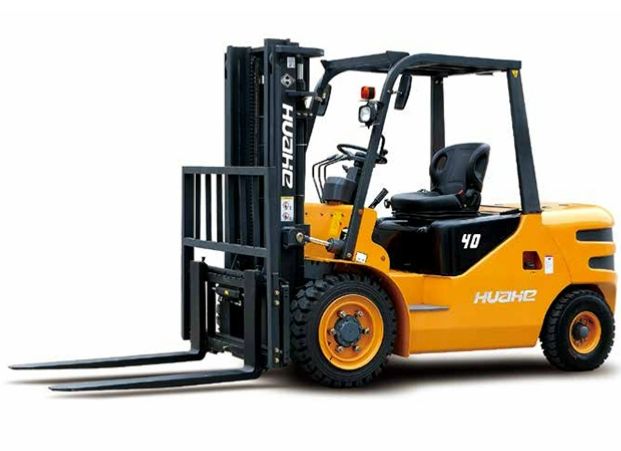
Diesel engines operate on a fundamental physics principle: high compression. This high compression ratio translates directly into massive low-end torque. Torque acts as the raw twisting force required to initiate heavy movement. When operators need to move a 15,000-pound steel coil, they rely entirely on this low-end power. It allows the machine to navigate steep inclines and uneven outdoor gravel without stalling or hesitating.
Furthermore, diesel fuel boasts exceptionally high thermal efficiency. It packs significantly more usable energy per gallon than gasoline or propane. You extract more physical work from every drop of fuel. Mechanically, diesel engines ignite fuel through compression alone. They completely lack spark plugs, distributor caps, and complex electrical ignition wiring. This brilliantly simple design heavily reduces electrical failure points in wet, dusty, or harsh industrial environments.
Ultimately, raw engine power drives measurable business outcomes. A powerful engine yields faster travel speeds and quicker lift rates under maximum load capacity. Faster operations naturally shrink cycle times. When operators complete more lifts per hour, your facility throughput scales upward, delivering a tangible competitive advantage.
Evaluating heavy-duty equipment requires mapping technical features directly to tangible business outcomes. A powerful machine means little unless it systematically solves an operational bottleneck. The chart below outlines how specific mechanical features translate into unmatched scalability for your material handling fleet.
Engineering Feature | Direct Business Benefit |
|---|---|
Internal Combustion Engine / Rapid Refueling | Enables 24/7 continuous operation without suffering multi-hour battery charging downtime. |
High Ground Clearance & Pneumatic Tires | Provides multi-terrain versatility; easily replaces the need for separate indoor and outdoor models. |
No Electric Grid Dependency | Guarantees infrastructure independence for remote construction sites, lumber yards, or port docks. |
Advanced Cold-Weather Cranking | Delivers absolute reliability with zero battery degradation in harsh, freezing winter climates. |
Pushing a light-duty electric or propane unit to lift heavy industrial loads creates massive safety vulnerabilities. Under-sizing your equipment invites severe mechanical failures. Overstressed frames suffer from invisible metal fatigue and sudden stress fractures. Worse, pushing equipment beyond its rated limits drastically increases the risk of fatal tip-over accidents on job sites.
To combat these dangers, heavy-duty diesel models incorporate robust structural safety mechanics. They feature incredibly dense, advanced counterweights designed for extreme loads. Their axles offer wider stances to physically stabilize unstable or off-center materials. Many modern units also include automatic tilt and lift lockouts. These advanced hydraulic systems freeze mast movement instantly if onboard sensors detect an unsafe load balance.
Matching robust equipment to your exact payload directly supports enterprise risk management. Proper load handling keeps you strictly aligned with occupational safety regulations, including stringent OSHA standards. More importantly, it reduces daily operator strain. Forcing operators to wrestle with inadequate machinery causes severe musculoskeletal disorders (MSDs). Right-sizing your fleet protects worker health while shielding your bottom line from costly worker compensation claims.
Every piece of industrial equipment comes with specific operational trade-offs. You must clearly acknowledge the environmental and indoor limitations of diesel power. These high-compression engines generate toxic emissions and considerable noise during operation. Therefore, diesel remains fundamentally an outdoor or high-ventilation solution. You must heavily restrict and aggressively ventilate any indoor usage to ensure absolute worker safety.
Maintenance complexity represents another distinct operational reality. Heavy-duty lifting generates intense engine heat and immense hydraulic pressure. You must strictly enforce Preventative Maintenance (PM) schedules. Routine upkeep requires regular attention to engine oil, fuel filters, cooling systems, and high-pressure lines. Ignoring these vital PM intervals quickly leads to catastrophic engine failure and costly downtime.
Fortunately, manufacturers continue future-proofing these robust machines against tightening regulations. Modern Tier 4 Final diesel engines feature advanced exhaust gas purification systems. These systems capture and neutralize harmful particulate matter before it leaves the exhaust stack. Furthermore, hybrid-diesel systems are rapidly emerging globally. They successfully bridge the gap between necessary raw power and strict Environmental, Social, and Governance (ESG) compliance requirements.
When you prepare to procure new heavy equipment, follow a strict shortlisting logic. Never buy a machine rated exactly for your maximum everyday payload. Instead, apply the industry-standard payload redundancy sizing rule. Always specify a rated capacity 25% to 50% higher than your absolute maximum anticipated load. This crucial buffer accounts for sudden load center shifts during transit. It also seamlessly accommodates future business scaling as your handled materials inevitably grow heavier.
Next, carefully evaluate your attachment readiness. Standard carriage forks rarely solve every material handling challenge in a heavy-duty environment. You might need hydraulic rotators, heavy paper roll clamps, or specialized multi-pallet handlers. Verify your chosen machine possesses the necessary hydraulic flow rate to operate these heavy attachments smoothly without bogging down the main engine.
To move forward efficiently, advise your procurement stakeholders to follow these actionable next steps:
Audit your daily shifted tonnage and map out peak operational hours.
Assess your site terrain meticulously, noting steep inclines, deep mud, or unpaved gravel sections.
Consult an authorized equipment dealer for a comprehensive on-site survey before formally issuing a Request for Proposal (RFP).
Selecting a heavy-duty diesel unit serves as a long-term investment in brute reliability and uninterrupted operational uptime. Heavy industries demand equipment capable of matching aggressive, non-stop production schedules. While exhaust emissions and complex maintenance schedules pose very real operational trade-offs, the underlying performance benefits remain profound. The sheer ability to operate entirely independent of electric charging infrastructure across severe, remote environments stands completely unmatched in the material handling sector.
Do not let inadequate equipment throttle your facility output or compromise job site safety. Take the time to rigorously calculate your specific daily throughput needs today. We highly encourage you to contact a heavy-duty material handling specialist to schedule a comprehensive fleet assessment and discover exactly how much efficiency you stand to gain.
A: Calculate your absolute maximum anticipated load weight. Then, add a 25% to 50% safety margin to that figure. This crucial redundancy ensures dynamic stability during movement, accounts for unexpected load center shifts, and dramatically extends the machine's longevity by preventing structural fatigue.
A: Diesel units require regular engine oil changes, fuel filter replacements, cooling system flushes, and emission system upkeep. Conversely, electric models focus heavily on battery health. Their maintenance revolves around battery cell watering, acid equalization, and inspecting specialized charging infrastructure.
A: You should only operate them indoors very briefly and strictly within highly optimized, massively ventilated spaces. Extended indoor use without proper industrial exhaust fans leads to toxic fume accumulation. This poses a severe, immediate safety risk to your entire warehouse staff.
A: Battery-powered units suffer massive range depletion and power loss in freezing temperatures. In contrast, diesel engines maintain consistent, reliable power output in the cold. You simply must use proper winter-grade diesel fuel blends and install engine block heaters to ensure smooth morning startups.
