
Please Choose Your Language


Views: 0 Author: Site Editor Publish Time: 2025-12-25 Origin: Site


When power outages occur, whether due to weather events, natural disasters, or power grid failures, a portable generator can be an essential backup power solution for households. Unlike fixed generators that are permanently installed and connected to a home’s electrical system, a portable generator is designed for mobility and flexibility, offering homeowners a cost-effective option for maintaining electricity during emergencies. It’s crucial to understand how a portable generator works, how to calculate the power needs for your home, and how to connect it safely to ensure that you have a reliable and efficient power source when you need it the most.
At Huahe Heavy Industry Co., Ltd., we specialize in producing high-quality portable generators that can meet various energy needs. Whether you're looking to power essential appliances or keep your home running during a blackout, our products are designed for optimal performance and safety. In this article, we will explore how a portable generator can work for your home, ensuring you are well-prepared for any power interruption.
Before you consider connecting a portable generator to your home, it’s important to understand your home’s power requirements. Home power needs can generally be divided into two categories: essential appliances and non-essential appliances.
Essential appliances are the ones that are critical for maintaining basic functions during an outage. These typically include:
Refrigerators and freezers to preserve food and prevent spoilage.
Lighting to ensure you can navigate your home.
Medical equipment, if you or a family member rely on it for health.
Heating and cooling systems, especially in extreme weather conditions.
Non-essential appliances are those that can be temporarily powered down during an outage, such as:
Television and entertainment systems.
Laundry machines.
Microwaves and ovens.
By identifying which appliances are essential and which are not, you can better calculate the total wattage your portable generator needs to handle. Focusing on essential appliances ensures that you are not overloading the generator and that it can provide the power you need in an emergency.
Once you’ve identified the essential appliances in your home, the next step is to calculate the required wattage for your portable generator. This process involves understanding both the running wattage and the starting wattage of your appliances.
Running wattage is the continuous power required to keep an appliance running.
Starting wattage (or surge wattage) is the extra power needed to start certain devices that have motors or compressors, such as refrigerators, air conditioners, and pumps.
For example, a refrigerator may consume 600 watts to run, but it might need 1,200 watts to start. When calculating the total wattage for your home, make sure to account for both running and starting wattage. Here's how you can calculate your home’s total wattage needs:
List all essential appliances.
Find the running wattage and starting wattage for each device (this information can typically be found on the appliance's nameplate or in the user manual).
Add the running wattages together to get the total running wattage.
Add the starting wattages for devices with motors, and include any additional wattage required for surge power.
Choose a generator with a capacity that exceeds the total wattage by at least 20% to account for future needs and ensure reliable operation.
Once you have determined the wattage your portable generator needs to support, the next critical step is connecting the generator to your home safely. There are several methods for doing this, and it’s important to follow the correct safety protocols to avoid risks like electric shock or backfeeding.
Key connection methods:
Cord-Inlet Box: A cord-inlet box is an easy-to-install device that allows you to connect your portable generator to your home’s electrical panel using a heavy-duty extension cord. The box is installed outside your home, and it has a plug that connects directly to the generator. This method is typically used for smaller homes and is ideal if you need to power a few essential appliances.
Transfer Switch: A transfer switch is the safest and most efficient way to connect a portable generator to your home’s electrical system. This switch allows you to safely transfer power from the grid to your generator in the event of an outage. A transfer switch prevents backfeeding, which occurs when power from the generator flows back into the utility grid, potentially harming utility workers or damaging your generator.
Safety precautions:
Never connect a portable generator directly to your home’s electrical outlets using a standard extension cord, as this can cause backfeeding, leading to dangerous situations.
Ensure that the generator is properly grounded to prevent electrical shock.
Always operate the generator in a well-ventilated area to avoid carbon monoxide buildup.
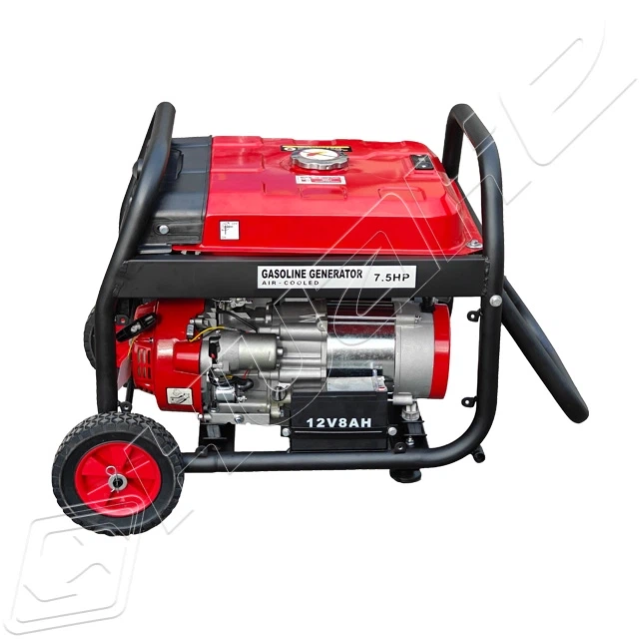
Choosing the right type of portable generator for your home is crucial to ensure that you meet both your power needs and your budget. There are three main types of portable generators that can be used for home backup: inverter generators, gasoline generators, and diesel generators. Each type has its advantages and disadvantages for home use.
Inverter generators are ideal for homeowners who need clean, stable power for sensitive electronics, such as computers and medical devices. They are quieter, more fuel-efficient, and lighter compared to gasoline and diesel generators. Additionally, they provide a more stable voltage output, making them the best option for powering delicate appliances. However, they tend to have a lower power output, making them suitable for smaller homes or fewer devices.
Gasoline generators are the most common and generally the most affordable option. They are easy to find and operate, making them a popular choice for homeowners who need a temporary power source. Gasoline generators are suitable for small to medium-sized homes and can power essential appliances during an outage. However, they are louder and less fuel-efficient than inverter generators, and they require regular refueling.
Diesel generators are known for their high power output and fuel efficiency. They can run for longer periods without needing a refill, making them suitable for homes that require continuous power. Diesel is more energy-dense than gasoline, so these generators are ideal for larger homes or properties with high power demands. However, diesel generators are typically louder and more expensive than gasoline and inverter generators.
Proper maintenance is essential to ensuring that your portable generator is ready to provide backup power when needed. Regularly maintaining the generator and checking the fuel supply will help prevent breakdowns and ensure that the generator operates smoothly during an emergency.
Maintenance tips include:
Check the oil regularly and replace it as needed.
Inspect the air filter and clean or replace it to maintain engine efficiency.
Test the generator periodically to ensure that it is in good working condition. Run the generator for a short period every month to ensure the engine is functional.
Store fuel properly in a cool, dry place and ensure that it is in good condition. Gasoline should be used within 3-6 months, while diesel can be stored for a longer period.
Additionally, make sure that the generator is stored in a dry, safe location when not in use to avoid corrosion or rusting.
A portable generator is an excellent option for homeowners who need a reliable backup power source during power outages or in areas without access to the grid. By understanding your power needs, calculating wattage requirements, and selecting the right generator type, you can ensure that your generator provides reliable, safe, and efficient power for your home. Proper setup, safety measures, and ongoing maintenance are key to making sure your portable generator will be there when you need it most.
At Huahe Heavy Industry Co., Ltd., we specialize in manufacturing high-quality portable generators that are designed to meet a variety of home backup power needs. With more than 30 years of experience in the industry, we offer durable, fuel-efficient, and reliable products to keep your home powered during emergencies.
Contact us today to learn more about how our portable generators can provide the reliable power your home needs during a power outage or emergency.
What is the best type of portable generator for home backup?
The best type of generator depends on your power needs. Inverter generators are ideal for sensitive electronics, while gasoline and diesel generators are better for larger power demands.
How do I calculate the wattage requirements for my home?
List all essential appliances, check their wattage requirements, and add up the running and starting wattages to determine your total power needs.
Can I use a portable generator to power my entire home?
Yes, you can use a portable generator to power your entire home if it provides enough wattage to meet your needs. A transfer switch is typically required for safe and efficient connection.
How often should I maintain my portable generator?
You should run your portable generator monthly to test its functionality, check the oil and air filter, and ensure that fuel is stored properly.
